Mirabilis jalapa L.
Summary
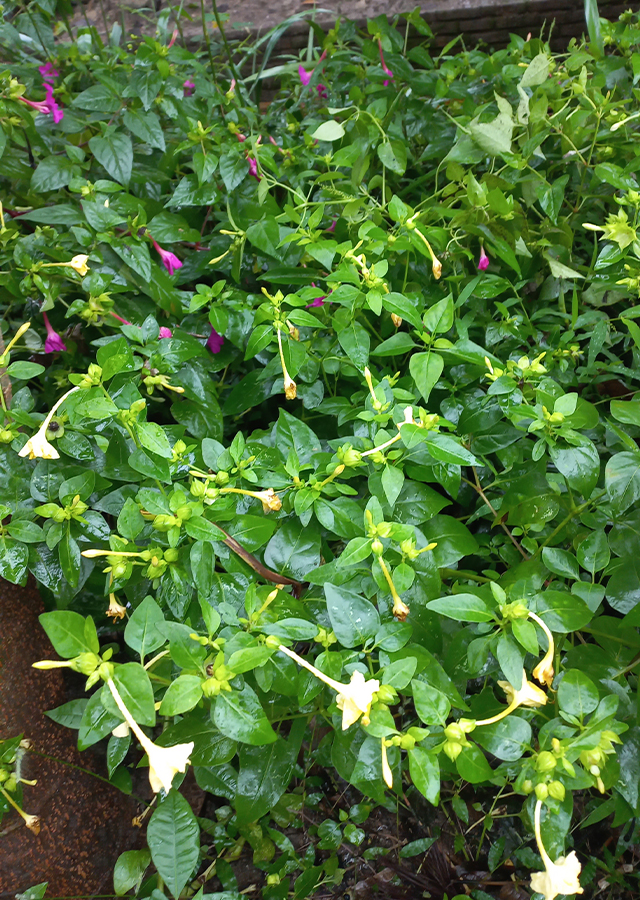
Mirabilis jalapa or four o'clock flower is thought to be native to Mexico through Central America, and has been cultivated as an ornamental across various continents since the 1500s. Besides its beautiful flowers, this plant is also a source of natural dye for cosmetics and cakes, its leaves can be eaten as emergency food, and its seeds are used as a pepper substitute. In some countries, the four o'clock flower is even considered invasive, though it is still traditionally used to treat boils, diarrhea, and fever.
Agroecology
The native habitat of M. jalapa is believed to be forest edges, thickets, and grasslands. This species is also widely found growing in waste ground, disturbed sites, roadsides, abandoned fields, and railway lines. Found at elevations from near sea level up to 3,000 m asl. M. jalapa can grow in almost all soil types, as long as fertile and well-drained, both in full sun conditions (6-8 hours of sunlight) to partial shade, with a soil pH of 6.1 to 7.8. M. jalapa's growth is also tolerant of salt and drought.
Morphology
- Roots a taproot, tuberous, black or blackish brown.
- Stem upright, much-branched, cylindrical, hairless or slightly puberulent, swollen at the nodes.
- Leaves unifoliate, opposite, ovate or ovate-triangular shaped. Base truncate or cordate, margin entire, tip acuminate, venation pinnate. Petiole about 1-4 cm.
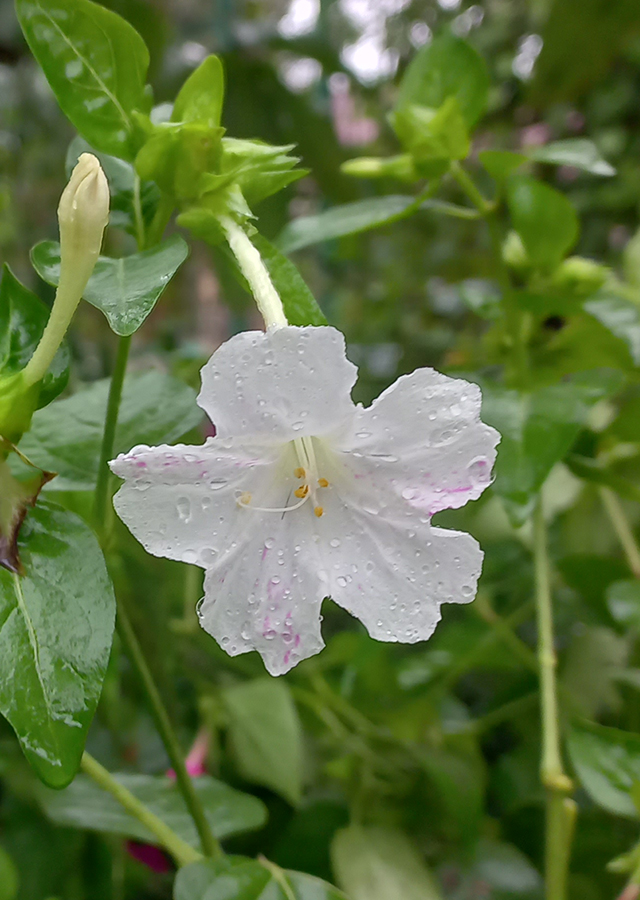
- Flowers usually clustered at the branch tips, arranged in 3-7 clusters, trumpet-shaped, lemon-scented. Involucre campanulate, 5-lobed, lobes triangular-ovate, acute, hairless. Perianth various colors (purple, red, yellow, white, or variegated), tube-shaped, opening in the afternoon and closing the following morning. Stamens numbering 5, filaments slender, anthers globose.
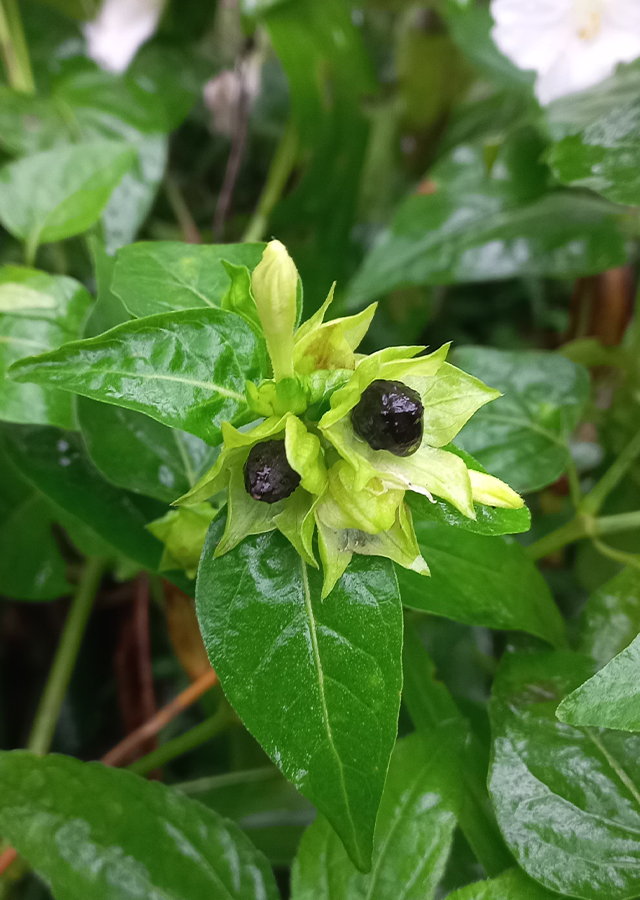
- Fruit dry, dark brown to black, narrowly ovate shaped, 5-8 mm in diameter, seed-like, ribbed, wrinkled, and layered. Endosperm starchy white.
Cultivation
- Plant propagation can be done generatively through seed and vegetatively through tubers and stem cuttings.
- Although the flower is morphologically adapted for cross-pollination, this species is reported to be mostly a selfer. This species can self-pollinate as the stamens roll toward the stigma when the flower closes.
Chemical Content
Oxymethylanthraquinone, trigonelline, galactose, arabinose, steroids, tannins, saponins, inulin, flavonoids, glycosides, triterpenoids, chrysophanol, physcion, stigmasterol, mirabijalone A, boeravinone C, aurantiamide acetate, glycerol monoeicosate, β-sitosterol, 4-hydroxy-3-methoxybenzoic acid, astragaloside II, astragaloside III, astragaloside IV, astragaloside VI, flazin, 4'-hydroxy-2,3-dihydroflavone 7-beta-D-glucopyranoside, gingerglycolipid A, 3,4-dihydroxybenzaldehyde, p-hydroxybenzaldehyde, beta-sitosterol, daucosterol, phenolic compounds (hydroxycinnamic acids, isoflavonoids, coumarins).
Benefits
Treats edema (dropsy), scabies, boils, abscesses, eczema, skin infections and itching, diabetes, muscle swelling, urinary tract infections, diarrhea, dysentery, digestive disorders, rashes, hemorrhoids, conjunctivitis, reduces swelling from broken bones and ordinary swelling, reduces fever, relieves headache, treats syphilitic sores, addresses vaginal discharge, addresses intestinal parasites. Is aphrodisiac, diuretic, laxative, and anti-inflammatory.
Simplisia
- Prepare an adequate amount of fresh four o'clock flower root, wash clean with running water then drain.
- Dry under the sun or with an oven at 40°C until the moisture content reaches 10%.
- Store in a clean, airtight container.
Local Names
Kembang pagi sore, Kembang pukul empat, Bunga waktu kechil (Melayu), Kederat, Segerat, Tegerat (Jawa), Noja (Bali), Bungga Ledonosko (Roti), Loro Laka (Timor), Bunga-bunga paranggi (Makasar), Pukul ampa (Minahasa), Kupa oras (Ambon), Cako rana (Ternate).
Traditional Recipes
The following recipes reflect traditional knowledge passed down through generations, not a substitute for professional medical diagnosis or advice. Consult a healthcare provider before use.
1. Boils
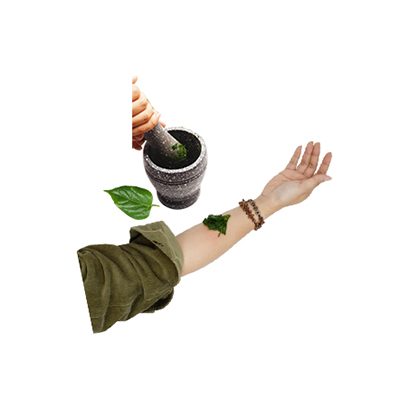
- Prepare an adequate amount of four o'clock flower leaves and wash until clean.
- Grind until it becomes a paste.
- Apply the leaf paste as a poultice on the affected area.
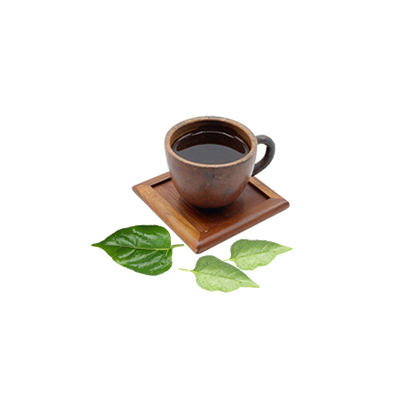
2. Laxative remedy
- Take an adequate amount of four o'clock flower leaves and wash until clean.
- Boil until it boils.
- Let it cool to warm/cold.
- Strain then drink.
Reference Sources
- Royal Botanic gardens, Kew. Plants of the World Online: Mirabilis jalapa L.. https://powo.science.kew.org/taxon/urn:lsid:ipni.org:names:162591-2. 09-12-2022.
- CABI. 2022. Mirabilis jalapa (four o'clock flower). https://www.cabidigitallibrary.org/doi/10.1079/cabicompendium.34254. 09-12-2022.
- Stuartxchange. 2021. Philippine Medicinal Plants: A las cuatro. http://www.stuartxchange.org/AlasCuatro.html. 09-12-2022.
- Flora Fauna Web. 2022. Mirabilis jalapa L.. https://www.nparks.gov.sg/florafaunaweb/flora/2/2/2227. 09-12-2022.