Momordica charantia L.
Summary
Bitter gourd (Momordica charantia) is an annual vine up to 5 meters long of the Cucurbitaceae family, native to West India and Myanmar, widely cultivated in Indonesia after being spread by the Dutch. Its distinctively bitter fruit is commonly processed into a nutritious vegetable. Bitter gourd is traditionally believed to treat urinary stones, diabetes, and cleanse postpartum blood.
Agroecology
This plant can grow from lowlands up to elevations of 1,300 m above sea level, temperature 18-24°C. Prefers open places (getting full sunlight) and rainfall of 2,000-2,500 mm/year, soil pH 5-6.
Morphology
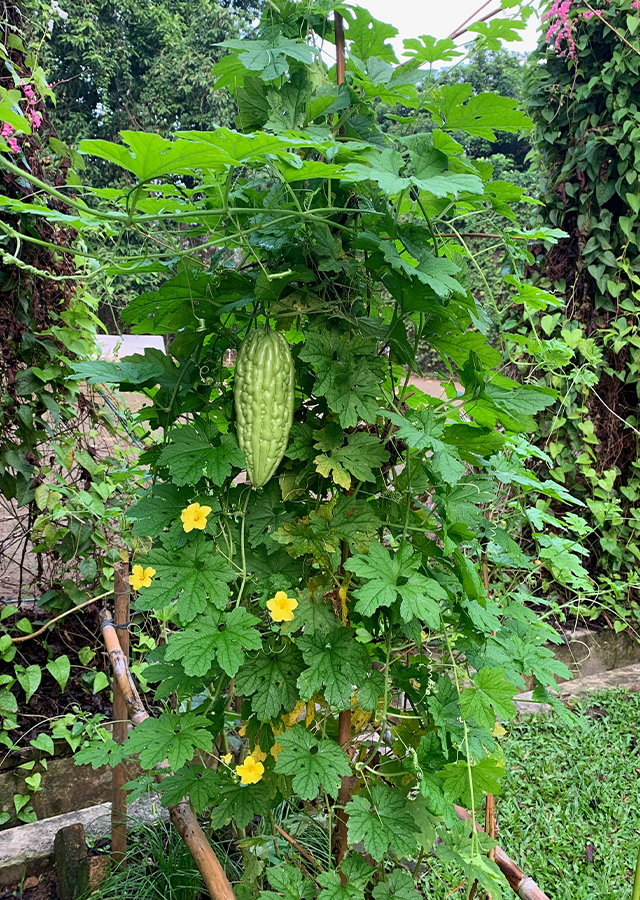
- Stem green, hairy, small, long, spiral-shaped tendrils.
- Leaves single, hairy, palmate-shaped, heart-shaped base with a dark green upper surface and light green or yellowish-green underside.
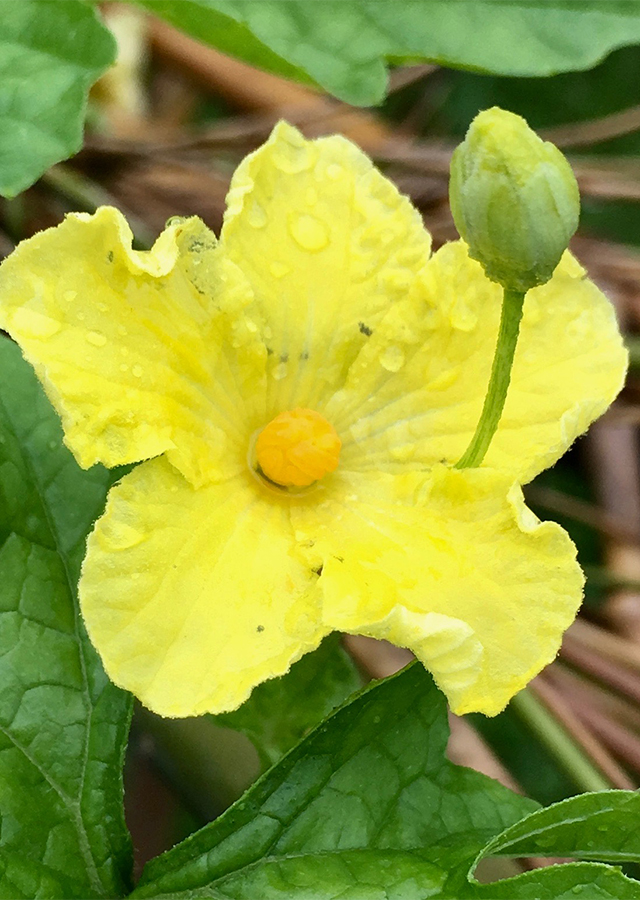
- Flowers single, light yellow corolla.
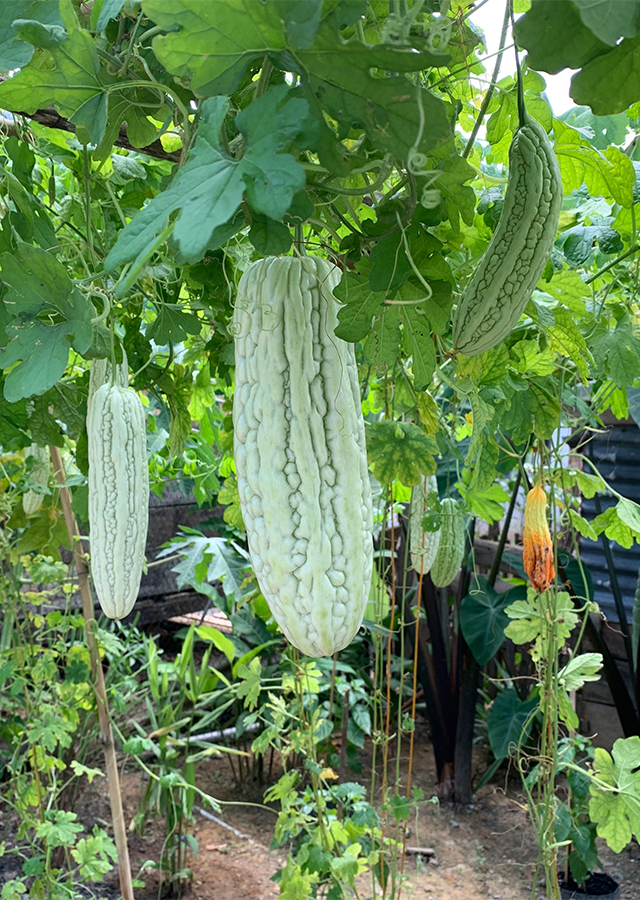
- Fruit oblong, long, green or white with bumps on the skin surface, bitter tasting.
- Seeds numerous, yellowish-brown, flat elongated, hard.
Cultivation
- Propagated using seed taken from ripe fruit. Sow in a polybag. Soil must always be moist, until shoots grow. After 2-4 leaves appear, transplant one plant per polybag.
- Plant directly by putting 2 seeds into a hole 1-2 cm deep, cover with soil. Plant spacing 0.75 x 0.75 m.
Chemical Content
Quinine substance, β-carotene, lutein, lycopene, vicine, thiamine, riboflavine, ascorbic acid, sterols, uracil, cucurbitacins, triterpenoids, p-methoxy benzoic acid, adenosine.
Benefits
Heals diarrhea in infants, treats cough, leprosy and boils, urinary stones, diabetes, expels pinworms, cleanses postpartum blood, and fever reducer.
Local Names
Paria (Sumatra), Pepareh (Java), Prieu, Fori, Pepare, Kambeh, Poya, Pudu, Pentu, and Palia (Sulawesi), Paya kuwuh, Paya kutuh (Bali).
Traditional Recipes
The following recipes reflect traditional knowledge passed down through generations, not a substitute for professional medical diagnosis or advice. Consult a healthcare provider before use.
1. Urinary stones
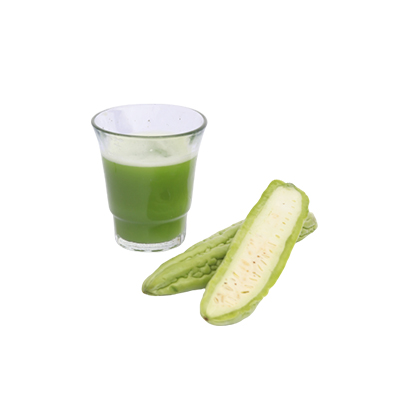
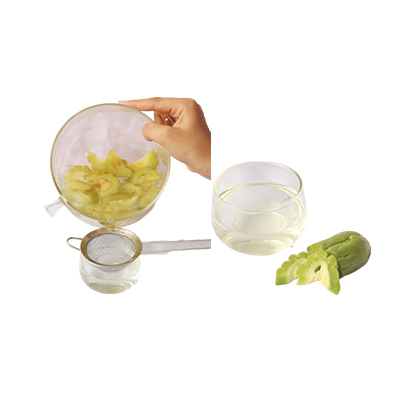
- Grind 100 g bitter gourd and add ½ glass of water, squeeze and strain. Drink all at once.
- Drink 3 times a day.
2. Diabetes
- Wash 200 g fresh bitter gourd thoroughly, then slice thinly.
- Boil the bitter gourd slices with 3 glasses of clean water until reduced to 1 glass then cool and strain.
- Drink the water, do this every day.
Reference Sources
- CABI. (2014). Invasive Species Compendium. Momordica charantia (bitter gourd). https://www.cabi.org/isc/datasheet/34678. 25-02-2021.
- Fern, Ken. (2019). Useful Tropical Plants. Momordica charantia. http://tropical.theferns.info/viewtropical.php?id=Momordica+charantia. 25-02-2021.
- Stuart xchange. (2019). Philippine Medicinal Plants. Ampalaya. http://www.stuartxchange.org/Ampalaya. 25-02-2021.