Morus alba L.
Summary
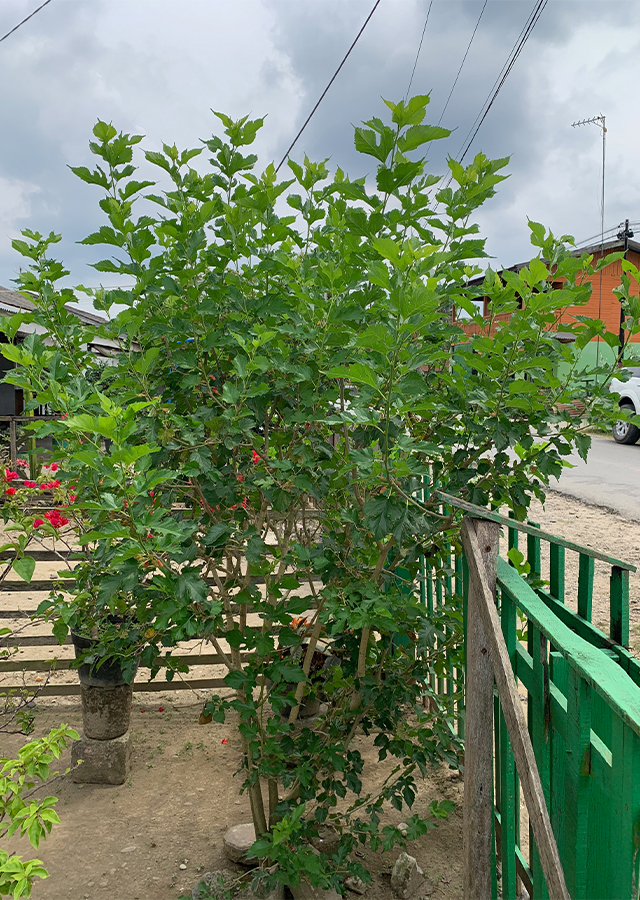
Mulberry (Morus alba) is a tree up to 5-15 meters tall of the Moraceae family, native to the Himalayan mountains, distributed to India, China, and Myanmar, and now cultivated on Java. Its leaves are best known as the primary feed for silkworms in the silk industry. Beyond that, mulberry is traditionally believed to lower high blood pressure, relieve fever, and support skin and eye health.
Agroecology
Grows well in tropical regions at elevations between 300-3,300 m above sea level, average rainfall of 700-2,500 mm/year. Favors fertile soil at pH 5.5-7.5, sandy loam to clay loam soil, well-drained, requiring adequate sunlight, a sufficiently humid region, annual temperature of 20-28 °C, humidity of 65-90%.
Morphology
- Roots taproot.
- Stem covered with yellowish-white spots, diameter up to 15 cm. Height ± 4-5 m.
- Leaves simple, triangular, pointed tip, rough texture, toothed margins, pinnate venation.
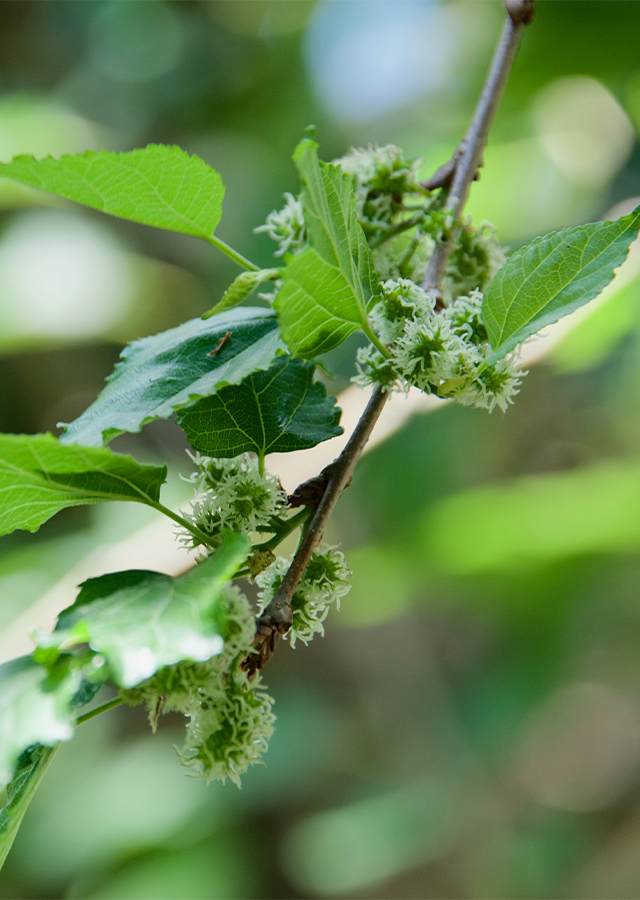
- Flowers compound, growing in the leaf axils.
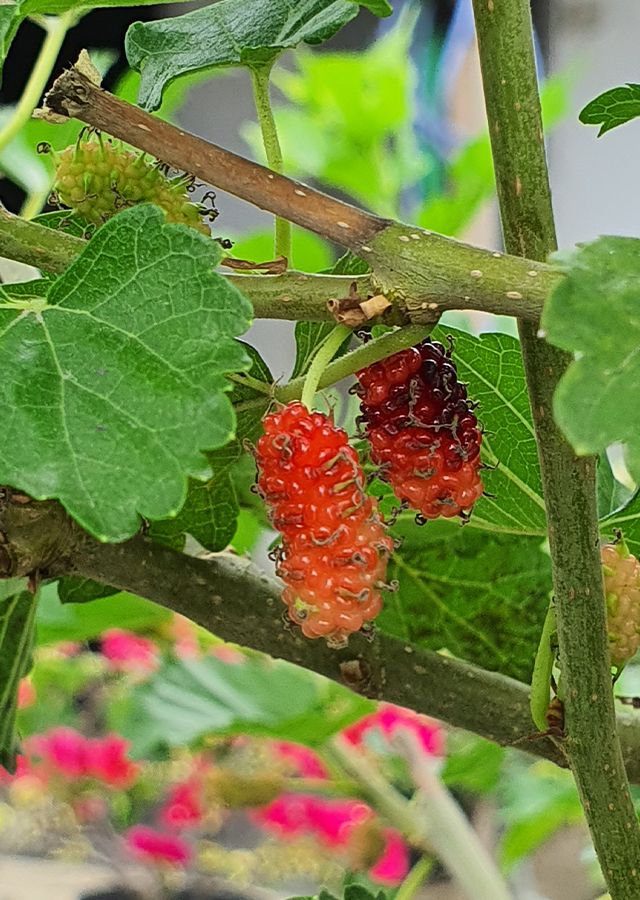
- Fruit green when young, turning purplish-black and sweet when ripe.
Cultivation
- Propagated generatively (by seed), and vegetatively (grafting, air layering, stem cuttings, leaf cuttings, and tissue culture).
- Stem cuttings are the most common method. Select a stem 20 cm long, more than 1 cm in diameter, with 3 or 4 buds.
Chemical Content
Ecdysterone, inokosterone, lupeol, alkaloids, β-sitosterol, rutin, moracetin, isoquercetin, scopoletin, scopolin, α, β-hexenal, cis-β-hexenol, cis-lambda-hexenal, eugenol, benzaldehyde, linalool, benzyl alcohol, butylamine, acetone, trigonelline, folic acid, tannins, anthocyanins, flavonoid polyphenols.
Benefits
Treats fever, malaria, high blood pressure, diabetes, elephantiasis, boils, eye inflammation; heals lower back pain; supports skin and eye health; boosts the immune system; lowers cholesterol; reduces blood fat and treats diabetes.
Simplisia
Not yet available
Local Names
Kerto (Gayo), Kitau (Lampung), Lampuang (Java).
Traditional Recipes
The following recipes reflect traditional knowledge passed down through generations, not a substitute for professional medical diagnosis or advice. Consult a healthcare provider before use.
1. Reducing Blood Fat and Diabetes
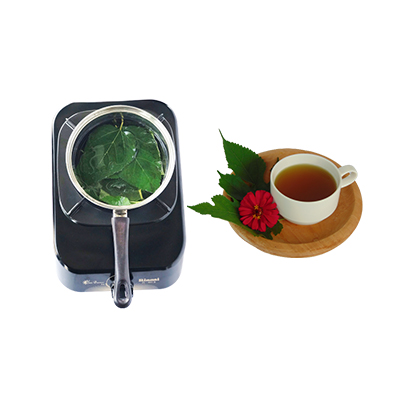
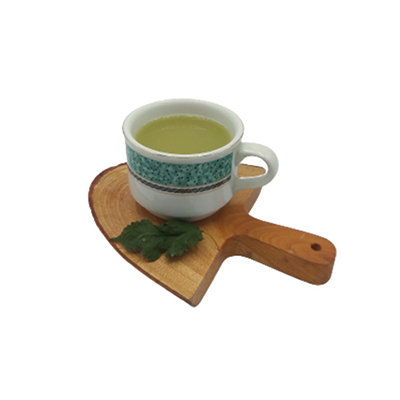
- Infusion: Prepare 30 g of fresh mulberry leaves, boiled in 2 cups of water for 15 minutes.
- Let cool and strain.
- Drink twice a day in equal amounts, morning and evening.
2. Preventing Excessive Night Sweats
- Take 6-9 g of dried mulberry leaf powder, 300 ml rice-washing water.
- Boil the dried mulberry leaves together with the rice-washing water until boiling.
- Remove from heat, let cool, then drink the mixture.
Reference Sources
- Chan EWC, Lye PY, Wong SK. 2016. Phytochemistry, pharmacology, and clinical trials of Morus alba. Chin. J. Nat. Med. 14(1): 17-30.
- Devi B, Sharma D, Kumar D, Jeet K. 2013. Morus alba Linn: a phytopharmacological review. Int. J. Pharm. Pharm. Sci. 5(2): 14-18.
- Omidiran MO, Baiyewu RA, Ademola IT, Fakorede OC, Toyinbo EO, Adewumi OE, Adekunle EA. 2012. Phytochemical analysis, nutrional compotition, and antimicrobial activities of ehite mulberry (Morus alba). Pak. J. Nutr. 11(5):456-460.
- PROSEA. 2016. Morus alba. https://uses.plantnet-project.org/en/Morus_alba_(PROSEA) 12-06-2020.
- Saifudin A. 2014. Pengaruh infusa daun murbei (Morus alba L.) terhadap kadar superoksida dismutase otak dan kemampuan daya inagt tikus putih diabetes kronik. Skripsi. Fakultas Sains dan Teknologi. Universitas Islam Megeri Maulana Maliki Ibrahim Malang. Malang.
- Simon P, Ginting A, Tarigan R, Hutasoit D, Yulistiani. 2013. Karakteristik morfologik dan agronomik serta kualitas nutrisi beberapa spesies murbei. Seminar Nasional Teknologi Peternakan dan Veteriner 2013.