Mucuna pruriens (L.) DC.
Summary
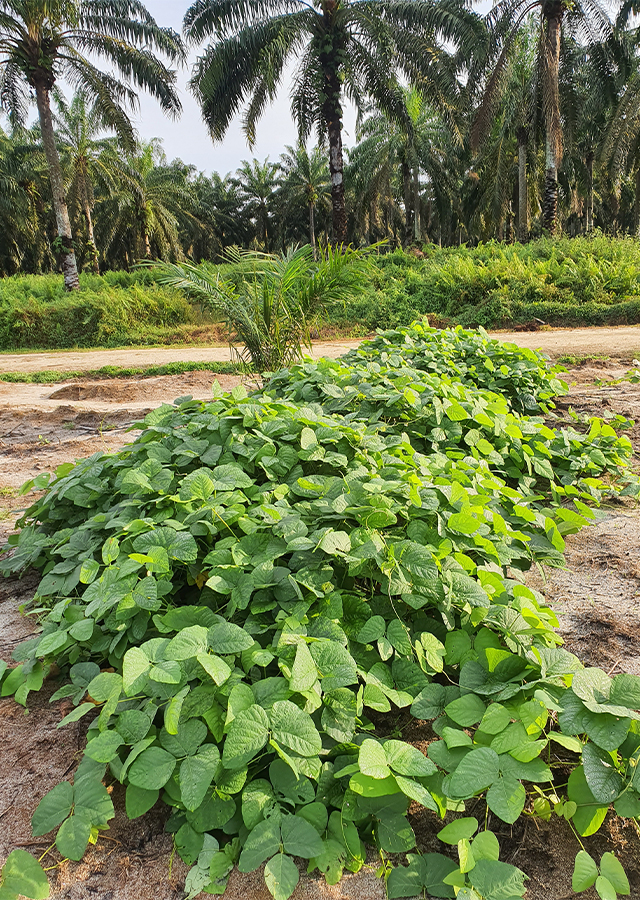
Kacang benguk (Mucuna pruriens) is an annual vine 6-15 meters long of the Fabaceae family, native to India and Africa, widely cultivated in tropical regions. Its L-DOPA content attracts interest from the pharmaceutical industry, while its mature seeds are processed into tempeh as a soybean substitute. Kacang benguk is traditionally believed to be an aphrodisiac and to help reduce tremor symptoms.
Agroecology
Grows in areas up to elevations of 2,100 m above sea level with average daytime temperatures in the range of 20-30°C. Prefers fertile, moist, well-drained soil, and direct or partial sunlight. This plant is found in sandy, loamy, rocky, and volcanic soil with a soil pH of 5-7.
Morphology
- Stem massive, round, green, and finely hairy.
- Leaves trifoliately pinnate, oblong to ovate-shaped, pinnate, green in color.
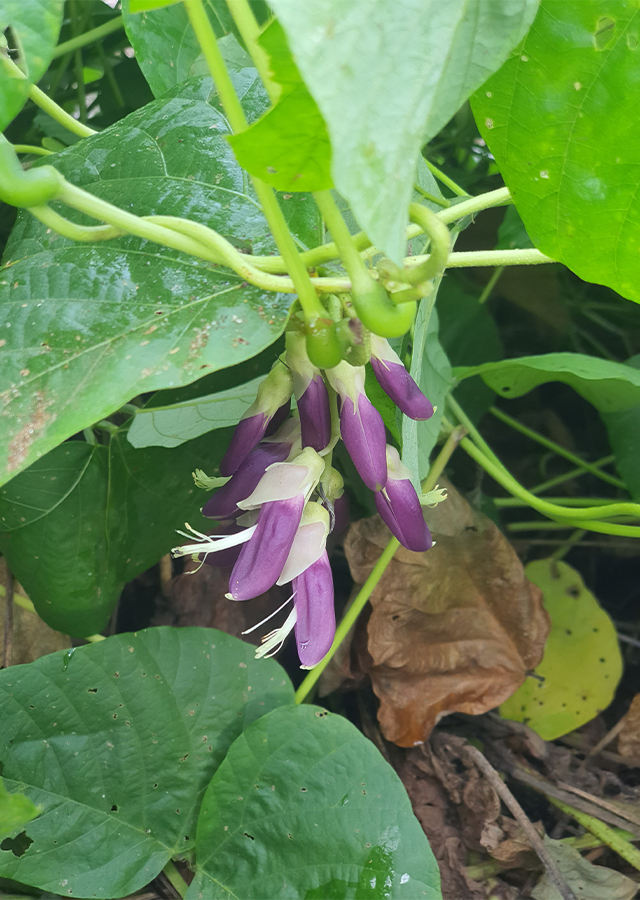
- Flowers compound forming clusters, with gray sepals, purplish or white corolla.
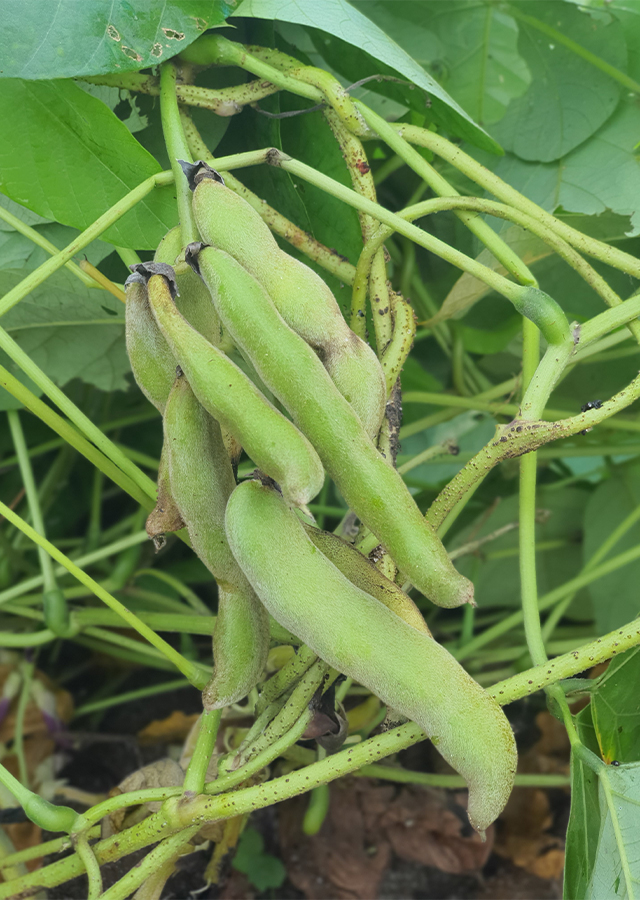
- Fruit a pod clustered on the stem. Pod oblong, 4-15 cm long, consisting of 3-6 seeds, covered with fine thin hair.
- Seeds ovoid, solid, brownish with black speckles.
Cultivation
- Propagated by seed and stem cuttings.
- Mature seeds are used, with good shape and size, dried in the hot sun until dry then placed in a shaded area.
Chemical Content
Alkaloid, prurienine, ß-sitosterol, glutathione, lecithin, venolic acid, tryptamine, alkylamine, steroid, flavonoid, terpenoid, mucunadine, mucunain, essential oil, dopamine.
Benefits
Treats wounds, arthritis, worm infections, cholera, reduces tremor symptoms, addresses erectile dysfunction, as an aphrodisiac and tonic, cough suppressant, blood purifier, fever and cholesterol reducer.
Simplisia
- Prepare fresh pods then wash thoroughly with running water to remove attached dirt.
- Dry for several days.
- Once dry, grind with a blender.
- Place in an airtight or sterile package.
Local Names
Kacang kowas (Sunda), Kekara juleh (Maluku), Bhengok (Madura).
Traditional Recipes
The following recipes reflect traditional knowledge passed down through generations, not a substitute for professional medical diagnosis or advice. Consult a healthcare provider before use.
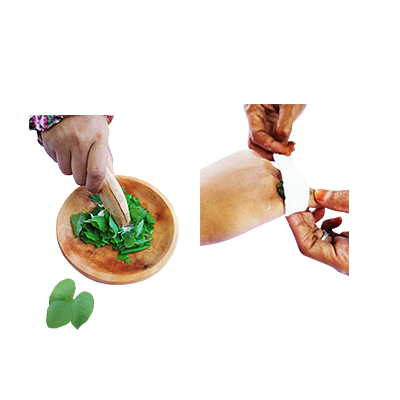
1. Treating wounds
- Wash 10 g fresh Mucuna pruriens leaves thoroughly. Add ¼ g slaked lime, then pound until fine.
- Apply to the wound then bandage with a clean cloth.
Reference Sources
- Echo Community. (No date). Velvet Bean. https://www.echocommunity.org/resources/398d94f4-59aa-4500-b535-a08e67f8d78b. 23-02-2021
- Health Jade. (No date). Mucuna pruriens. https://healthjade.net/mucuna-pruriens/. 23-02-2021
- StuartXchange. (2021). Philippine Medicinal Plants. Nipai. http://www.stuartxchange.org/Nipai.html. 23-02-2021
- Inventaris tanaman obat indonesia (I) jilid 2. 2001. Mengobati Luka Badan penelitian dan pengembangan kesehatan. Depkes.
- Zenodo. 2017. THE TRADITIONAL USES AND PHARMACOLOGICAL ACTIVITIES OF MUCUNA PRURIENS (L)DC: A COMPREHENSIVE REVIEW. https://zenodo.org/record/1007255#.YfyVTNVBzIV 03-02-2021.
- Kronika. Kara Benguk, Gizi Melimpah Tanaman Hampir Punah. http://kronika.id/kara-benguk-gizi-melimpah-tumbuhan-hampir-punah/ 03-02-2021.