Murraya paniculata (L.) Jack
Summary
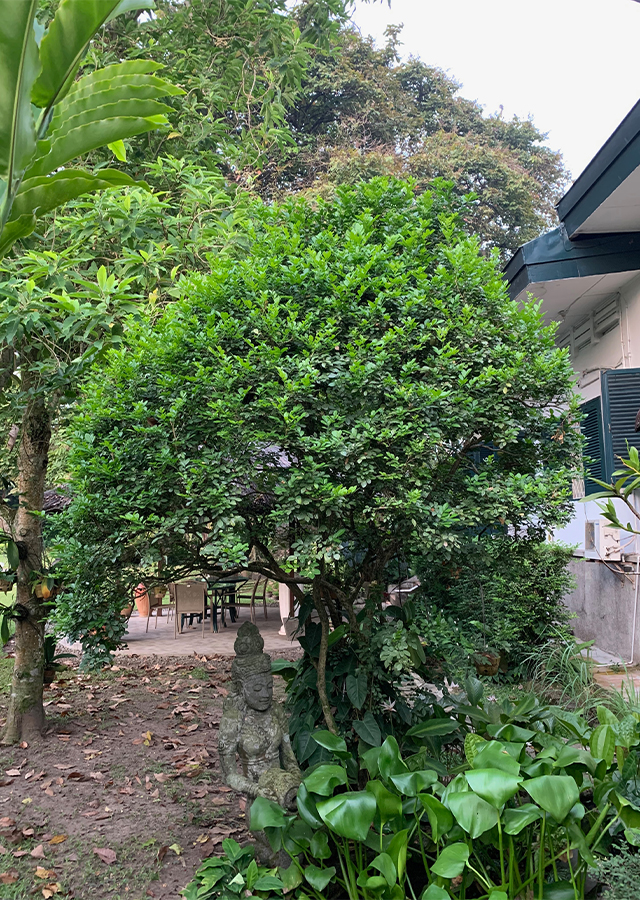
Kemuning (Murraya paniculata) is a shrub up to 1.8-12 meters tall of the Rutaceae family, native to Sri Lanka, India, and Myanmar, now distributed as far as Australia. Its sharply fragrant flowers are used to scent tea, while its essential oil is used as a perfume ingredient. Kemuning is traditionally believed to lower blood cholesterol and relieve dysentery.
Agroecology
Grows up to elevations of 400 m above sea level. Its growth does not require too much sunlight and is not dry. Usually grows wild at forest edges or in house yards. Prefers fertile loamy soil with an acidic to alkaline pH.
Morphology
- Stem hard, ridged, thornless.
- Leaves compound arranged spirally, leaflets stalked, opposite, ovate or oblong, tip and base tapering, edges flat, smooth surface, glossy, green.
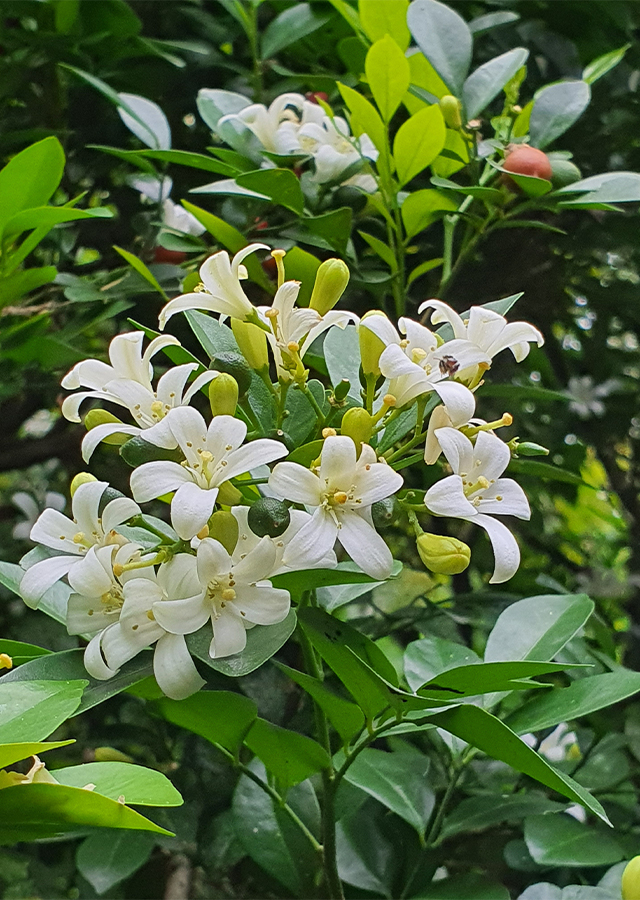
- Flowers compound, raceme-shaped, fragrant white in color with a spicy, bitter, and warm taste. Emerges from leaf axils or twig tips.
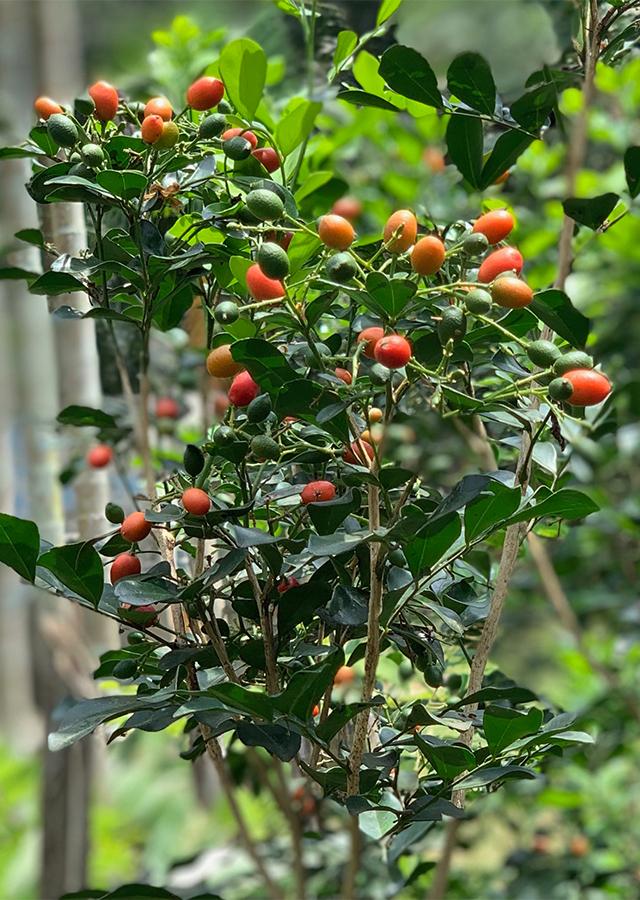
- Fruit a fleshy berry, oblong round, green when young, orange to red when ripe, has 2 seeds.
Cultivation
Propagated through seed, air layering and stem cuttings. Seedling selection from seeds comes from fruit that has turned dark red.
Chemical Content
Murrmeranzin, isopropylidene, murrangatin, muralonginal, pranferin, coumarin, alkaloid, scopolamine, heptamethoxy, flavonoid, saponin, tannin.
Benefits
Lowers blood cholesterol, remedy for dysentery, diarrhea, intestinal worms, swelling, improves blood circulation, rheumatism, fever reducer, urinary tract infections, antibacterial, anti-inflammatory, antiobesity.
Simplisia
- Separate the leaves from the stem. Wash with water thoroughly then drain.
- Dry for 3-5 days directly in the sun.
- Pack the simplisia in a clean, airtight container.
Local Names
Kamuniang (Minangkabau), Kamuning (Sunda), Kuning (Bali), Kemuni (Bima), Kemiuning (Sumba), Palopo (Bugis), Fanasa (Aru), Kamoni (Ambon).
Traditional Recipes
The following recipes reflect traditional knowledge passed down through generations, not a substitute for professional medical diagnosis or advice. Consult a healthcare provider before use.
1. Testicular inflammation
- Wash 60 g fresh kemuning leaves and 35 g sambiloto thoroughly.
- Boil together with 3 glasses of water until boiling and reduced to 1 glass, remove and cool, then strain.
- Drink the concoction twice a day, ½ glass each time. Do this regularly every day until recovered.
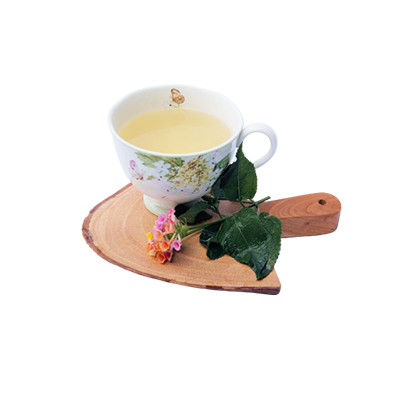
2. Swelling
- Prepare 3 g kemuning leaves and 6 g lantana root. Boil the ingredients with 150 ml water until the water is reduced to 100 ml then strain.
- Drink once a day, 100 ml. Do this for 7 days.
- For maintenance, drink 3 times a week, 100 ml.
Reference Sources
- Chowdury JU, Bhuiyan MdNI, Yusuf M. 2004. Chemical composition of the leaf essential oils of Murraya koenigii (L.) Spreng and Murraya paniculata (L.) Jack. Bangladesh J. Pharmacol. 3: 59-63.
- Gautam MK, Goel RK. 2012. Exploration of preliminary phytochemical studies of leaves of Murraya paniculata (L.). Int. J. of Pharm. & Life Sci. 3(8): 1871-1874.
- PROSEA. 2016. Murraya paniculata. https://uses.plantnet-project.org/en/Murraya_paniculata_(PROSEA) 07-06-2019
- Sayar K, Paydar M, Murphy BP. 2014. Pharmacological properties and chemical constituents of Murraya paniculata (L.) Jack. Med. Aromat. Plants. 3(4): 173-179.
- Tihurua EF, Astuti IP, Rugayah. 2012. Anatomi helaian daun Murraya spp. (rutaceae) di Jawa. Berita Biologi. 11(3): 411-419.