Musa acuminata cv. Raja Udang (AAA)
Summary
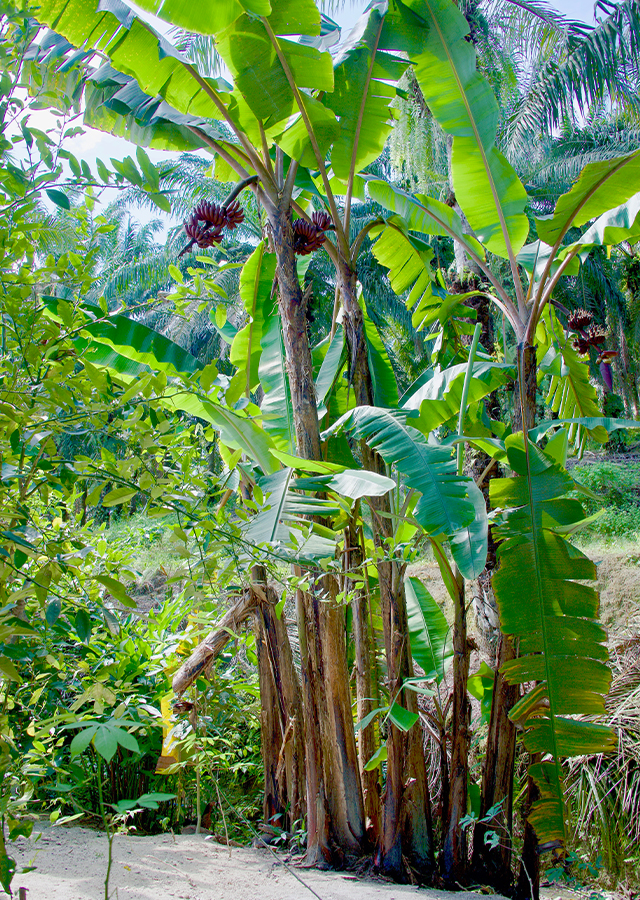
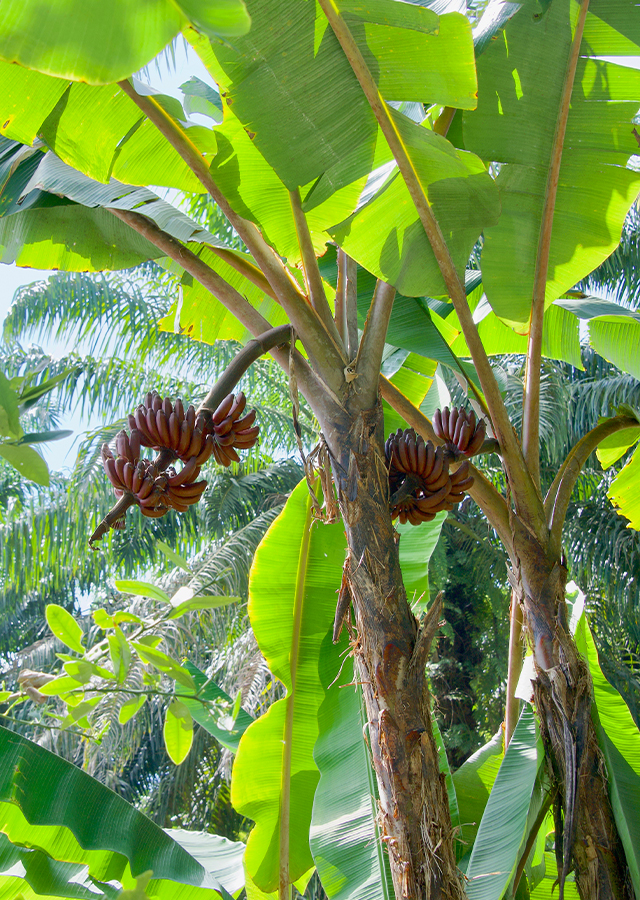
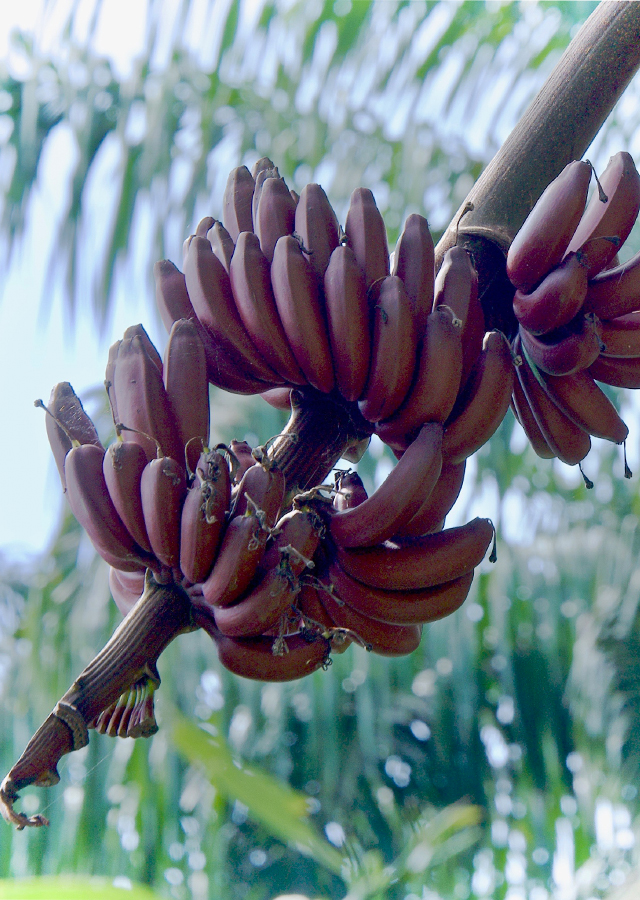
Pisang merah or red banana (Musa acuminata cv. Raja Udang) is a herb 3-7 meters tall of the Musaceae family, with its estimated gene center at the Malay Peninsula, now spread from India to South America. Its purplish-colored fruit is nutrient-dense and popular as a healthy snack. Red banana is believed to help lower blood sugar levels and address anemia.
Agroecology
Grows well in soil with a light (sandy) or heavy (clay) texture and prefers well-drained soil. Generally easily found in semi-shaded places (light forest) or without shade, in hot humid tropical climates, especially lowlands at elevations of 100 m above sea level.
Morphology
- Roots fibrous, root growth moves and gathers toward the sides of the tree for 4-5 m.
- Stem there are 2 types, namely true stem and pseudostem.
- Leaves oblong, purplish-green, wide and long. Has fibrous leaf veins with compact leaf edges.
- Flowers perfect, at the base for female flowers, while in the middle for male flowers. Flower position at the axil between bracts is called banana blossom.
- Fruit has flesh that is cream to pink colored (young fruit), skin dark red or maroon colored when ripe. Fruit size smaller, thicker skin and longer storage life compared to yellow bananas
Cultivation
- Propagated vegetatively through offshoots.
- Select offshoots 100-150 cm tall.
- Planting holes are made approximately 30 x 40 cm in size with a planting distance of 2-3 m.
Chemical Content
Flavonoids, phenolics, anthocyanins, β carotene, saponins, tannins, α-amylase, α-glucosidase, amylopectin, 2-heptyl acetate, isoamyl acetate, 2-methylbutyl acetate, 2-heptyl hexanoate, alkaloids, terpenoids, phlobatannin.
Benefits
Has antioxidant activity, lowers blood sugar levels, addresses diarrhea, anemia, jaundice, lowers cholesterol, high blood pressure and body weight, prevents cancer, reduces stress and heart disease risk.
Simplisia
Not available
Local Names
Pisang tembaga (Karo), Pisang ungu (Java), Pisang utan (Malay), Pisang timbago
Traditional Recipes
The following recipes reflect traditional knowledge passed down through generations, not a substitute for professional medical diagnosis or advice. Consult a healthcare provider before use.
1. Diarrhea
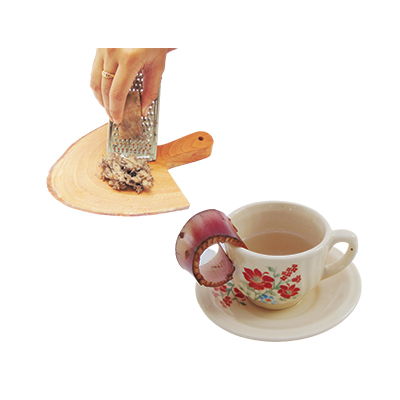
- Grate the red banana corm and take 1/2 glass of its liquid.
- Drink 3 times a day.
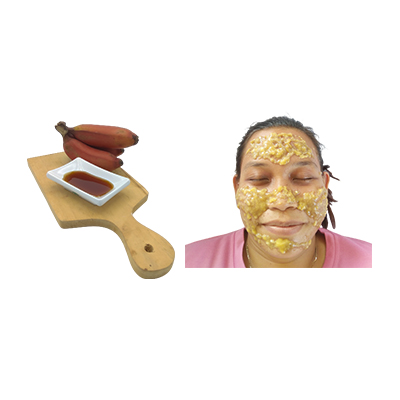
2. Jaundice
- Prepare an adequate amount of red banana.
- Mash the banana in a container, add a few drops of honey to make a smoother paste.
- Apply the mask to the face and neck and leave for 20 minutes.
- Rinse thoroughly.
Reference Sources
- Bennet R, Shiga N, Hassimotto NA, Rosa SS, Lajolo F, Cordenunsi A. 2010. Phenolics and antioxidant properties of fruit pulpand cell wall fractions of Postharvest Banana (Musa acuminata Juss.) cultivars. J. Agric. Food Chem. 58(13):7991-8003
- Edenta C, Okoduwa SIR, Okpe O. 2017. Effects of aqueous extract of three cultivars of banana (Musa acuminata) fruit peel on kidney and liver function indices in wistar rats. Medicine. 4(77): 2-7.
- Fu X, Cheng S, Liao Y, Huang B, Bing Du B, Zeng W, Jiang Y, Duan X, Yang Z. 2018. Comparative analysis of pigments in red and yellow banana fruit. Food Chemistry 329: 1009, 1018.
- Lim TK. 2012. Fruits Musa acuminata (AAA Group) 'Red'. Edible Medicinal And Non-Medicinal Plants 3: 531-534.
- Onyema CT, Ofor CE, Okudo VC, Ogbuagu AS. 2016. Phytochemical and antimicrobial analysis of banana pseudo stem (Musa acuminata). B.J.P.R. 10(1): 1-9
- Prosea. 2016. Musa acuminata. https://uses.plantnet-project.org/en/Musa_acuminata_(PROSEA) 07-06-2019