Mussaenda frondosa L.
Summary
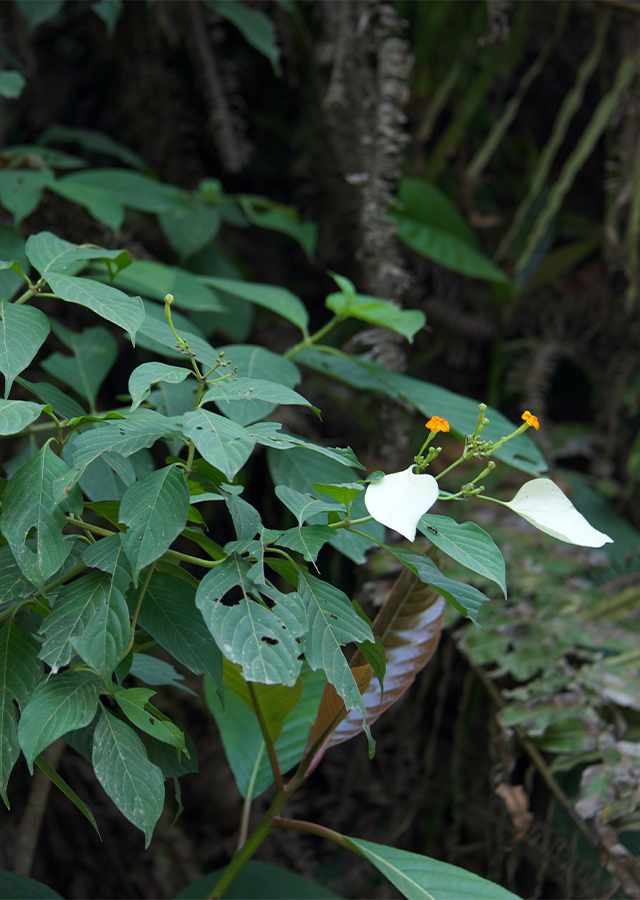
Nusa indah hutan (Mussaenda frondosa) is a shrub up to 3 meters tall of the Rubiaceae family, distributed from India and China to Malaysia and Indonesia. Its enlarged, white calyx can be eaten as a salad, besides being popular as a yard ornamental plant. Traditionally, nusa indah hutan is also believed to help address jaundice, asthma, and boils.
Agroecology
This plant is often found in house yards as an ornamental plant. Grows well up to elevations of 1,200 m above sea level and lives wild in shrubland or on hillsides. Grows up to elevations of 1,700 m above sea level. Prefers full sunlight with neutral soil pH and warm temperatures (subtropical areas). Tolerant of semi-dry conditions.
Morphology
- Roots taproot, yellowish-white in color.
- Stem round shaped, heavily branched, rough surface, grows upright.
- Leaves single, opposite, elliptical to lance-shaped, hairy surface, reddish-green color, leaf length 5-14 cm and leaf width 1.5-5.5 cm.
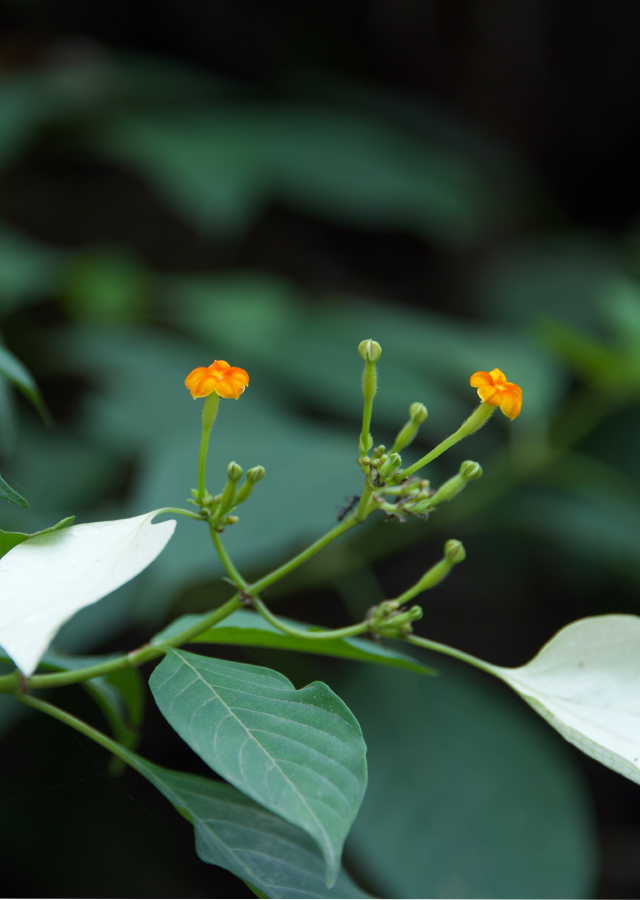
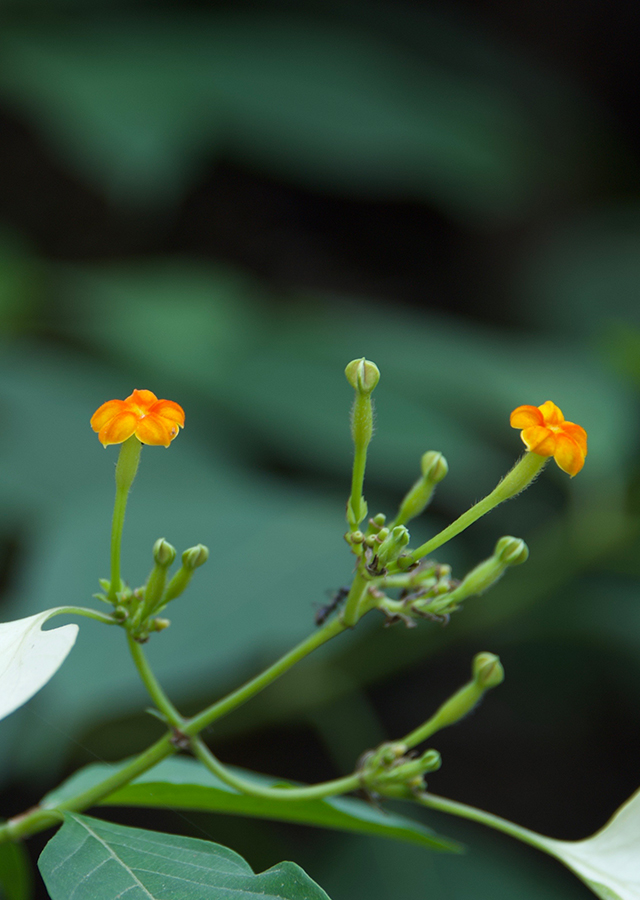
- Flowers compound, trumpet-shaped, emerging at the stem tip, petals yellow or orange in color, asymmetrical.
- Seeds lance-shaped, small in size, brown.
Cultivation
Propagated generatively (by seed) and vegetatively (stem cuttings). Cutting technique, diagonal, about 30 cm in size.
Chemical Content
β-sitosterol, alkaloids, flavonoids, saponins, β-stigmasterol, arjunolic acid, tannins, glycosides, steroids and resin.
Benefits
Prevents breast cancer, treats jaundice, asthma, fever, boils, leprosy, diuretic, cough, wounds, diarrhea, eye ailments, worm remedy.
Simplisia
- Select fresh, undamaged leaves. Wash the leaves with clean running water then drain.
- Dry using a dark cloth covering the leaves to avoid direct contact with sunlight or use an oven (temperature 50-60°C).
- Dry-sort to remove unwanted foreign material. Store the dried material in a container/plastic bag, at room temperature.
Local Names
Daun putri (Malay), Kingkilaban, Areuy siwurungan (Sunda), Kalik adep (Java).
Traditional Recipes
The following recipes reflect traditional knowledge passed down through generations, not a substitute for professional medical diagnosis or advice. Consult a healthcare provider before use.
1. Canker Sores
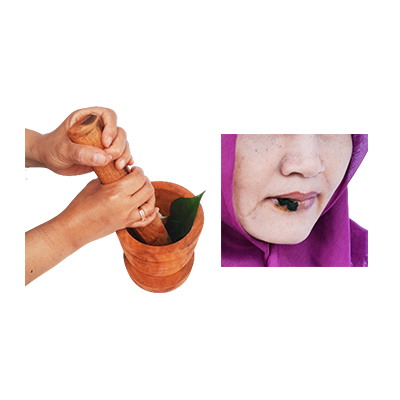
- Prepare 2-3 young leaves or white flowers, 10 g young coconut, 2-3 betel leaves.
- Mix all ingredients then pound until fine. Apply to the area affected by canker sores