Myrmecodia pendens Merr. & L.M.Perry
Summary
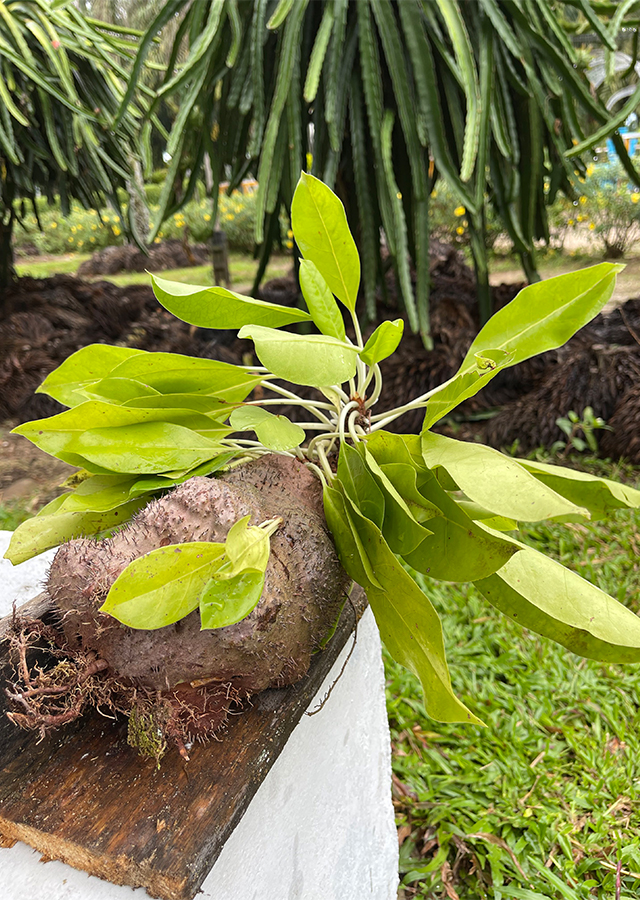
Sarang semut (Myrmecodia pendens) is an epiphyte about 50 cm long from the Rubiaceae family, a medicinal plant native to Merauke, Papua, that grows hanging on a host tree associated with an ant colony. The unique tunnels within its tuber are thought to be the source of its special medicinal compounds. The indigenous people of Papua have used sarang semut for generations to treat cancer, tumors, and coronary heart disorders.
Agroecology
Able to live in secondary forest areas and former cultivation areas at elevations of 250 to 2,500 m asl. This plant is also commonly found in mangrove forests and trees around coastal areas at elevations up to 2,400 m asl. Besides these areas, this plant is also often found in grassland areas and open agricultural areas, at elevations around 600 m asl, and is rarely found in lowland tropical forest. This plant grows attached to hosts with rough-barked trunks, bushy tree habits, open areas, and close to rivers (somewhat moist). In the regions of Papua, Sumatra, and Kalimantan, this plant is generally found as an epiphyte on several trees such as cajuput trees, kaha trees, beech trees, pine trees, tamarind trees, gala-gala trees, bayuan trees, kasturi trees, pulai, banyan, and others. The host trees of this plant are generally distributed throughout the tropical landmass, i.e. areas with high abiotic factors including high rainfall, air temperature, humidity and light intensity, soil, and tropical environmental physiographic conditions.
Morphology
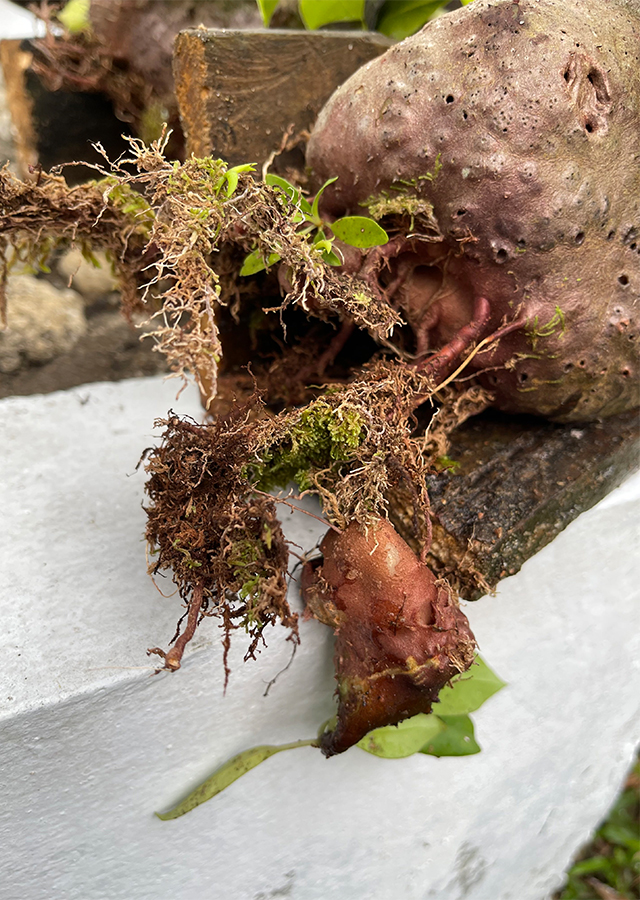
- Roots attached to the host tree, dangling on the plant's branches.
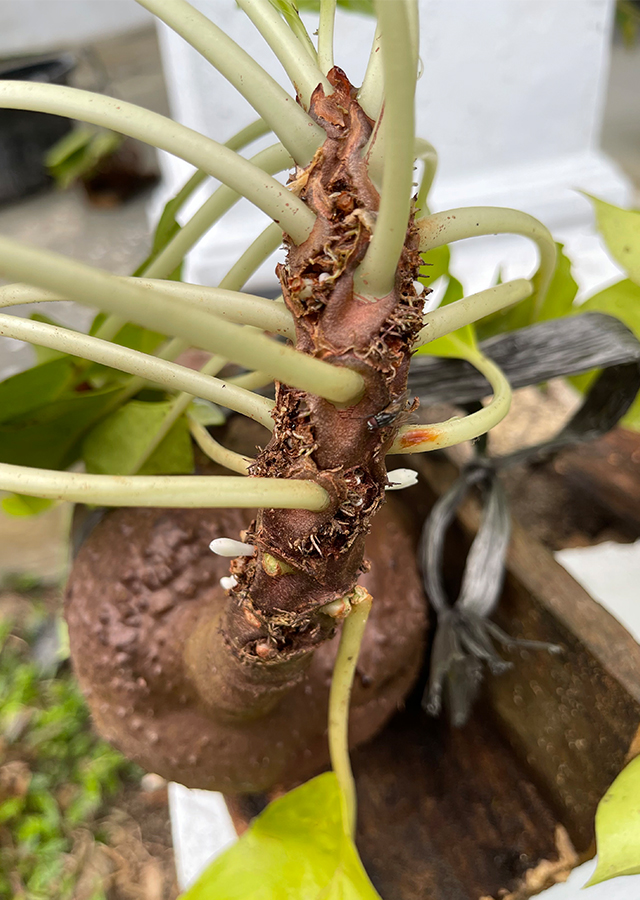
- Stem thick, unbranched, with short internodes, brown to grayish, base of the stem swollen (hypocotyl) resembling a tuber, round when young, later becoming shortened-oblong or elongated with age. The interior of the stem is hollow and compartmentalized, resembling a labyrinth and commonly used as a dwelling for ant colonies. This tuber-like stem sometimes attaches to the host plant, sometimes hangs. It is covered with cleopoles and alveoli with spines that function to protect it from herbivore predators.
- Leaves simple, petiolate, arranged spreading but mostly clustered at the tip of the stem, and green. Leaf blade thick, oblong shaped with a blunt base and tapering tip, margin entire, leaf surface smooth, veins white.
- Flowers white, the calyx generally split at the tip.
- Fruit berry-shaped, round, and orange.
- Seeds generally 2 per fruit.
Cultivation
- Natural propagation of the sarang semut plant can be done using seeds from the fruit. However, this propagation faces obstacles, as fallen seeds and fruits are carried off and eaten by ants of the species Iridomyrmex cordatus, and the presence of the Dicaeum cruentatum bird that eats the fruit along with the sarang semut seeds when fruiting occurs, so that only surviving seeds can grow. Another obstacle is that sarang semut seeds can only germinate in fresh condition.
- An alternative propagation method for the sarang semut plant is in vitro propagation.
- The growing media used for cultivating this plant is burnt rice husk, cocopeat (chopped coconut coir), fern roots, and moss.
Chemical Content
Flavonoids, tannins, tocopherol, alpha-tocopherol, phenolics, and various minerals (sodium, calcium, zinc, iron, phosphorus, magnesium), polysaccharides.
Benefits
Heals inflammation, addresses muscle pain, coronary heart problems, cancer and tumors (brain, nose, breast, liver, lung, intestinal, uterine, skin, prostate cancer, and blood cancer), diabetes, goiter, nosebleeds, peptic ulcers, hemorrhoids, tuberculosis, rheumatism, gout, stroke, gastritis, kidney function disorders, promotes breast milk flow, increases sexual desire for both men and women, regulates menstruation, and addresses vaginal discharge. Has anti-inflammatory, antioxidant, anticancer, and antibacterial activity.
Simplisia
- Prepare an adequate amount of sarang semut plant.
- Slice thin then dry under the sun for 2 x 24 hours.
- Grind using a blender until it becomes powder.
- Store in a clean, airtight container.
Local Names
Nongon (Papua), Urek - urek polo (Jawa), Kepala beruk dan Rumah semut (Sumatra).
Traditional Recipes
The following recipes reflect traditional knowledge passed down through generations, not a substitute for professional medical diagnosis or advice. Consult a healthcare provider before use.
1. Treats cancer
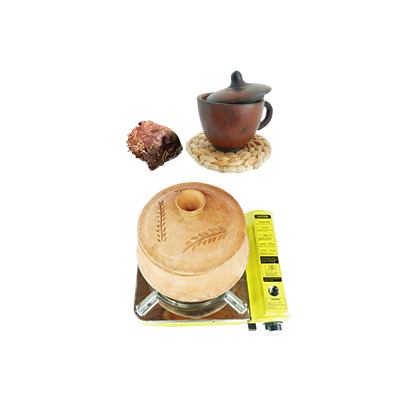
- Prepare an adequate amount of sarang semut tuber.
- Slice thin then dry in the sun.
- Boil with 3 glasses of water until 1 glass remains.
- Drink regularly three times a day.
Reference Sources
- Royal Botanic Gardens. Plants of the World Online: Myrmecodia pendens Merr. & L.M.Perry. https://powo.science.kew.org/taxon/urn:lsid:ipni.org:names:328917-2. 28-03-2022.
- Dinas Kesehatan Provinsi Papua. 2016. Tumbuhan Obat Tradisional Papua: Berdasarkan Kearifan Lokal Masyarakat. Nulis Buku Jendela Dunia.
- Kusumanegara A., Pribadi E. Y., Jannah A. M., Yuniar N., Utomo H. S., Ngara D. A. N. 2020. Menyingkap Rahasia Jenis-Jenis Tumbuhan Obat di Taman Nasional Matalawa Sumba-Nusa Tenggara Timur. Balai Taman Nasional Manupeu Tanah Daru dan Laiwangi Wanggameti.
- Wabia E., Siburian R. H. S. 2019. Profil Tempat Tumbuh Sarang Semut (Myrmecodia spp.) di Distrik Manokwari Selatan Papua Barat. EnviroScienteae 15(1): 91-94.
- Crisnaningtyas F., Rachmadi A. T. 2010. Pemanfaatan Sarang Semut (Myrmecodia pendens) Asal Kalimantan Selatan Sebagai Antibakteri. Jurnal Riset Industri Hasil Hutan 2(2): 31 - 35.
- Nugroho R. A. dkk. 2019. Myrmecodia: Efek Fisiologi dan Potensi Manfaat. Deepublish.