Nepenthes gracilis Korth.
Summary
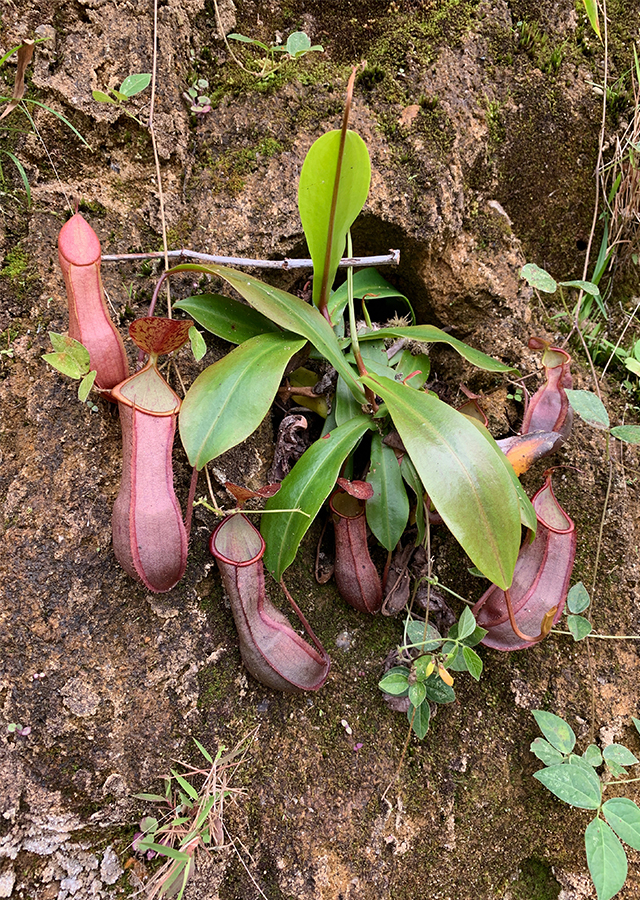
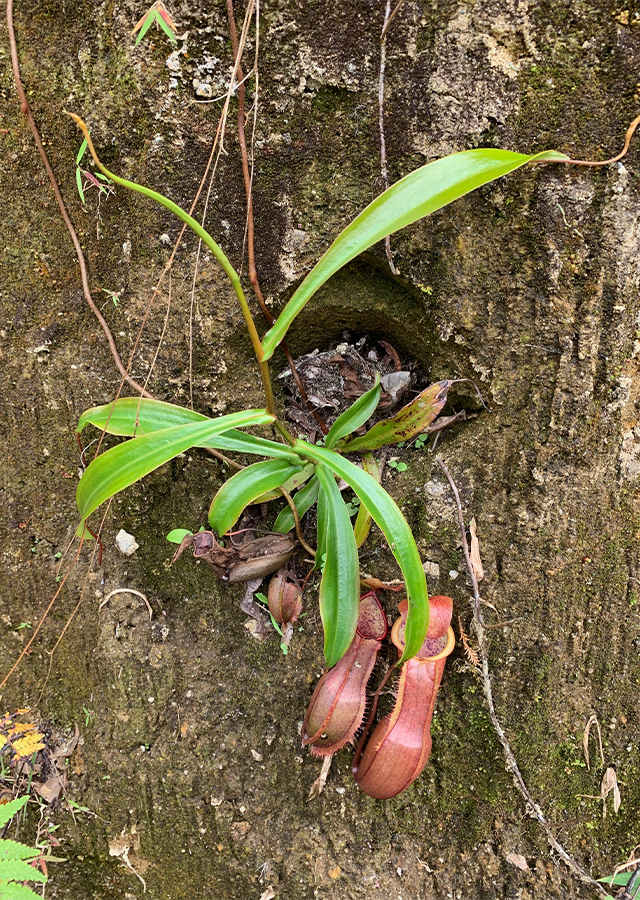
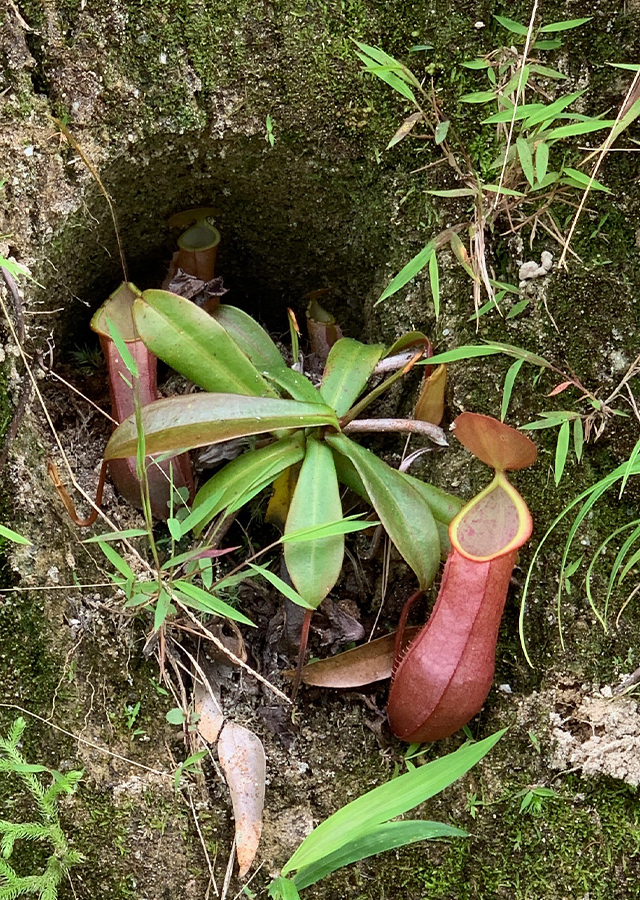
Pitcher plant (Nepenthes gracilis) is an epiphytic climbing plant up to 5 meters long of the Nepenthaceae family, distributed across Indonesia, Malaysia, Thailand, and Singapore, with the largest populations in Kalimantan, Sumatra, and Sulawesi. As a carnivorous plant, the uniquely shaped pitcher at the tip of its leaf functions to trap and digest insects as an additional nutrient source. Beyond its uniqueness as an ornamental, the pitcher plant is also traditionally used to relieve asthma, cough, and stomach ache.
Agroecology
Generally lives in extreme locations on marginal, nutrient-poor soil. In Indonesia, 7 pitcher plant habitats have been recorded, namely lowland tropical rainforest, mountain forest, peat forest, heath forest, limestone mountains, savanna grassland, swamps, and lakes. Its distribution is very wide, from coastlines to highlands (1,200 m above sea level).
Morphology
- Roots taproot, growing from the base of the stem, elongated with secondary roots, black.
- Stem rough, its shape varies (triangular, square, round, and angular).
- Leaves attached to the stem via a winged petiole. The leaf blade connects with the wing, with a tendril at the leaf tip, 10-25 cm long and 2 cm wide.
- Pitcher has 3 forms: rosette pitcher, lower pitcher, and upper pitcher. The pitcher is green, red, or green with red spots.
- Flowers compound, arranged on the stem. Each flower consists of 4 nectar-bearing tepals.
- Fruit capsule-shaped with seeds inside.
Cultivation
- Propagated generatively (by seed) and vegetatively (by stem cuttings, offshoot separation).
- Seeds are sown in a mixed medium of cocopeat and burnt husk, or a tissue culture medium.
- Seedlings are moved to pots once they reach a sufficient size of about 4 leaves.
- The plant should be placed in a location with about 20-50% shade.
Chemical Content
Flavonoids, triterpenoids, phenolics (plumbagin, isoshinanolone, epishinanolone, shinanolone, quercetin, kaempferol), lipophilic compounds.
Benefits
Treats cancer, asthma, diabetes, dry throat or as a cough remedy, stomach ache, eye pain; treats burns; reduces fever; acts as an astringent (refreshing solution).
Simplisia
- Wash the leaves thoroughly under running water. Air-dry the material for several days until completely dry.
- Pound the material into a coarse powder.
- Store in an airtight container/plastic, away from sunlight.
Local Names
Entuyut (Kalimantan).
Traditional Recipes
The following recipes reflect traditional knowledge passed down through generations, not a substitute for professional medical diagnosis or advice. Consult a healthcare provider before use.
1. Dry Throat or Cough
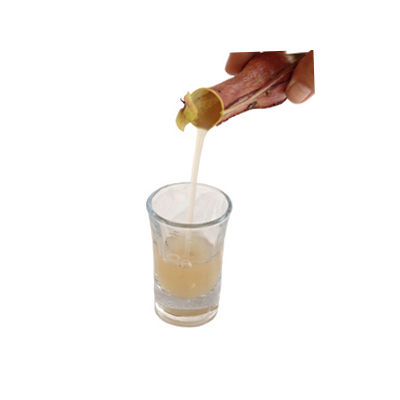
- Drink directly the liquid contained in a still-closed pitcher.
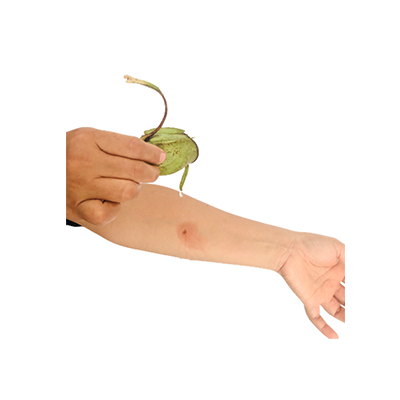
2. Treating Burns
- Take 2-5 ml of the liquid from the pitcher plant.
- Apply to the burn 4-5 times a day.
Reference Sources
- Biteau N, Nisse E, Miguel S, Hannnewald P, Bazile V, Gaume L, Mignard B, Hehn A, Bourdgaud F. A simple SDS-PAGE protein pattern from pitcher secretions as a new tool to distinguish Nepenthes species.
- Biswal DK, Debnath M, Konhar R, Yanthan S, Tandon P. 2018. Phylogeny and Biogeography of Carnivorous Plant Family Nepenthaceae With Reference to the Indian Pitcher Plant Nepenthes khasiana Reveals an Indian Subcontinent Origin of Nepenthes Colonization in South East Asia During the Miocene Epoch. Front. Ecol. Evol. 6: 108.
- Cheek M, Jebb M. 2014. Expansion of the Nepenthes alata group (Nepenthaceae), Philippines, and descriptions of three new species. Blumea 59(2): 144–154 www.ingentaconnect.com/content/nhn/blumea.
- Gwee PS, Khoo KS, Ong HC, Sit NW. 2014. Bioactivity-guided isolation and structural characterization of the antifungal compound, plumbagin, from Nepenthes gracilis. Pharm. Biol. 52(12): 1526–1531.
- Kissinger, Rina Muhayah NP, Ervizal A. Zuhud, Latifah K Darusman, dan Iskandar Z Siregar. 015. Analisis Fungsi Nepenthes Gracilic Korth. Terhadap Lingkungan Hutan Kerangas. Jurnal Hutan Tropis 3(1).
- Kissinger. 2013. Bioprospeksi Hutan Kerangas: Analisis Nepenthes gracilis Korth. Sebagai Stimulus Konservasi. Tesis. Sekolah Pasca Sarjana Institut Pertanian Bogor. Bogor.
- Kumar YK, Haridasan S, Rao RR. 1980. Ethnobotanical notes on certain medicinal plants among some Garo people around Balphakram Sanctury in Meghalaya. Bull Bot Surv India 22:161–165.
- Rodzali, M.M., M.M. Mydin. Antibacterial activity of leaves and pitchers extract of Nepenthes gracilis against Bacillus subtilis and Escherichia coli. J. Fundam. Appl. Sci. 9(6): 81-88.
- Satu Harapan.com. 2013. Kantong Semar Tumbuhan Unik Penuh Manfaat. http://www.satuharapan.com/read-detail/read/kantong-semar-tumbuhan-unik-penuh-manfaat 12-10-2019.