Nepenthes mirabilis (Lour.) Druce
Summary
Nepenthes mirabilis or swamp pitcher plant is the pitcher plant species with the widest distribution compared to its relatives, stretching from Hainan in the north to Cape York in the south, and from the Mentawai Islands to Papua New Guinea. In Indonesia, its stem is used by communities as hedge rope, while its unique pitcher shape attracts ornamental plant enthusiasts. The Dayak people traditionally also use this plant, listed as Least Concern by the IUCN (2006), as a remedy for stomach ulcers and high blood pressure.
Agroecology
Swamp pitcher plant is commonly found growing in swamp forests, coastal areas, and among Gleichenia, Melastoma, and Dipteris shrubs. This species generally grows from lowlands to mountains at elevations up to 2,200 m asl. This plant prefers watery or moist places such as swamps, riverbanks, or around rice fields. Swamp pitcher plant grows well in areas with an air temperature range of 27.5-32°C, soil temperature 26-27°C, soil moisture above 80%, air humidity 80-81%, and soil pH 6-6.2.
Morphology
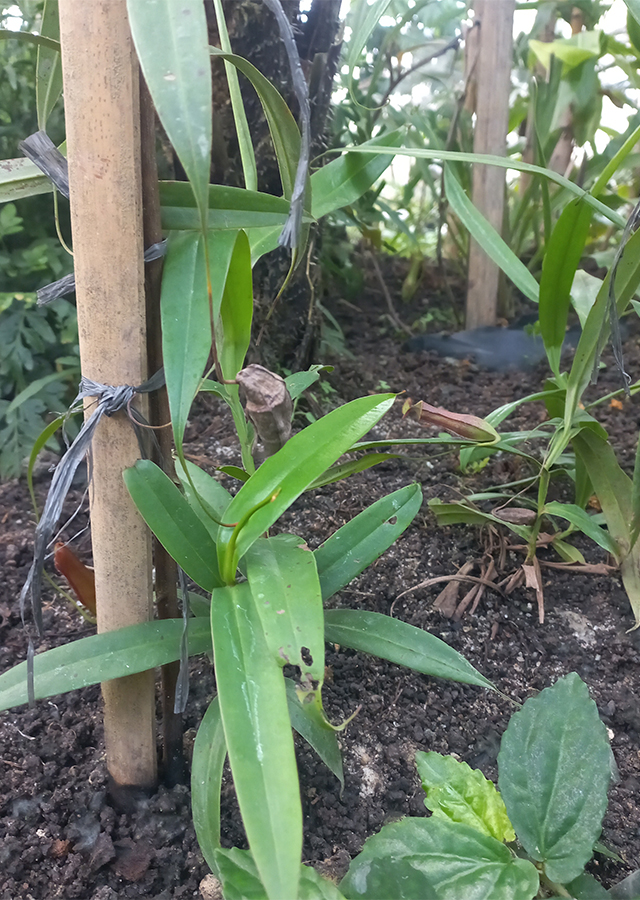
- Stem round (teres), smooth, strong with clear internodes, stem green-yellow and red.
- Leaves oblong to lanceolate shaped, petiolate, tip acute, base attenuate, margin entire, covered with fine hairs. Number of leaves per individual ranges from 7-48. Adaxial (upper surface) and abaxial (lower surface) lamina red, yellowish green, reddish green. Petiole colored red, reddish yellow, and yellowish green. Tendril 7.4-18 cm long, located in front of, beside, and behind the pitcher.
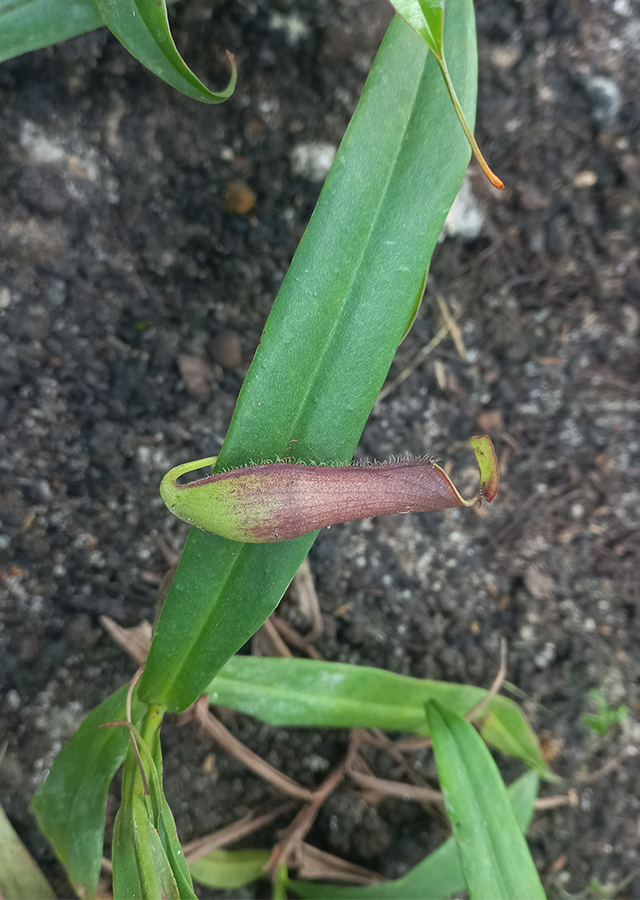
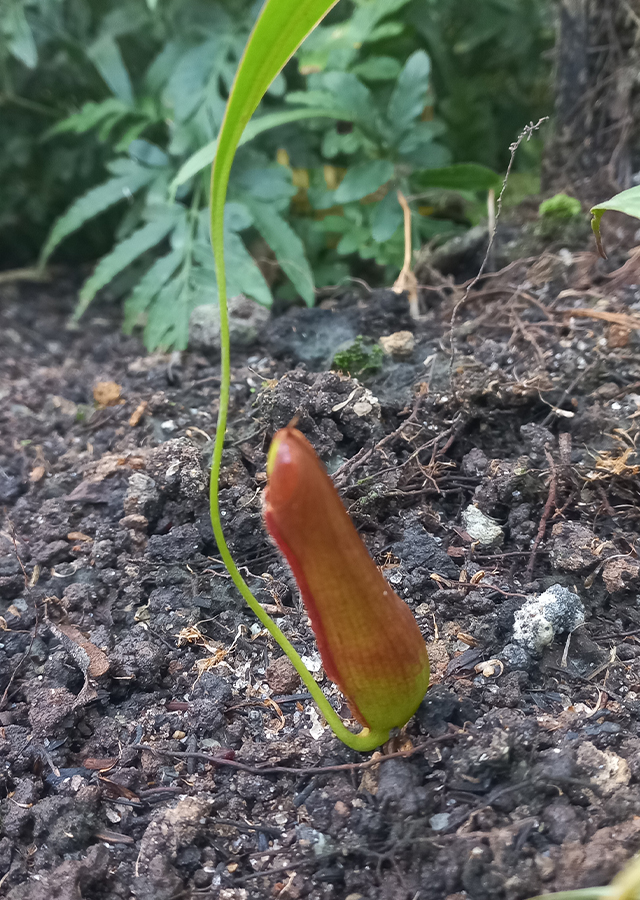
- Pitcher cylindrical, infundibulate, waisted, lid shape orbicular and ovate, while the mouth shape is orbicular and cordate. Number of pitchers per individual ranges from 8-45. Pitcher colored red, reddish green, and yellowish green. Lower pitchers have wings, while upper pitchers are wingless. Peristome thick, 0.4-0.5 cm in size, colored yellow, red, and yellowish green. Peristome teeth prominent, numbering about 104-218.
- Flowers compound, raceme type. Rachis length and peduncle length of male flowers longer than the rachis and peduncle length of female flowers. Number of raceme flowers ranges from 110-193. Tepals orbicular and red. Filaments form a column with anthers at the tip. Anthers arranged in 3 whorls, numbering 32. Stigma 1 in number, ovary superior with four lobes.
- Fruit a capsule, yellowish green, with four lobes, containing many seeds.
- Seeds spindle-shaped, white, numbering about 340 seeds per fruit.
Cultivation
- Plant propagation is generative through seed and vegetative through stem cuttings.
- Propagation through stem cuttings uses stems from plants already one year old. Cut the stem 15 cm long and leave 3-4 leaf nodes, and cut half of each leaf blade to prevent evaporation. Then plant the stem cutting in planting media. Before planting, the bottom of the stem cutting should first be coated with a root-stimulating hormone and fungicide.
Chemical Content
Flavonoids (quercetin, quercetin 3-O-β-D-glucuronide, quercitrin, kaempferol-3-O-α-L-rhamnoside, and (-)-epicatechin), leucoanthocyanin (cyanidin), nepenthosides A, nepenthosides B, leonuriside A, koaburaside, 4-hydroxy-2,6-dimethoxyphenyl 6'-O-vanilloyl-β-D-glucopyranoside, (-)-heimiol A, phenylethyl-β-D-glucopyranoside, icariside D1, rutinoside, syringaresinol, syringaresinol-4'-O-β-D-glucopyranoside, pinoresinol-4-O-β-D-glucopyranoside, lupeone, two naphthoquinones (nepenthones F and nepenthones G), five naphthoquinones (droserone, plumbagin, 3-methoxy-7-methyljuglone, 2-methoxy-7-methyljuglone, nepenthone C, acetogenictetralone), cis-isoshinanolone.
Benefits
Treats stomach ulcers, jaundice, high blood pressure, ureteral stones, hepatitis, breast tumors, headache, hemorrhoids, birth control.
Local Names
Information not found. Further research is needed.
Traditional Recipes
The following recipes reflect traditional knowledge passed down through generations, not a substitute for professional medical diagnosis or advice. Consult a healthcare provider before use.
1. Headache
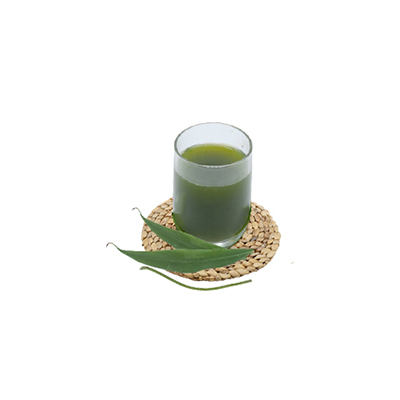
- Take an adequate amount of swamp pitcher plant stem and leaves and wash until clean.
- Grind both ingredients then squeeze.
- Drink the squeezed liquid to reduce headache.
Reference Sources
- Royal Botanic Gardens. Plants of the World Online: Nepenthes mirabilis (Lour.) Druce. https://powo.science.kew.org/taxon/urn:lsid:ipni.org:names:603761-1. 15-08-2022.
- Sanusi et al. 2017. Ethnobotanical, Phytochemical, and Pharmacological Properties of Nepenthes Spesies: A Review. Asian Journal Pharmaceutical and Clinical Research, Vol 10, Issue 11, 2017, 16-19.
- Due R. 2013. Etnobotani Tumbuhan Obat Suku Dayak Pesaguan dan Implemetasinya Dalam Pembuatan Flash Card Biodiversitas. Artile Penelitian. Universitas Tanjungpura. Pontianak.
- Adi A. C. A., Lestari D. P. Elsa, Saputri F. S. 2022. Design of information system of traditional ethnomedicine Dayak Tribe
in West Borneo. BIO-INOVED : Jurnal Biologi-Inovasi Pendidikan 4(2): 126-133. DOI: 10.20527/bino.v4i2.12366. - Wardana S. T., Ilmawati I., Tanzerina N., Juswardi, Aminasih N., Harmida. 2019. Morphological Characteristics of Nepenthes in Peat Swamp Area of Tulung Selapan, South Sumatera. BIOVALENTIA: Biological Research Journal, 5(2).
- Handayani T. 2001. Nepenthes spp. Koleksi Kebun Raya Bogor yang Berpotensi Sebagai Tanaman Hias. Warta Kebun Raya 3(1) Mei 2001.