Nymphoides indica (L.) Kuntze
Summary
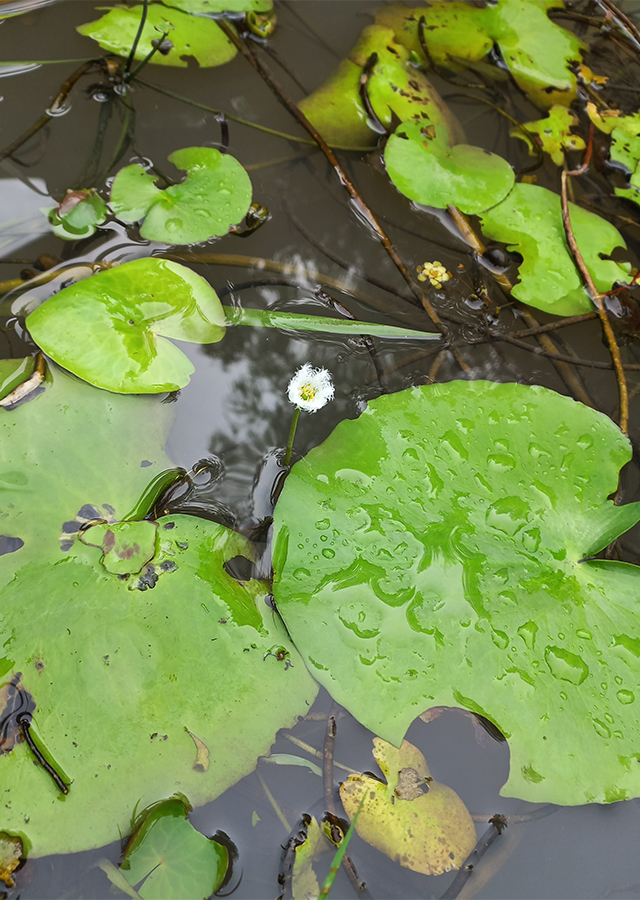
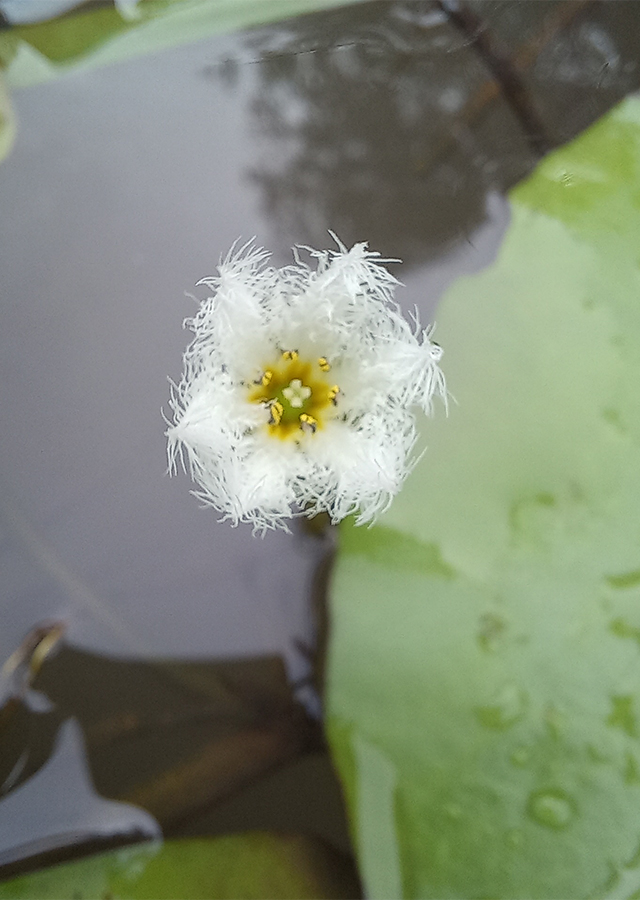
Bunga tetepok (Nymphoides indica) is an aquatic plant up to 2 meters tall from the Menyanthaceae family spread from Nepal to Australia and the Pacific, nicknamed 'water snowflake' in English because of its white flowers resembling snowflakes. In 2011, this flower was designated one of Indonesia's national flowers. Bunga tetepok is traditionally used to relieve headaches and treat fever and dysentery.
Agroecology
Bunga tetepok grows in shallow, standing water, ponds, flooded rice fields, and lake edges, up to an elevation of 1,900 m. This plant prefers full sun but tolerates partial shade. It grows best when its roots are submerged in water 30-60 cm deep.
Morphology
- Roots short stolons, submerged in water, with rhizomes.
- Stem cylindrical, unbranched, yellowish-green.
- Leaves glossy green above and pale below with scattered glands. Leaf blade ovate to subcordate, base heart-shaped, smooth margin, floating on the water surface, thickly fleshy.
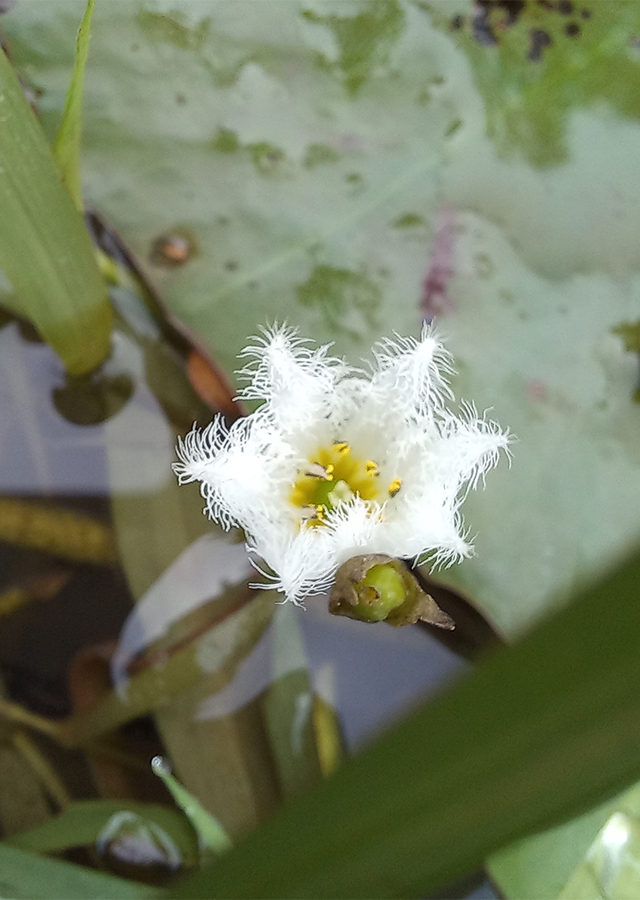
- Flowers numerous, small, star-shaped with five white petals, covered with long white hairs on top with a yellow section in the center. Bunga tetepok flowers rise above the water surface with a stalk of 2-4 cm, slightly fragrant.
- Fruit ellipsoid, containing many seeds.
- Seeds smoothly round, pale brown.
Cultivation
Propagation generatively (seeds) or vegetatively (leaf and stem cuttings).
Chemical Content
5 lipophilic compounds (azelaic (nonanedioic) acid, 4-methyl-heptanedioic acid, hexadecanoic acid, stearic acid, and hexadecanol fatty alcohol), 3 seco-iridoids (7-epiexaltoside, 6″,7″-dihydro-7-epiexaltoside, menthiafolin), flavonoids (3,7-di-O-methylquercetin-4'-O-β-glucoside, 3-O-methylquercetin-7-O-β-glucoside, 3,7-di-O-methylquercetin, quercetin 3,7-dimethyl ether 4′-glucoside), scopoletin, ferulic acid, monoterpenoids foliamenthoic acid, and 6,7-dihydrofoliamenthoic acid methyl ester.
Benefits
Treats dysentery, scabies, snake bites, jaundice, headaches, fever, rheumatism, gallbladder problems, swelling, has antipyretic, anticonvulsant (preventing or treating seizures), aphrodisiac, antimicrobial, antiprotozoal, antioxidant, and mild-to-moderate antidiabetic properties.
Simplisia
- Take fresh bunga tetepok plant and wash until clean.
- Dry under direct sunlight or using an oven.
- Once the leaves are completely dry, store in a well-closed container protected from light to maintain the quality of the preparation.
Local Names
Teratai sudamala (Bali), Bunga telepok, Bunga telipuk, Tarate, Teratai bulu ayam.
Traditional Recipes
The following recipes reflect traditional knowledge passed down through generations, not a substitute for professional medical diagnosis or advice. Consult a healthcare provider before use.
1. Headache
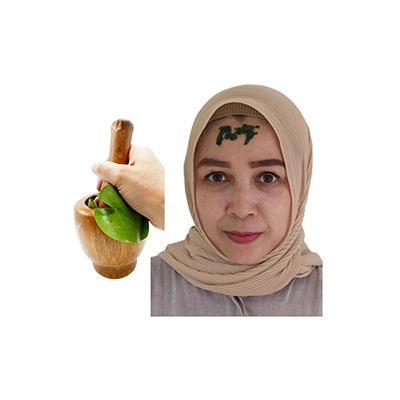
- Take bunga tetepok leaves as needed and wash until clean.
- Mash the leaves into a paste.
- Apply the leaf paste to the forehead to relieve headaches.
2. Fever
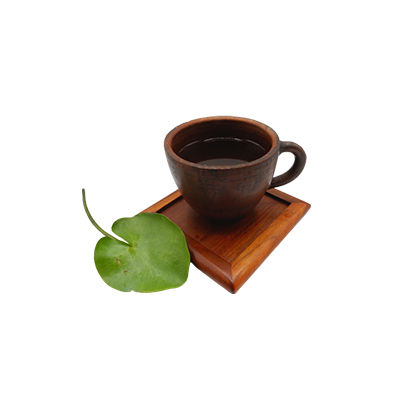
- Take the bunga tetepok plant and wash until clean.
- Boil the plant until boiling.
- Strain the decoction.
- Drink to cure fever.
Reference Sources
- Biodiversity Warriors. 2017. Artikel: Water snowflake (Nymphoides indica). https://biodiversitywarriors.kehati.or.id/artikel/water-snowflake-nymphoides-indica/. 24-09-2021.
- Royal Botanic Gardens. 2021. Plants of the World Online: Nymphoides indica (L.) Kuntze. http://powo.science.kew.org/taxon/1182548-2. 24-09-2021.
- Flora Fauna Web. 2019. Nymphoides indica (L.) Kuntze. https://www.nparks.gov.sg/florafaunaweb/flora/2/2/2272. 24-09-2021.
- Useful Tropical Plants Database. 2021. Nymphoides indica. http://tropical.theferns.info/viewtropical.php?id=Nymphoides+indica. 24-09-2021.
- Amin A et al. 2016. Phytochemical and Pharmacological Investigations on Nymphoides indica Leaf Extracts. Phytotherapy research 30(10):1624-1633. [diakses 24 September 2021]. https://pubmed.ncbi.nlm.nih.gov/27282639/
- Kim Y A et al. 2018. Article: Anti-Inflammatory and Skin-Moisturizing Effects of a Flavonoid Glycoside Extracted from the Aquatic Plant Nymphoides indica in Human Keratinocytes. Molecules 23. doi:10.3390/molecules23092342.
- Swapna et al. 2011. Review: A review on the medicinal and edible aspects of aquatic and wetland plants of India. Journal of Medicinal Plants Research 5(33): 7163-7176. DOI: 10.5897/JMPRx11.005.