Nypa fruticans Wurmb
Summary
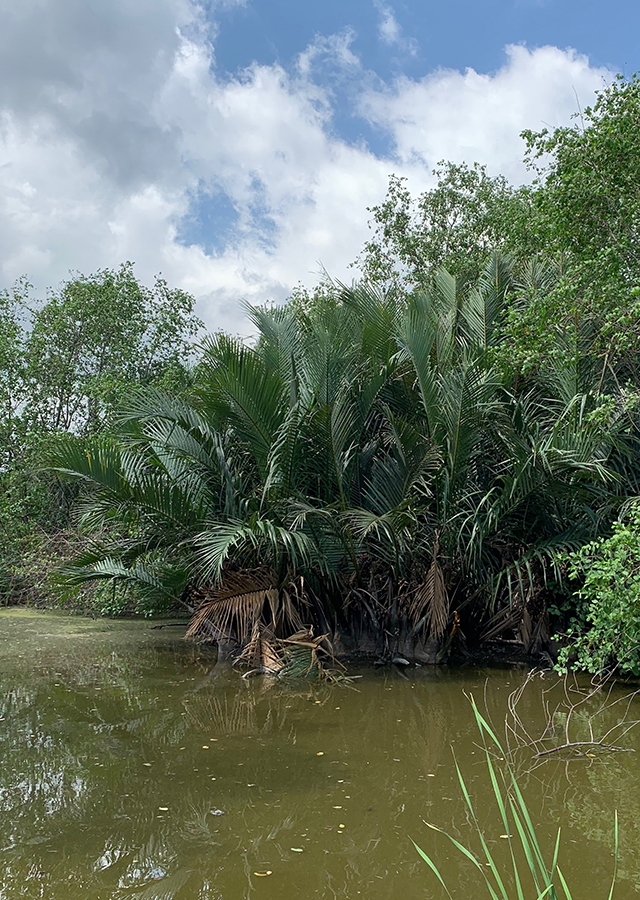
Nipah (Nypa fruticans) is a palm up to 10 meters tall of the Arecaceae family that grows along the coasts of the Indian and Pacific Oceans, distributed from Bangladesh and India to Japan and Indonesia. Its broad leaves are woven into roofing, baskets, and mats, while its young shoots can be eaten. Traditionally, nipah is also believed to aid digestion and act as an antidote.
Agroecology
Generally grows in brackish swamp areas or tidal areas near the coast, mangrove forest environments with an acidity level of pH 6-6.5. This plant prefers a humid climate, with rainfall of more than 100 mm/month throughout the year, air temperature 20-35 °C. Able to grow in areas with somewhat fresh water and tolerant of somewhat dry land.
Morphology
- Roots fibrous and long.
- Stem creeps underground and forms a rhizome.
- Leaves compound, young leaves yellow, old leaves green.
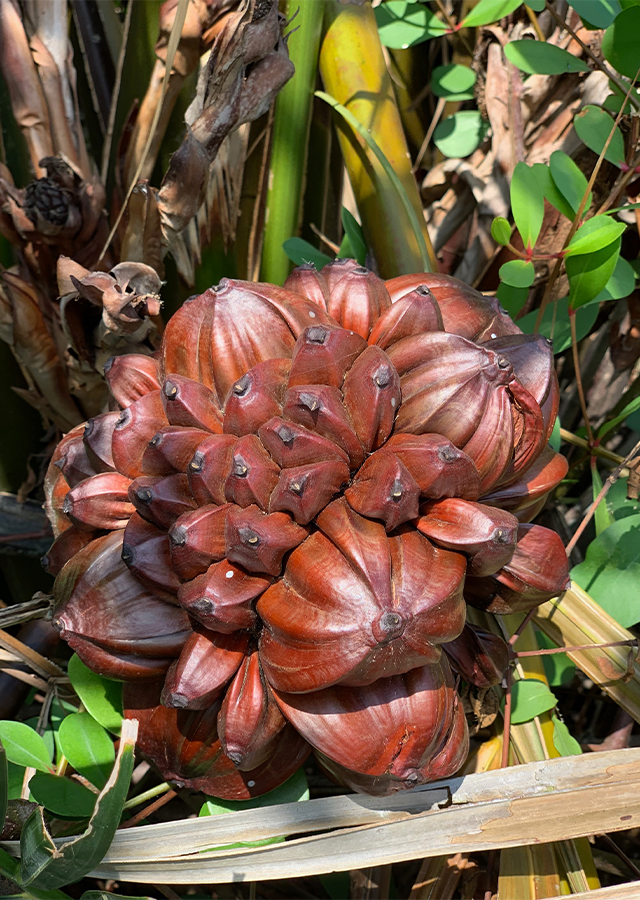
- Flowers compound emerging from leaf axils, male flowers arranged in a panicle and female flowers clustered at the tip forming a ball.
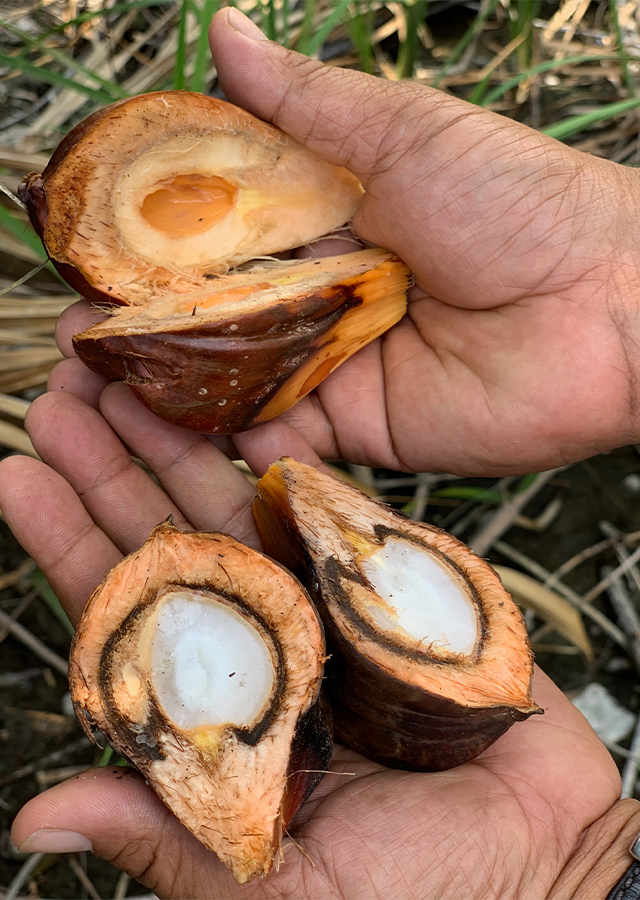
- Fruit egg-shaped and flattened.
Cultivation
- Propagated using fruit.
- Generally propagates naturally and is rarely cultivated.
Chemical Content
Essential amino acids (histidine, arginine, threonine, valine, methionine, isoleucine, leucine, phenylalanine and lysine), alkaloids, steroids, triterpenoids, flavonoids, tannins, polyphenols, chlorogenic acid, kaempferol.
Benefits
Aids digestion, fever reducer, antidote, sedative, cough, sore throat, anticancer, headache remedy, and toothache.
Simplisia
Not yet available
Local Names
Buyuk (Java, Bali), Bobo (Manado), Parenga, Pureno (Maluku).
Traditional Recipes
The following recipes reflect traditional knowledge passed down through generations, not a substitute for professional medical diagnosis or advice. Consult a healthcare provider before use.
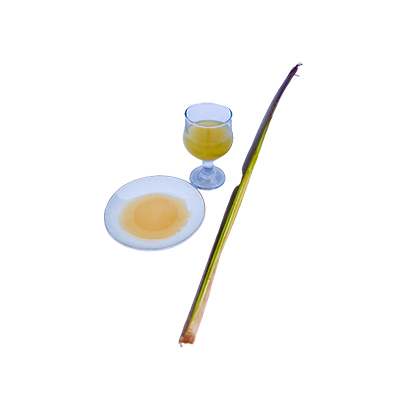
1. Cough
- Prepare an adequate amount of young nipah leaf shoots (still budding).
- Crush the material and pound then squeeze out the liquid.
- Mix the squeezed liquid with honey then drink.
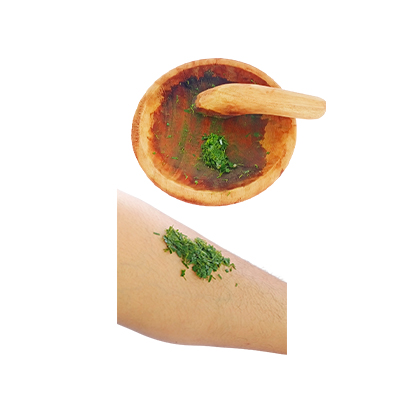
2. Boils
- Prepare an adequate amount of leaves.
- Mash the leaves until mashed.
- Apply to the affected area.
Reference Sources
- Siregar SB . 2012. Analisis finansial serta prospek pengolahan buah nipah (Nypa fructians) menjadi berbagai produk olahan. Skripsi. Fakultas Pertanian. USU: Medan.
- https://www.healthbenefitstimes.com/know-about-the-nipa-palm 20-06-2020 (Bisul)