Ochna serrulata (Hochst.) Walp.
Summary
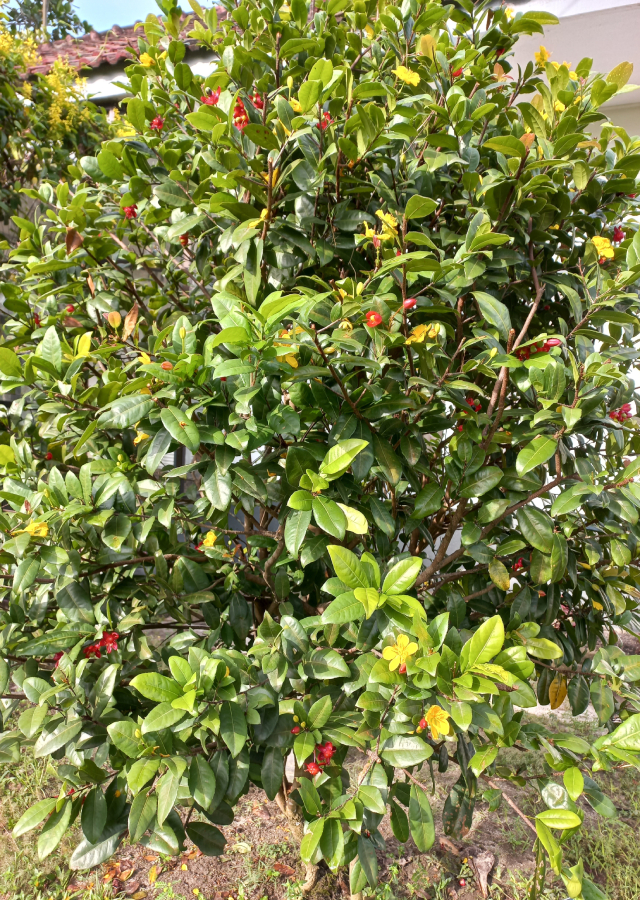
Mickey mouse (Ochna serrulata) is a shrub up to 1.5 meters tall from the Ochnaceae family that originates from South Africa, widely cultivated as an ornamental and living hedge. In Vietnam, its flowers are considered lucky flowers for the new year because they bloom only once a year. The Zulu people in South Africa traditionally use a decoction of its root to treat children with bone disease.
Agroecology
This plant has good adaptability, growing well in open areas as well as in dense forest. Requires full sun to partial shade. Initially the plant grows very slowly, but once established will grow quickly. The suitable climate is an area with temperatures never below -2 °C. This means this plant does not tolerate frost or ice.
Morphology
- Roots taproot.
- Stem round, upright, dark brown color, monopodial branching.
- Leaves simple, alternate, narrowly elliptical, up to 5 cm long, with a finely serrated margin, blade stiff and glossy dark green.
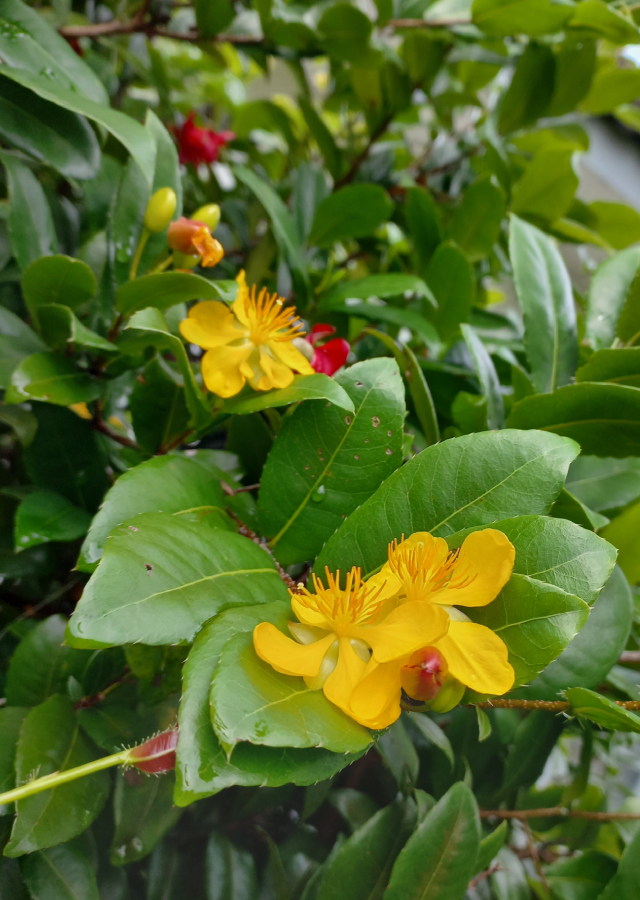
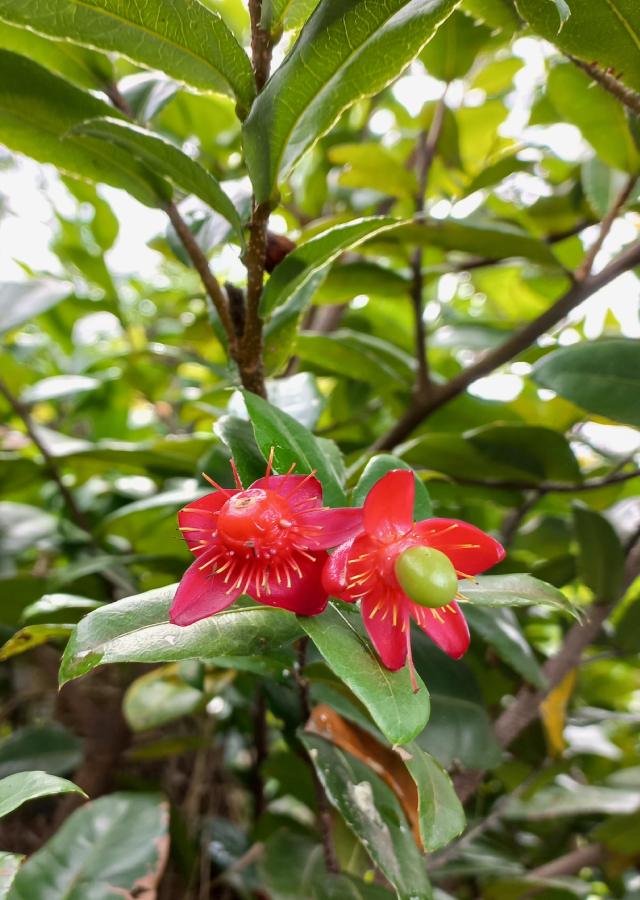
- Flowers large, up to 4 cm, with yellowish-green persistent sepals, turning red on the fruit, petals yellow and 5-lobed, numerous stamens.
- Fruit a drupe, oblong, red.
- Seeds black.
Cultivation
Propagated by seed and cuttings using stem cuttings of medium maturity (neither too old nor too young).
Chemical Content
4,4′,7-tri-O-methylisocampylospermone A, 4′′′-de-O-methylafzelone A, and serrulone A; irisolone 4′-methyl ether, 3',4'-dimethoxy-6,7-methylenedioxyisoflavone, iriskumoonin 3′-methyl ether, lophirone L, biflavanone 1, campylospermone A, syringaresinol, 16α,17-dihydroxy-ent-kauran-19-oic acid.
Benefits
Used in wound care, relieving pain, treating children suffering from bone disease or gangrenous proctitis. Has antibacterial, antimalarial, cytotoxic, non-mutagenic activity.
Local Names
Cakar macan, Okna, Okuna kuning, Wahyu tumurun (Java).
Traditional Recipes
The following recipes reflect traditional knowledge passed down through generations, not a substitute for professional medical diagnosis or advice. Consult a healthcare provider before use.
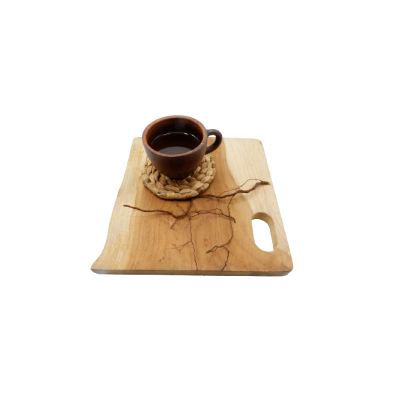
1. Bone disease in children
- Take mickey mouse root as needed and wash until clean.
- Boil the root until boiling.
- Strain the decoction.
- Drink.
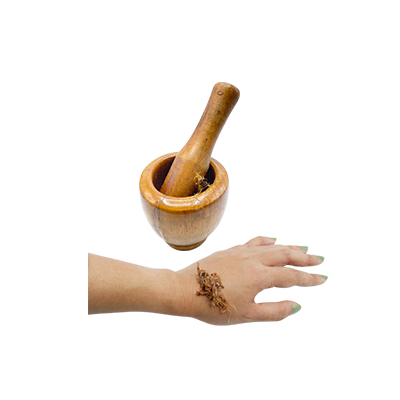
2. Wounds
- Wash mickey mouse root as needed until clean.
- Mash into a paste.
- Apply the root paste to the wounded skin.
- Also applied to relieve pain from the wound.
Reference Sources
- Stuartxchange. 2019. Philippine Medicinal Plants: Mickey mouse bush. http://www.stuartxchange.org/MickeyMouseBush. 23-09-2021.
- Flora Fauna Web. 2019. National Park: Ochna serrulata Walp. http://nparks.gov.sg/florafaunaweb/flora/6/6/6680. 23-09-2021.
- Royal Botanic Gardens. 2017. Plant of the World Online: Ochna serrulata (Hochst.) Walp. http://powo.science.kew.org/taxon/urn:lsid:ipni.org:names:606778-1. 23-09-2021.
- New Zealand Plant Conservation Network. 2021. Ochna serrulata. https://www.nzpcn.org.nz/flora/species/ochna-serrulata/. 23-09-2021.
- Botanical Clearing House Universitas Negeri Surabaya. 2021. Bunga mickey mouse. http://bch.unesa.ac.id/hayati/bunga-mickey-mouse. 23-09-2021.
- We Know. 2017. Tema Jendela Gambar. Tanaman Wahyu Tumurun, Mickey Mouse atau Ochna serrulata?. http://lagingertie.blogspot.com/2017/09/tanaman-wahyu-tumurun-mickey-mouse-atau.html. 23-09-2021.