Ocimum basilicum var. thyrsiflorum (L.) Benth.
Summary
Ocimum basilicum var. thyrsiflorum or Thai basil is a variety of sweet or Italian basil native to Thailand and widely used as a garnish in Thai and Vietnamese cuisine, consumed raw, cooked, or as a fragrant tea. Its essential oil is used in the culinary and fragrance industries, while its antioxidant and antibacterial content makes this basil a potential ingredient in acne treatment creams—though it is not recommended for use by pregnant women and children.
Agroecology
Thai basil grows well in a sunny location, with fertile, moist, well-drained soil that is allowed to dry slightly before watering again. Thai basil can also be grown indoors near a bright window if it receives at least 6 hours of sunlight daily. Thai basil is generally found growing mainly in seasonally dry tropical biomes.
Morphology
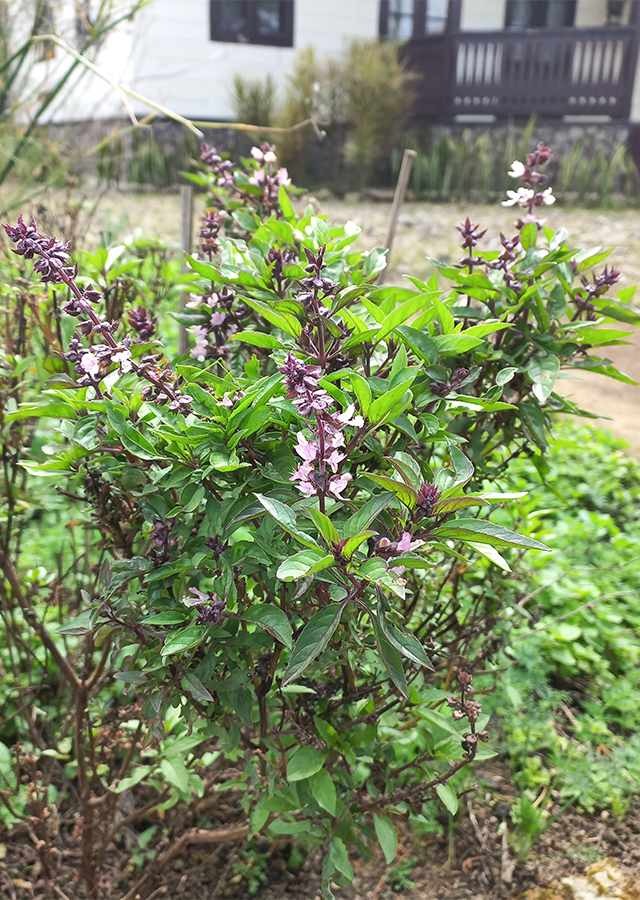
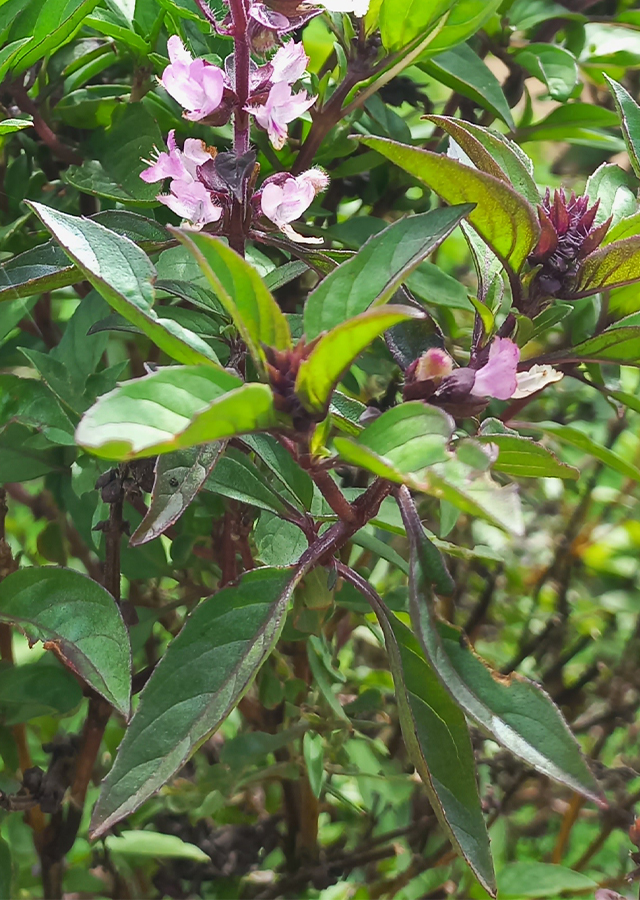
- Stem much-branched, purplish red, providing a nice contrast with the bright green leaves.
- Leaves narrow, arrow-shaped, smaller or about half the size of regular basil leaves, more serrated and one to two inches long. Darker green than regular basil leaves, glossy, and often with purple veins. Leaves have a spicier aroma compared to regular basil.
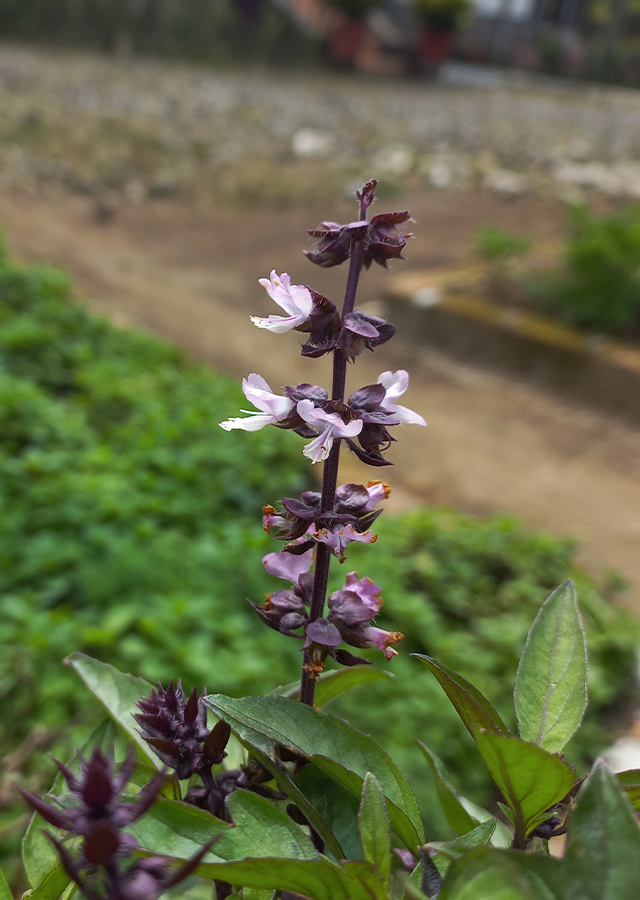
- Flowers bisexual, purplish pink. Inflorescence dense, branched, with loose whorls.
Cultivation
- Plant propagation is generative through seed and vegetative through cuttings.
- Seed germination takes 10-15 days.
Chemical Content
Eugenol, linalool, methyl chavicol, β-(E)-ocimene, α-(E)-bergamotene, α-epi-cadinol, camphor, flavonoids, anthraquinones, saponins, tannins, alkaloids, glycosides, phenols, thiols, essential oil (α-pinene, sabinene, β-pinene, myrcene, α-terpinene, and limonene), 8 phenolics (including rosmarinic, caftaric, caffeic, chicoric acid, p-hydroxybenzoic, p-coumaric, protocatechuic acid, and rutin), a large amount of polysaccharides.
Benefits
Prevents inflammation, soothes inflammation from acne, addresses skin problems (ringworm, white patches or faded skin color, and redness accompanied by itching), protects and reduces the risk of nerve damage, fights colon cancer cells. Has antioxidant, antibacterial, and antimicrobial activity.
Simplisia
- Prepare Thai basil and wash clean with running water.
- Dry under the sun or with an oven at 40°C until the moisture content reaches 10%.
- Grind using a blender until it becomes powder.
- Store in a clean, airtight container.
Local Names
Information not found. Further research is needed.
Traditional Recipes
The following recipes reflect traditional knowledge passed down through generations, not a substitute for professional medical diagnosis or advice. Consult a healthcare provider before use.
1. Source of antioxidants
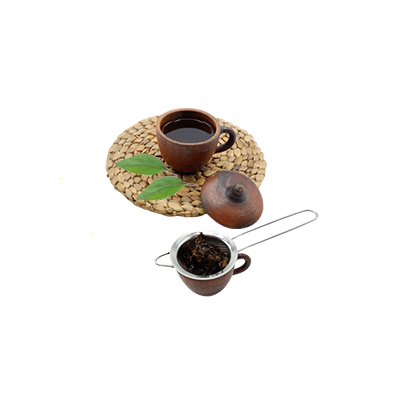
- Prepare dried Thai basil leaves.
- Take an adequate amount then steep with hot water.
- Wait until warm and the water changes color slightly.
- Strain then drink.
Reference Sources
- Royal Botanic Gardens. Plants of the World Online: Ocimum basilicum var. thyrsiflorum (L.) Benth. https://powo.science.kew.org/taxon/urn:lsid:ipni.org:names:77284322-1. 22-09-2022.
- IDN Medis. 2022. Thai Basil : Manfaat – Efek Samping dan Tips Konsumsi. https://idnmedis.com/thai-basil#idnmedis_ref. 22-09-2022.
- Pripdeevech P., Chumpolsri W., Suttiarporn P., Wongpornchai S. 2010. The chemical composition and antioxidant activities of basil from Thailand using retention indices and comprehensive two-dimensional gas chromatography. Journal of the Serbian Chemical Society. 75 (11): 1503–1513.
- Candide. Thai Basil. https://candide.com/ZA/plants/eaabf98455d9bdfef9c454fdb2e92299. 22-09-2022.