Ocimum tenuiflorium L.
Summary
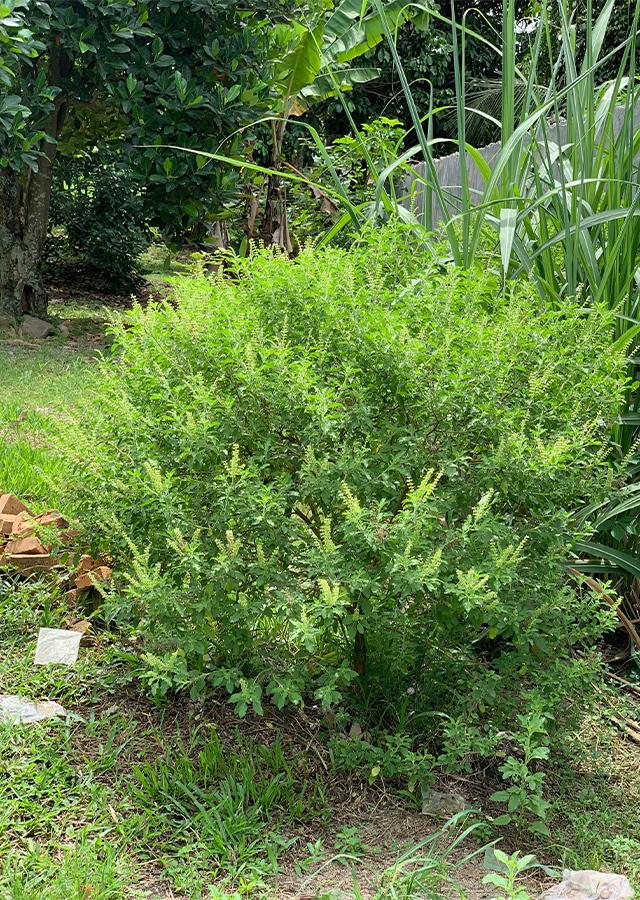
Ruku-ruku (Ocimum tenuiflorium), also known as holy basil, is an upright herb 30-100 cm tall of the Lamiaceae family, originating from India and Southeast Asia, considered the most sacred plant in India and cultivated for over three thousand years. Its distinctively aromatic leaves have been used in cooking as well as Ayurvedic remedies for centuries. Ruku-ruku is believed to be antipyretic, especially for reducing fever caused by malaria.
Agroecology
Ruku-ruku can be found at elevations up to 1,000 m above sea level. Grows well in areas with an average daytime air temperature between 20-28 °C, average rainfall of 1,000-3,000 mm/year, pH 6-7.5. Prefers moist but well-drained soil and a position in full sunlight. This plant requires 6-8 hours of sunlight/day.
Morphology
- Roots taproot.
- Stem woody, square, branching, hairy.
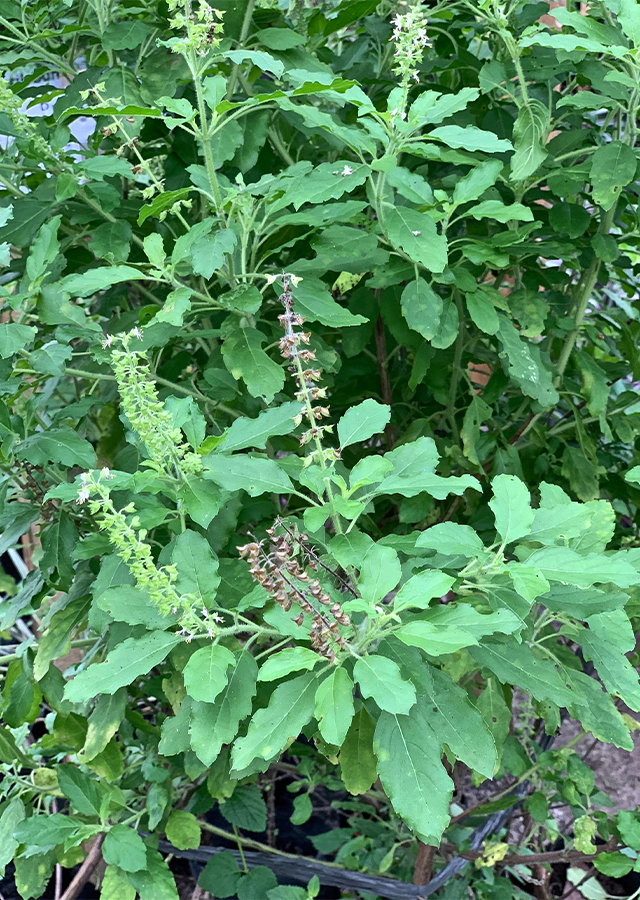
- Leaves green to brownish-green, aromatic, somewhat spicy taste. Blade elongated oblong shape, pinnate venation, serrated edges. Length 2.5-7.5 cm, width 1-2.5 cm.
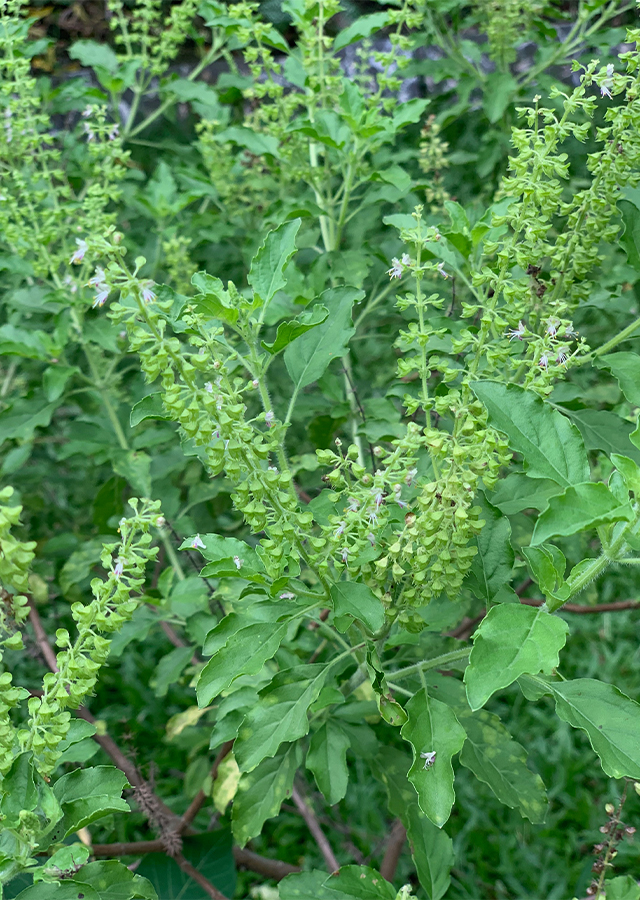
- Flowers emerge at the stem tip, purplish-white, hermaphrodite, arranged elongated.
- Fruit brown in color, egg-shaped, ± 1 mm long, mucilaginous.
- Seeds round shaped, yellowish-brown-reddish in color.
Cultivation
Propagated generatively (by seed) from dried flower clusters or vegetatively (young stem cuttings).
Chemical Content
Essential oils, flavonoids, phenolics, carotenoids, anthocyanins, phenylpropanoids, eugenol, fatty acids (stearic, palmitic, oleic, linoleic, linolenic), limatrol, decylaldehyde, cirsilineol, cirsimaritin, isothymusin, isothymonin, apigenin, rosmarinic acid.
Benefits
Treats stomach ache and stomach acid, liver disorders, respiratory and digestive tract, diabetes mellitus, addresses skin disorders, asthma, dysentery. Has anthelmintic, anti-inflammatory, antipyretic properties especially for fever caused by malaria.
Simplisia
- Select fresh ruku-ruku leaves, clean off attached dirt, wash then drain.
- Arrange on a tray, then dry in the sun and cover with a thin dark colored cloth.
- Once dry, put into a clean, tightly sealed, airtight plastic bag.
Local Names
Lute (Maluku), Lampes (Sunda), Kemangek (Madura), Uku-uku (Nusa Tenggara and Bali), Lufe-lufe (Ternate).
Traditional Recipes
The following recipes reflect traditional knowledge passed down through generations, not a substitute for professional medical diagnosis or advice. Consult a healthcare provider before use.
1. Stomach Ache and Stomach Acid
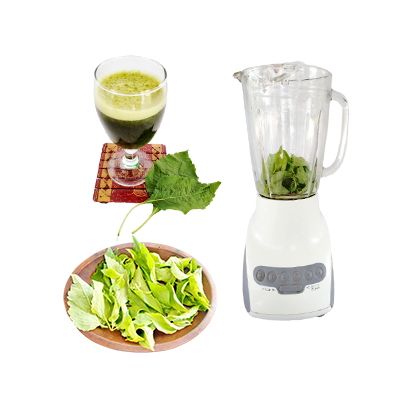
- An adequate amount of young ruku-ruku leaves.
- Blend with a little water until it becomes a juice.
- Drink twice a day for 3-5 days.
Reference Sources
- Pingale, S.S. & Firke, Narayan & Markandeya, A.G.. 2012. Therapeutic activities of Ocimum tenuiflorum accounted in last decade: A review. J Pharm Res. 5. 2215-2220.
- Siemonsma, J.S.; Siemonsma, J.S.; de Guzman, C.C. 1999. PLANTS resources of South-East Asia 13 : spices / editors, C.C. de Guzman and J.S. Siemonsma. Bogor : Prosea Foundation.