Oenanthe javanica (Blume) DC.
Summary
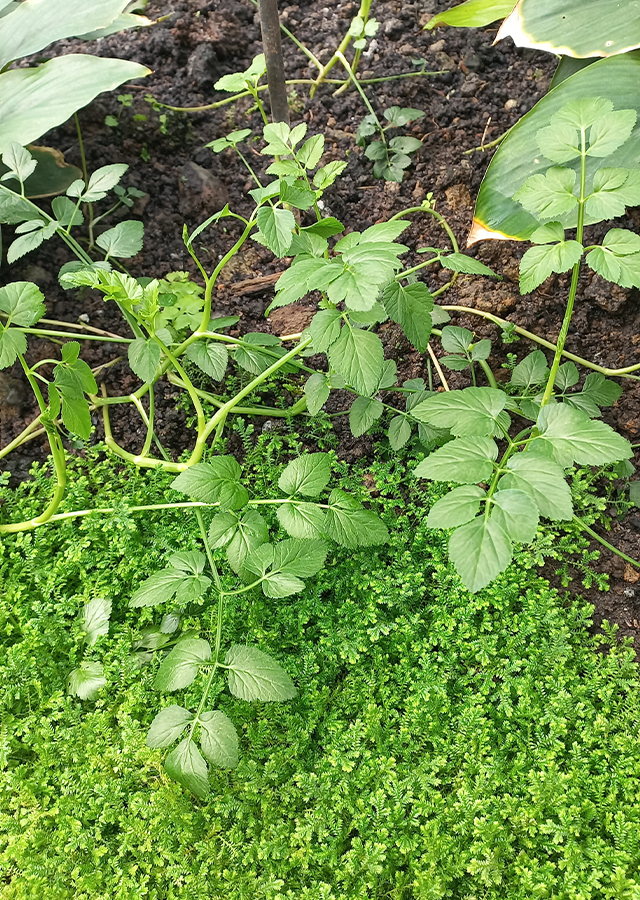
Tespong (Oenanthe javanica) is an upright herb 10-150 cm tall of the Apiaceae family, distributed from Pakistan to Japan and tropical Australia, consumed as food in China since 700 BC. Its leaves are commonly used as a celery substitute in East and Southeast Asian soups. In Korea and Malaysia, tespong is traditionally used as a fever reducer and hypertension remedy, while in China it is used to treat chronic and acute hepatitis.
Agroecology
Tespong can be found growing in swampy areas, along rivers, muddy riverbanks, wet grasslands, lake edges, wet and warm areas, at elevations up to 3,400 m above sea level. Prefers areas with partially shaded conditions, wet and moist soil, requiring plenty of water. Grows best in areas with annual daytime temperatures ranging between 10-30°C, but can tolerate 4-32°C, average annual rainfall ranging between 2,000-3,000 mm, but tolerating 1,500-3,500 mm, and a soil acidity degree (pH) between 5.5-6.5, but tolerating 4.5-7.
Morphology
- Root fibrous emerging from all nodes.
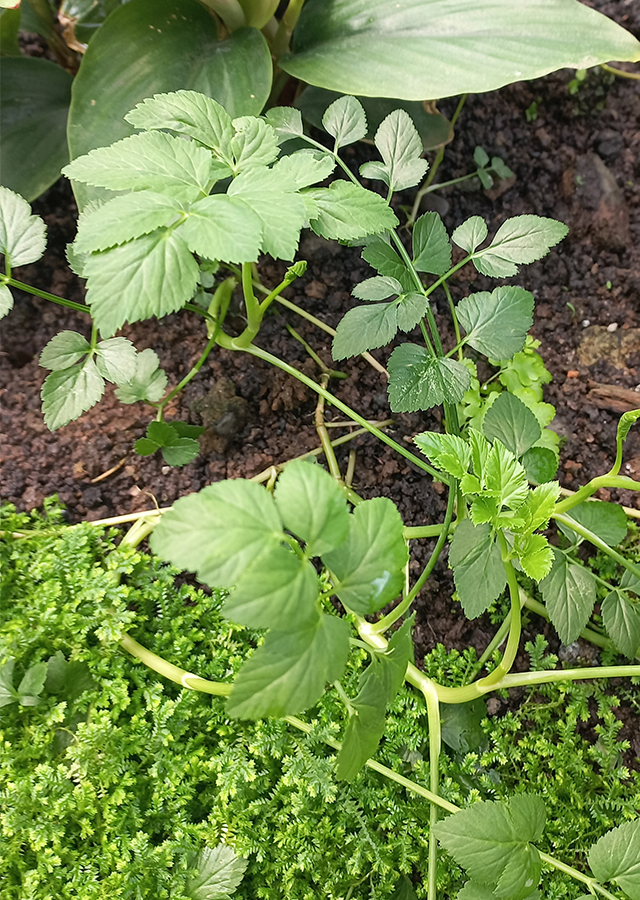
- Stem terete (slender cylindrical), hollow, many-branched, light green in color, hairless, vertically veined.
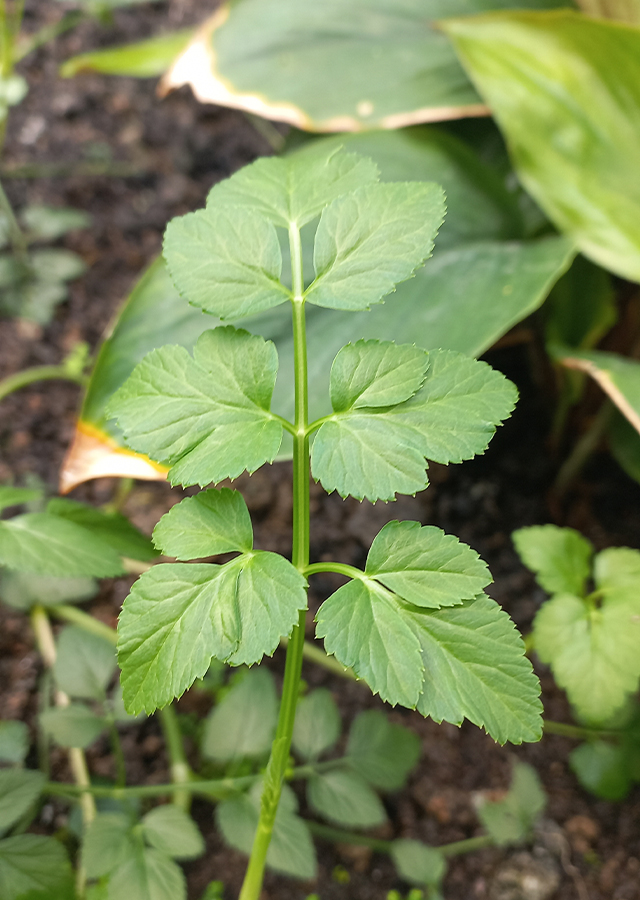
- Leaves alternate or scattered, leaf blade oblong to ovate shaped, serrated or flat leaf edges, single pinnate compound to triple pinnate compound (tripinnate). Upper surface dark green and dull, underside brighter. Fragrant smell when crushed.
- Flowers small in size, white in color, giving off a grape-like aroma. Has 5 sepal teeth colored dark green. Corolla numbering 5, ovate shaped, hairless. Stamens numbering 5, yellowish-brown in color, filament white. Inflorescence compound, in the form of numerous umbels.
- Fruit a schizocarp (dry fruit that does not split open, dividing into separate single-seeded segments at maturity), somewhat rounded (subglobose) or ovate, dorsal and central ribs slightly thickened.
Cultivation
Propagated vegetatively (stem cuttings) and generatively (seed).
Chemical Content
Coumarin (xanthotoxin, bergapten, isopimpinellin, sioimperatorin, imperatorin, columbianadin, 5-hydroxy-8-methoxypsoralen, 6,7-dihydroxycoumarin, scopoletin), polyphenol, flavonoid and flavonoid glycoside (apigenin, isorhamnetin-3-O-β-D-glucopyranoside, quercetin, isorhamnetin-3-O-galactoside, afzelin, persicarin, isorhamnetin, hyperoside, luteolin, kaempferol, rutin, nicotoflorin, quercetin-3-L-rhamnoside), phenolic (neochlorogenic acid, chlorogenic acid, caffeic acid, gallic acid, α-tocopherol, lunularin, p-hydroxyphenylethanol ferulate, 5-p-trans-coumaroylquinic acid, carvacrol, ferulic acid, catechin), essential oil (β-caryophyllene, δ-cadinene, β-bisabolene, α-terpinolene, γ-terpinene, α-amorphene), butanedioic acid, β-sitosterol, falcarindiol.
Benefits
Fever-reducing remedy, influenza, jaundice, hematuria (bloody urine), metrorrhagia (excessive menstruation), antidote for poisoning, relieves headache, relieves cough, addresses chronic hepatitis, hypertension, stomach ache, difficulty urinating, treats alcohol hangover, has anti-inflammatory, antioxidant, and antiviral activity.
Simplisia
- Pick tespong flowers on a bright morning.
- Dry with air or roast with an oven until dry at low temperature.
- Store the flower simplisia in a closed container.
Local Names
Seladren, Pampung (Java), Bacarongi (Batam), Bambung and Salada liangan (Sunda).
Traditional Recipes
The following recipes reflect traditional knowledge passed down through generations, not a substitute for professional medical diagnosis or advice. Consult a healthcare provider before use.
1. Headache
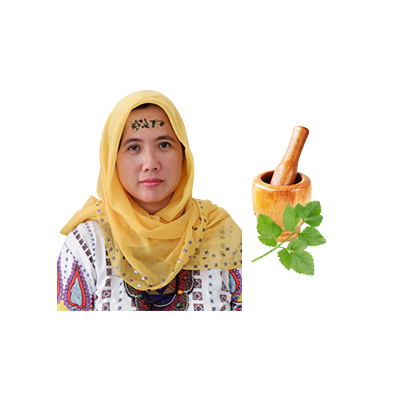
- Wash tespong leaves as needed thoroughly.
- Grind the leaves into a paste.
- Apply the leaf paste to the forehead.
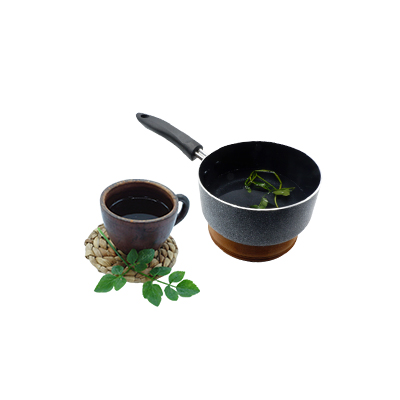
2. Hepatitis
- Boil the whole thoroughly washed tespong plant until boiling.
- Strain the decoction.
- Drink.
Reference Sources
- Royal Botanical Garden. 2021. Plant of the World Online: Oenanthe javanica (Blume) DC. http://powo.science.kew.org/taxon/urn:lsid:ipni.org:names:845307-1. 14-09-2021.
- Useful Tropical Plant. 2021. Oenanthe javanica. https://tropical.theferns.info/viewtropical.php?id=Oenanthe+javanica. 14-09-2021.
- Flora Fauna Web. 2019. Oenanthe javanica (Blume) DC. https://www.nparks.gov.sg/florafaunaweb/flora/4/9/4982. 14-09-2021.
- PROSEA. 2016. Oenanthe javanica (PROSEA). https://uses.plantnet-project.org/en/Oenanthe_javanica_(PROSEA). 14-09-2021.
- Chuan-li Lu, Xiu-fen Li. 2019. Review Article: A Review of Oenanthe javanica (Blume) DC. as Traditional Medicinal Plant and Its Therapeutic Potential. Hindawi. Evidence-Based Complementary and Alternative Medicine Vol. 2019. https://doi.org/10.1155/2019/6495819.