Ohwia caudata (Thunb.) H.Ohashi
Summary
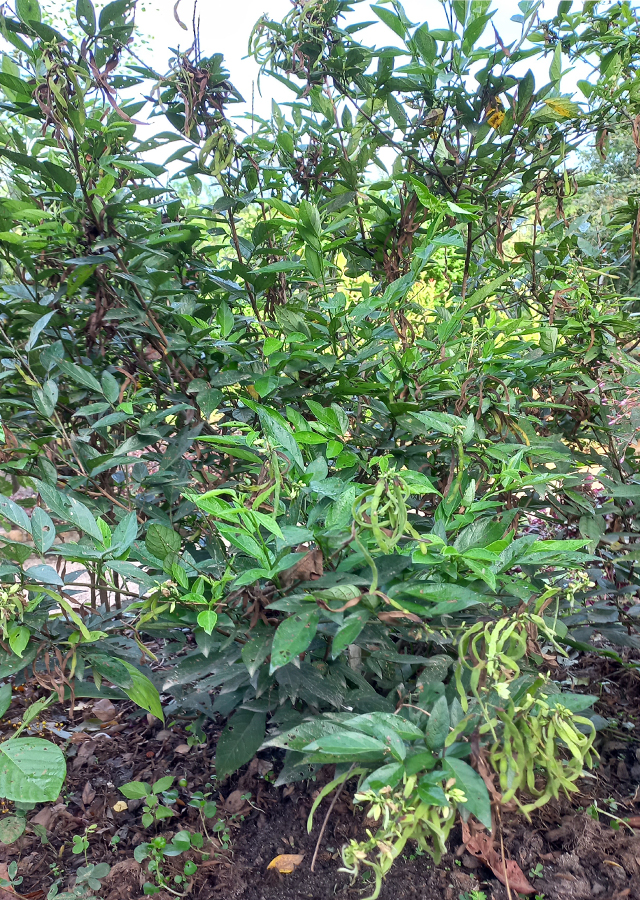
Buak cau (Ohwia caudata) is a shrub up to 1-2 meters tall from the Fabaceae family spread from China and Japan to Indonesia. In traditional Chinese medicine, the root or the whole plant is used to address fever and gastroenteritis, with modern pharmacological studies also confirming its analgesic and anti-inflammatory properties. The root and leaves of buak cau are also used as a natural pesticide.
Agroecology
Buak cau grows well in moist but well-drained soil. Its growth requires full sunlight (6-8 hours) with moderate water needs. In China, this plant can be found growing on mountain slopes, roadsides, grasslands, riverbanks, and forest edges, at elevations of 100-1,000 m asl. This plant forms a symbiotic relationship with nitrogen-fixing bacteria, allowing it to grow in infertile soil.
Morphology
- Roots have nodules for fixing nitrogen.
- Stem outer bark grayish-brown, many-branched, upright, woody.
- Leaves compound, trifoliate, blade lanceolate to oblong, tapering tip, pointed base, rough, pubescent (short, fine hairs) on both sides, smooth or flat margins, pinnate venation. Upper surface green, underside gray.
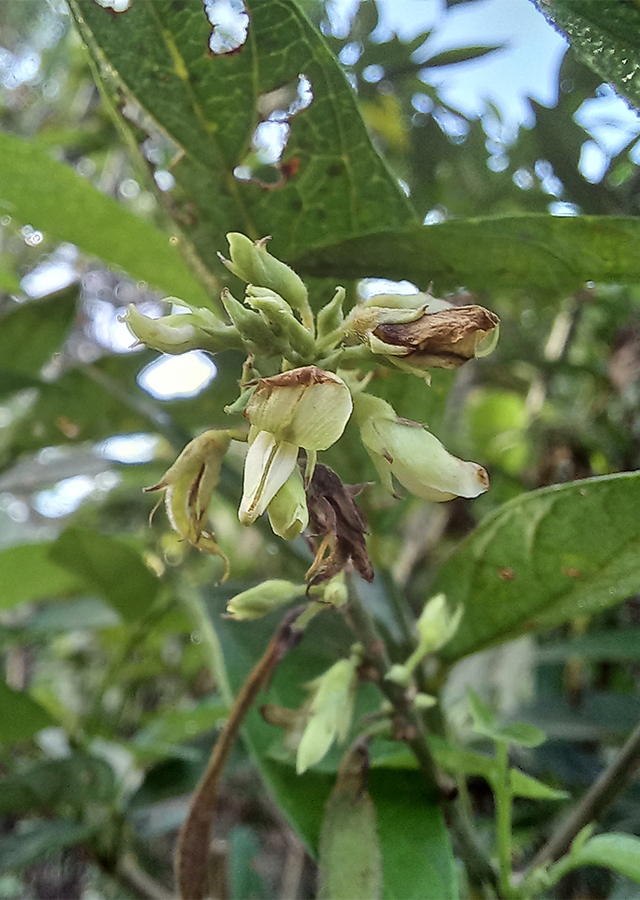
- Flowers greenish-white to yellowish, rachis (inflorescence stalk) densely covered with soft hairs, flowers arranged in pairs along the rachis. Inflorescence type arranged in racemes.
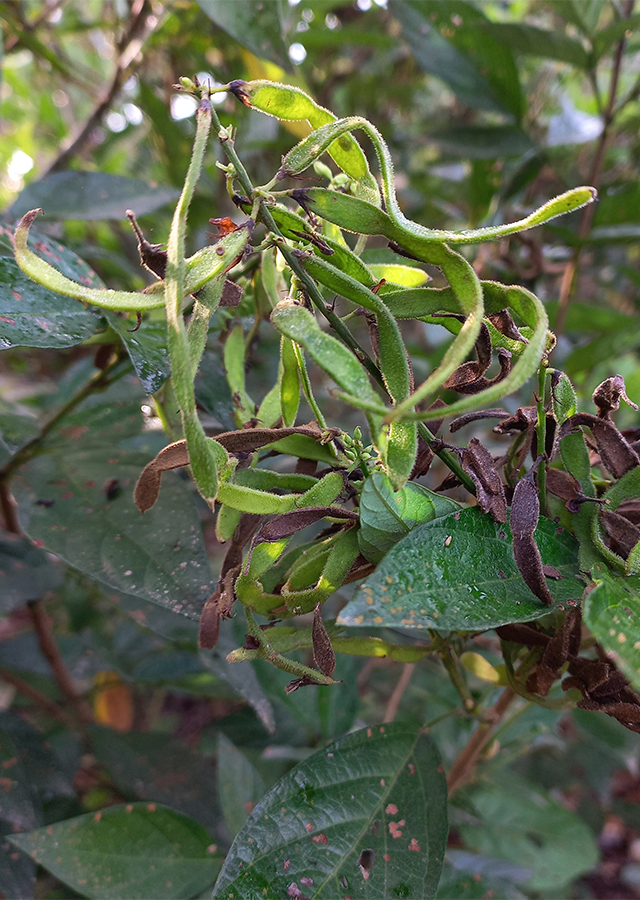
- Fruit a pod, linear, narrow and flattened, green turning brown when ripe, hairy, pod divided into 4-8 segments.
- Seeds ovate, flattened.
Cultivation
- Propagation generatively (seeds) and vegetatively (stem and root cuttings).
- Seeds usually germinate within 1-4 months at a temperature of 25 °C.
Chemical Content
Caudatan A and caudatan B, flavonoids (2'-hydroxyl yokovanol, 2'-hydroxyl neophellamuretin, yokovanol, swertisin, spinosin, 7-methyl-apigenin-6-C-β-glucopyranosyl 2″-O-β-d-xylopyranoside), triterpenoids, and alkaloids.
Benefits
Treats back rheumatism, diarrhea, colds, fever, gastroenteritis (intestinal or stomach infection caused by a virus), dysentery, rheumatic arthritis. Has analgesic, antipyretic, antiseptic, diuretic, and depurative (blood-cleansing) activity.
Local Names
No information found. Further research needed.
Traditional Recipes
The following recipes reflect traditional knowledge passed down through generations, not a substitute for professional medical diagnosis or advice. Consult a healthcare provider before use.
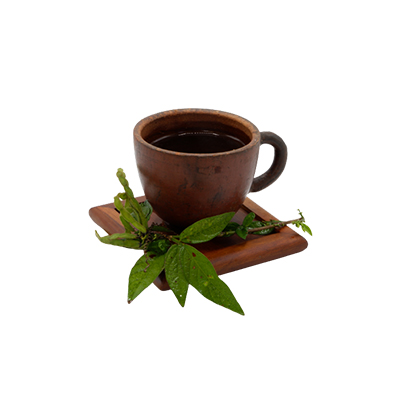
1. Fever
- Wash the whole buak cau plant until clean.
- Boil the whole plant in water until boiling.
- Strain the decoction.
- Drink.
Reference Sources
- Useful Tropical Plants Database. 2014. Ohwia caudata. https://tropical.theferns.info/viewtropical.php?id=Ohwia+caudata. 18-09-2021.
- Flora Fauna Web. 2019. Desmodium caudatum (Thunb.) DC. https://www.nparks.gov.sg/florafaunaweb/flora/3/9/3915. 18-09-2021.
- Kwon EB, Yang HJ, Choi JG, Li W. 2020. Protective Effect of Flavonoids from Ohwia caudata against Influenza a Virus Infection. Molecules 25. doi:10.3390/molecules25194387.
- Li J et al. 2018. Pharmacognostical study of Desmodium caudatum. Annals of the Brazilian Academy of Sciences 91(2): e20180637.
- Royal Botanic Gardens. 2021. Plants of the World Online: Ohwia caudata (Thunb.) H.Ohashi. http://www.plantsoftheworldonline.org/taxon/urn:lsid:ipni.org:names:1008958-1. 18-09-2021.