Ormocarpum cochinchinense (Lour.) Merr.
Summary
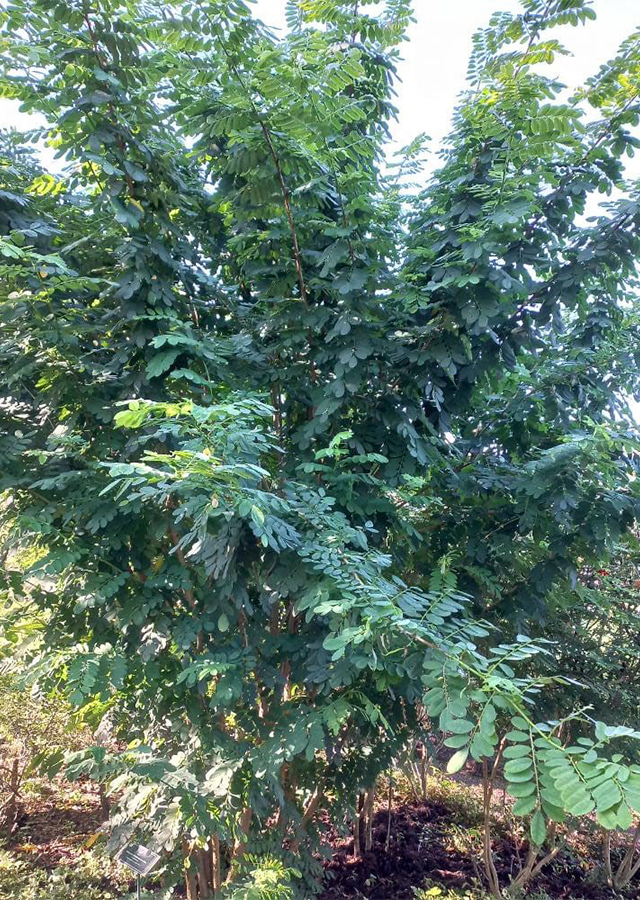
Luhu (Ormocarpum cochinchinense) is a shrub up to 1.5-2 meters tall of the Fabaceae family, distributed from tropical Africa to Southeast Asia. The Tamil Nadu community in India traditionally uses it to heal broken bones, supported by its proven high calcium content. Luhu is also believed to help relieve rheumatism and fever.
Agroecology
Luhu is usually found growing in open coastal thickets, roadsides up to elevations of 50 m above sea level. This plant requires full sunlight and well-drained soil conditions, but is able to survive drought conditions.
Morphology
- Root a taproot.
- Stem woody, young stem yellowish-brown and hairless then becoming cracked with maturity.
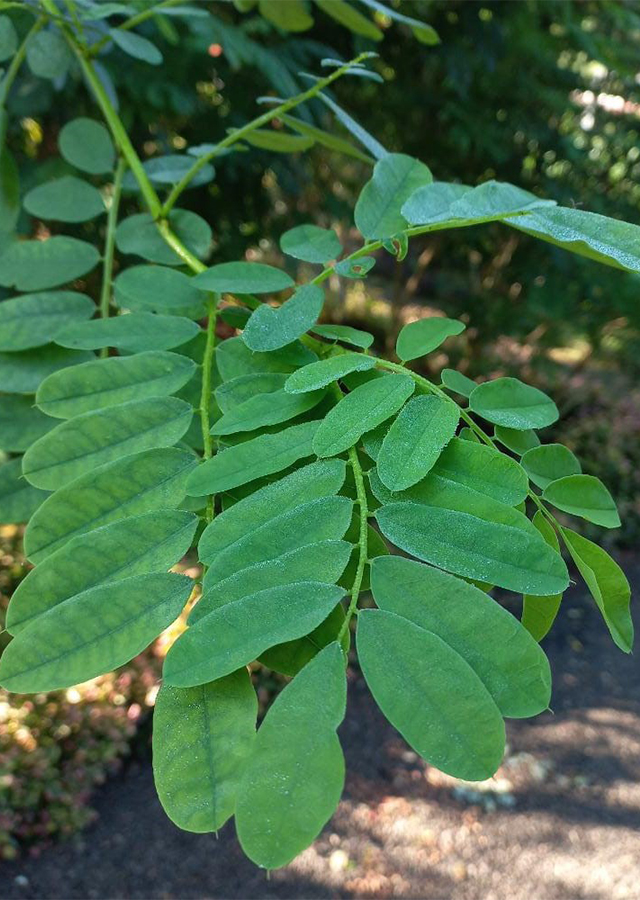
- Leaves compound, green in color, alternate, stalked, pinnate. Has 9-20 leaflets arranged on both sides of the rachis, with a single leaflet at the leaf tip. Leaflet thin, hairless, elliptical to oblong shaped.
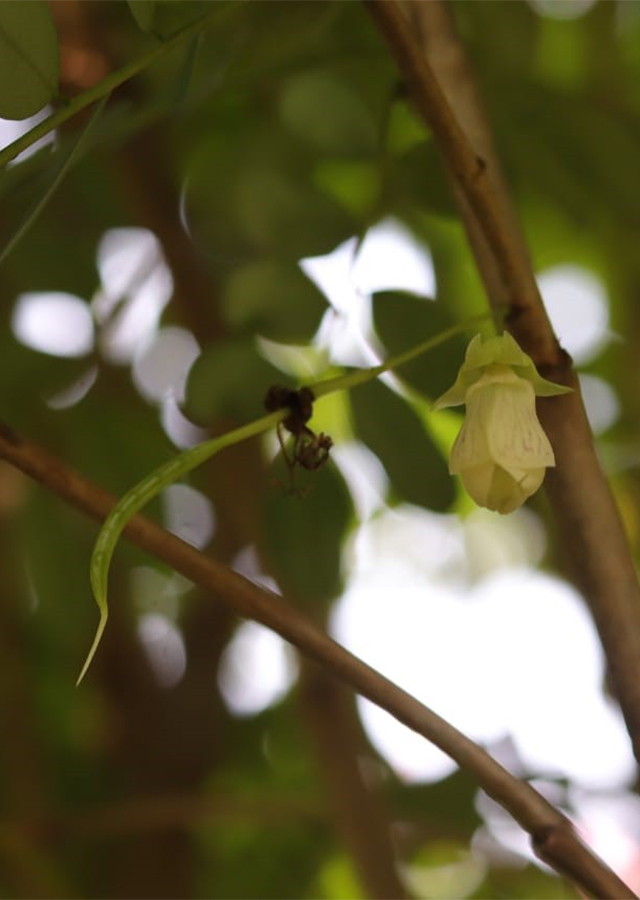
- Flowers white or yellow in color, sometimes with red or purple lines on the corolla petals. Sepal hairy, ovate lobes. Inflorescence a raceme consisting of 10-24 flowers, located in leaf axils.
- Fruit a smooth linear pod, 5-20 cm long and 1.5-2.5 cm wide, 4-7 segmented, mature fruit brown in color.
- Seeds light brown or cream in color, oblong.
Cultivation
Propagated generatively using seed.
Chemical Content
Alkaloid, betacyanin, cardiac glycosides, flavonoid, saponin, tannin, terpenoid, steroid, phenols, phytosterols, coumarin.
Benefits
Heals broken bones, rheumatism, fever, lower back pain and paralysis, chest pain, nerve pain, mouth burns (from using slaked lime when chewing areca nut), has antimalarial, anticancer, antimicrobial, and antioxidant activity.
Local Names
No information found. Further research needed.
Traditional Recipes
The following recipes reflect traditional knowledge passed down through generations, not a substitute for professional medical diagnosis or advice. Consult a healthcare provider before use.
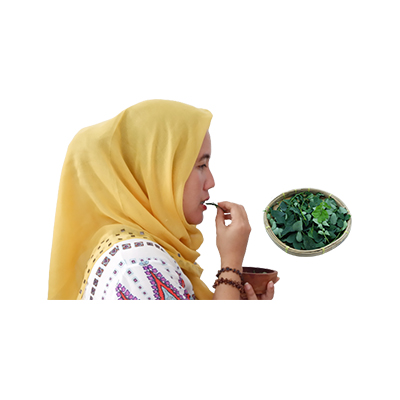
1. Chest pain
- Pick leaves as needed then wash thoroughly.
- Eat the leaves directly as a side dish.
2. Rheumatic fever
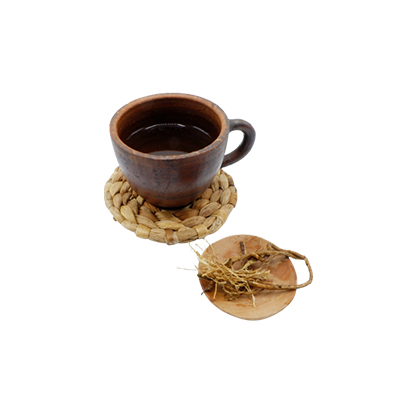
- Prepare luhu root then wash thoroughly.
- Boil the luhu root until boiling.
- Strain the decoction.
- Drink.
Reference Sources
- Royal Botanic Gardens. 2021. Plants of the World Online: Ormocarpum cochinchinense. http://powo.science.kew.org/taxon/urn:lsid:ipni.org:names:510616-1. 06-09-2021.
- Flora Fauna Web. 2021. Ormocarpum cochinchinense (Lour.) Merr. https://www.nparks.gov.sg/FloraFaunaWeb/Flora/5/6/5640. 06-09-2021.
- P. Babu, K. Bhuvaneswari, K. Vivekanandan, N. Harikrishnan. 2020. Review on Phytoconstituents and Pharmacological Activities of Leaves of Ormocarpum cochinchinense. International Journal of Pharmacognosy and Phytotherapy Research Vol. 3(1):015-017.
- Flora of China. Ormocarpum cochinchinense. http://www.efloras.org/florataxon.aspx?flora_id=2&taxon_id=242334759. 06-09-2021.