Pachyrhizus erosus (L.) Urb.
Summary
Bengkuang (Pachyrhizus erosus) is an annual climbing plant 2-6 meters long of the Fabaceae family, originating from Central and South America; the Aztecs even used its seeds as medicine centuries ago. The Spanish spread it to the Philippines in the 17th century before it entered Indonesia via Ambon. Its crisp tuber is now popular as a natural skin-brightening cosmetic ingredient as well as a fresh snack.
Agroecology
Grows well in lowlands up to elevations of 1,400 m above sea level with full sunlight, temperature 20-30 °C, rainfall between 1,300-1,700 mm/year, soil pH 4.5-8. Bengkuang is a plant that does not require much water.
Morphology
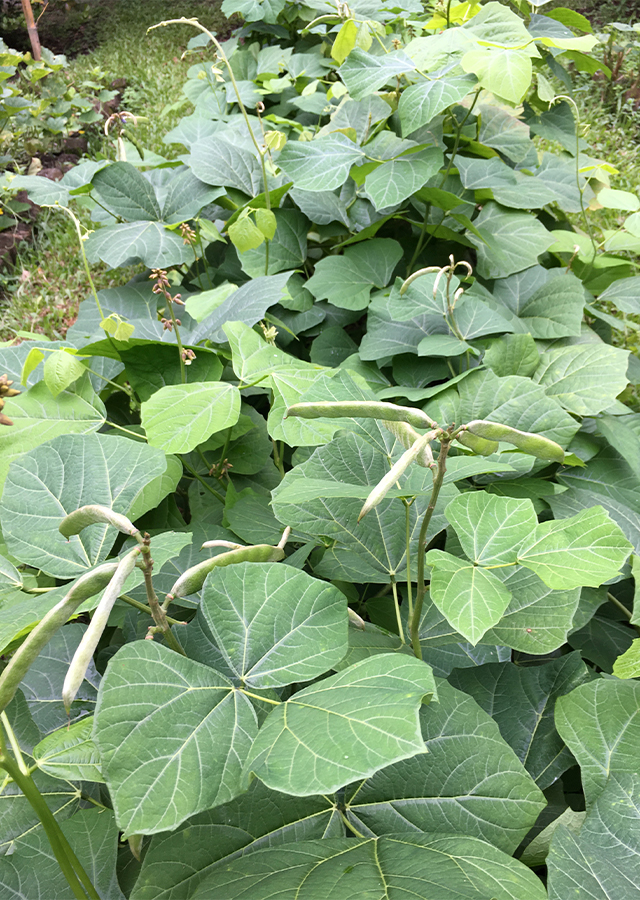
- Stem hairy, trailing and twining, has fine segments, generally greenish to brownish in color, has new shoots around it.
- Leaves compound, with 3 leaflets, pinnate venation.
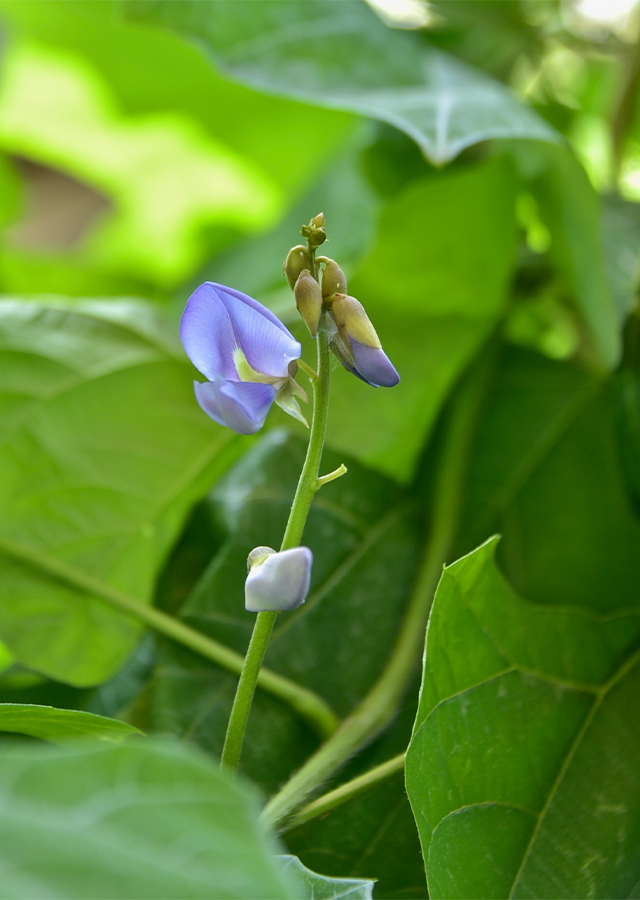
- Flowers blue or white calyx.
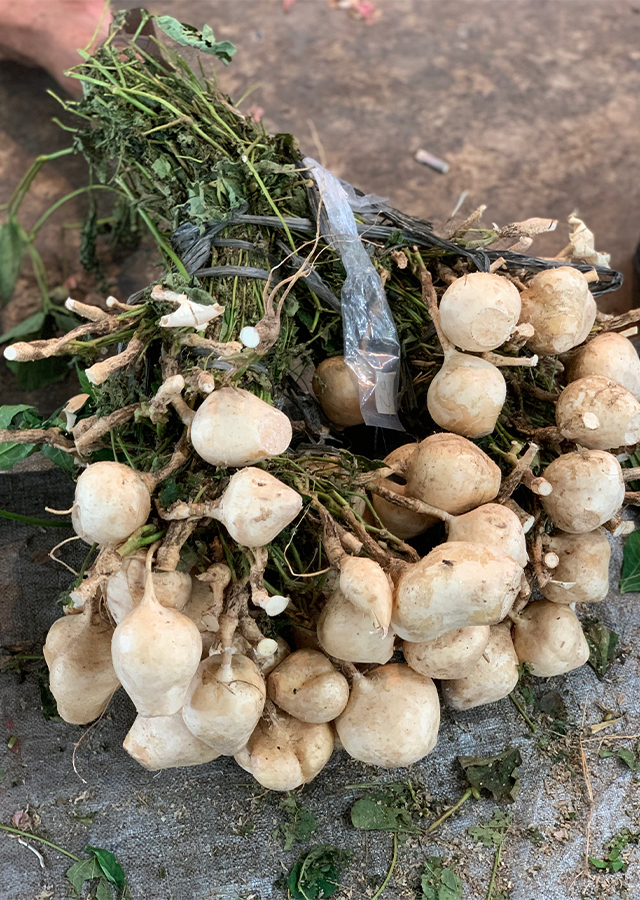
- Fruit has light brown skin and fruit flesh close to white in color.
- Seeds flat, nearly square-round shaped, olive green to brown or reddish-brown in color.
Cultivation
- Propagated generatively (by seed) and vegetatively (cuttings and offshoot separation).
- Planting should be done at the start of the rainy season. The dry season between September and November is the ideal time to start soil preparation.
- Planting distance 15 x 15 cm or 20 x 20 cm.
- Shoots appear on the 7th to 10th day.
- The tuber should be harvested before the plant flowers.
Chemical Content
Alpha hydroxyl acid (AHA), pachyrhizon, rotenone, saponins, flavonoids, thiamine, pyridoxine, riboflavin, niacin, folic acid, ascorbic acid.
Benefits
Addresses digestive problems, boosts the immune system, good for diabetic diets, brightens skin, whitens the face, pain remedy.
Simplisia
- Wash bengkuang fruit thoroughly with running water.
- Slice the fruit into small pieces, then dry using an oven at 60 °C for 2 days.
- Once dry, grind the material using a blender.
Local Names
Bangkuwang (Batak and Sunda), Singkuwang (Aceh), Jempingan (Bali), Uwi pisak (Lombok), Bengkowang (Java).
Traditional Recipes
The following recipes reflect traditional knowledge passed down through generations, not a substitute for professional medical diagnosis or advice. Consult a healthcare provider before use.
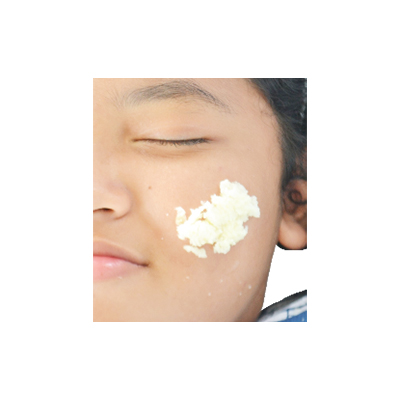
1. Whitening the Face
- Wash 1 bengkuang or an adequate amount thoroughly then peel. Pound or grate the bengkuang until fine.
- Apply evenly to the face, wait 15-20 minutes then rinse.
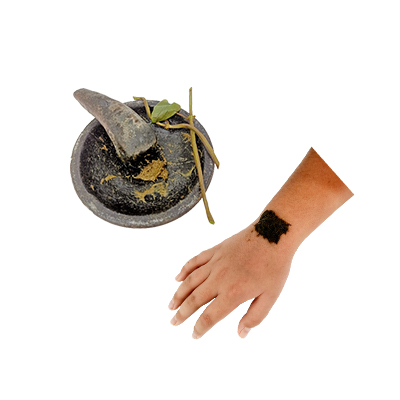
2. Pain Remedy
- Take an adequate amount of bengkuang stem then wash thoroughly. Pound with a little water until fine.
- Place on the painful area.
Reference Sources
- Fern, Ken. (2014). Useful Tropical Plants. Pachyrhizus erosus (L.) Urb. http://tropical.theferns.info/viewtropical.php?id=Pachyrhizus+erosus. 20-07-2020.
- Lim, T.K. (2012). Edible Medicinal And Non Medicinal Plants - Fruits Vol.10: 465-481.
- StuartXchange. (2016). Philippine Medicinal Plants. Sinkamas. http://www.stuartxchange.com/Sinkamas.html 06-02-2021