Pachystachys lutea Nees
Summary
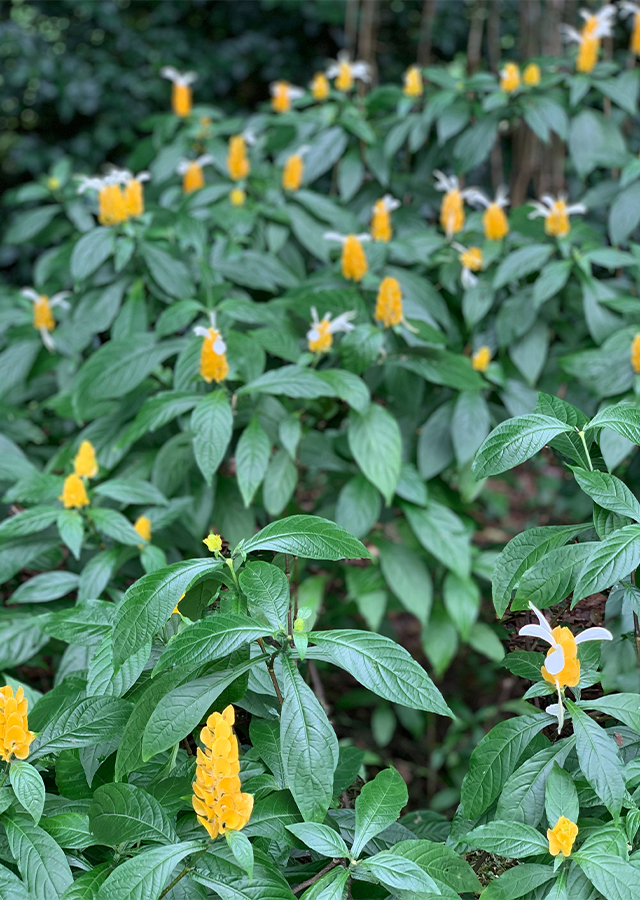
Lolipop (Pachystachys lutea) is a shrub up to 1 meter tall of the Acanthaceae family, native to Peru, popular as a yard ornamental thanks to its yellow lollipop-shaped flowers. Every part of this plant, whether fresh or dried, is used as traditional medicine. Lolipop is believed to relieve cough, fever, and help address hair loss.
Agroecology
Grows well at elevations of 10-1,500 m above sea level. This plant prefers fertile, loose soil, in sunlight, and grows in almost all soil types including sandy soil, clay soil, loamy soil or slightly acidic or alkaline soil. Not suitable for planting on the seaside.
Morphology
- Root fibrous, greenish-brown.
- Stem round, jointed, rough, and brownish-green in color.
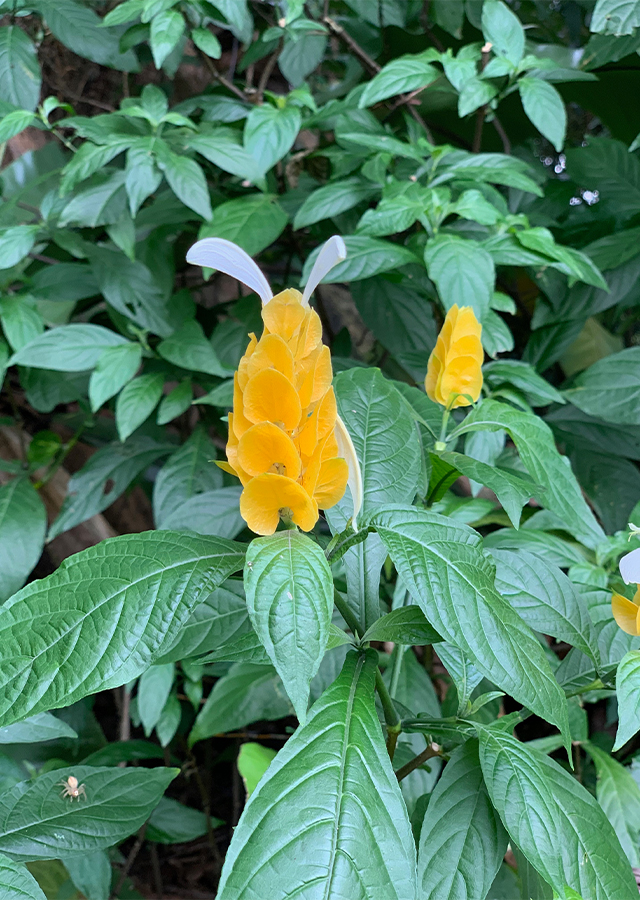
- Leaves single, green in color, crosswise opposite, without a petiole. Leaves lance-shaped, tip and base tapering, and pinnate venation.
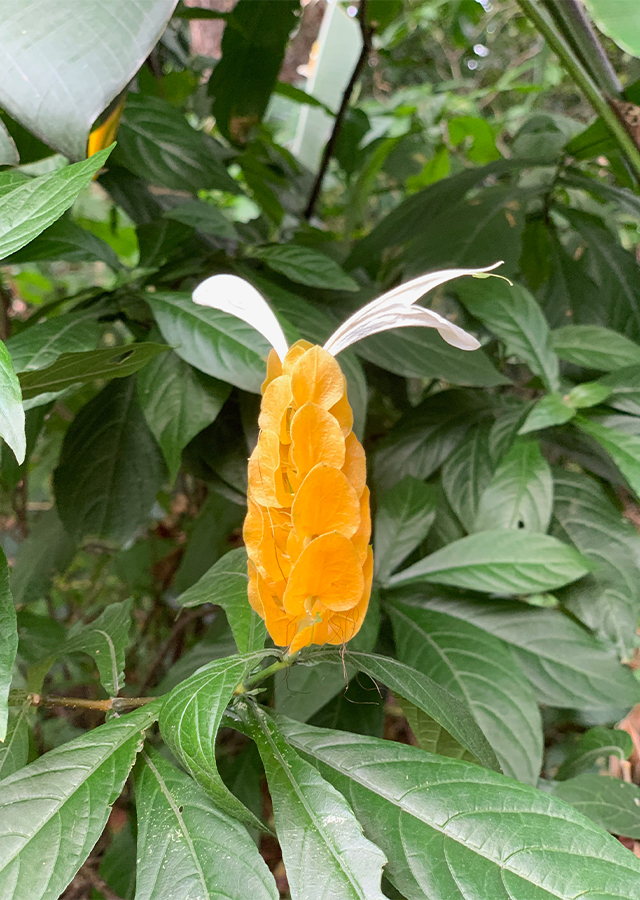
- Flowers compound, emerging at the stem or branch tip, a spike with an oval-shaped bract, tapering tip, arranged like a cone, yellow. Corolla beak-shaped.
- Fruit a box, ovate, rough, up to 3-8 cm long, smooth, and white in color.
- Seeds round, numerous, hard, black.
Cultivation
- Propagated vegetatively (stem cuttings), use a strong stem.
- Flowers in the dry season and can be harvested year-round.
Chemical Content
Alkaloid, saponin, polyphenol.
Benefits
Remedy for cough, fever, flu, addresses hair loss, treats diarrhea, worm infections, pneumonia.
Local Names
Bunga lilin, Air mancur, Udang emas, Kembang lilin (Java).
Traditional Recipes
The following recipes reflect traditional knowledge passed down through generations, not a substitute for professional medical diagnosis or advice. Consult a healthcare provider before use.
1. Remedy for diarrhea
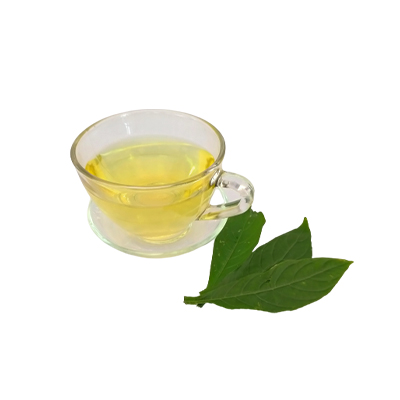
- Wash 60 g lolipop flower leaves thoroughly.
- Boil with 1 glass of water (400 ml) until boiling for 15 minutes.
- Strain and once cool drink all at once, 2-3 times a day.
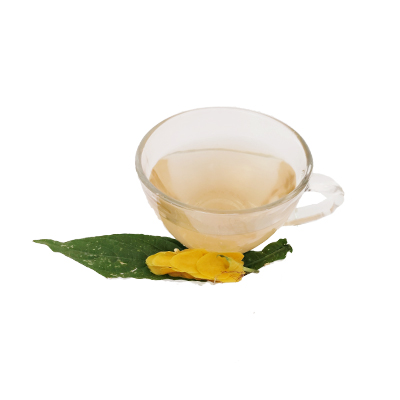
2. Worm infections
- Wash 30 g lolipop flower root thoroughly, then boil with 200 ml water until boiling for 5 minutes, strain.
- Once cool drink twice a day, morning and evening.
Reference Sources
- ABI. (No date). Invasive Species Compendium. Pachystachys lutea (lollypops). https://www.cabi.org/isc/datasheet/38497. 20-10-2020.
- Electronic Data Information Source of UF/IFAS Extension. (No date). Pachystachys lutea Golden Shrimp Plant. https://edis.ifas.ufl.edu/fp452. 05-02-2021.
- House Plants Expert. (No date). Lollipop Plants. https://www.houseplantsexpert.com/lollipop-plant.html. 16-02-2021.
- India plants. (No date). Pachystachys lutea. https://www.indiaplants.com/plant-details.php?x=UbzxtLEQAFM. 05-02-2021.
- KewScience. (No date). Pachystachys lutea. http://www.plantsoftheworldonline.org/taxon/urn:lsid:ipni.org:names:52814-1. 16-02-2021.
- Master Gardener Program. (No date). Golden Shrimp Plant, Pachystachys lutea. https://wimastergardener.org/article/golden-shrimp-plant-pachystachys-lutea/. 20-10-2020.
- StuarXchange. (2016). Philippine Medicinal Plant. Golden candle. http://www.stuartxchange.org/GoldenCandle. 20-10-2020.
- The Garden Helper. (No date). How to Grow and Care for Golden Shrimp Plants. http://www.thegardenhelper.com/golden_shrimp.html. 20-10-2021.