Paederia foetida L.
Summary
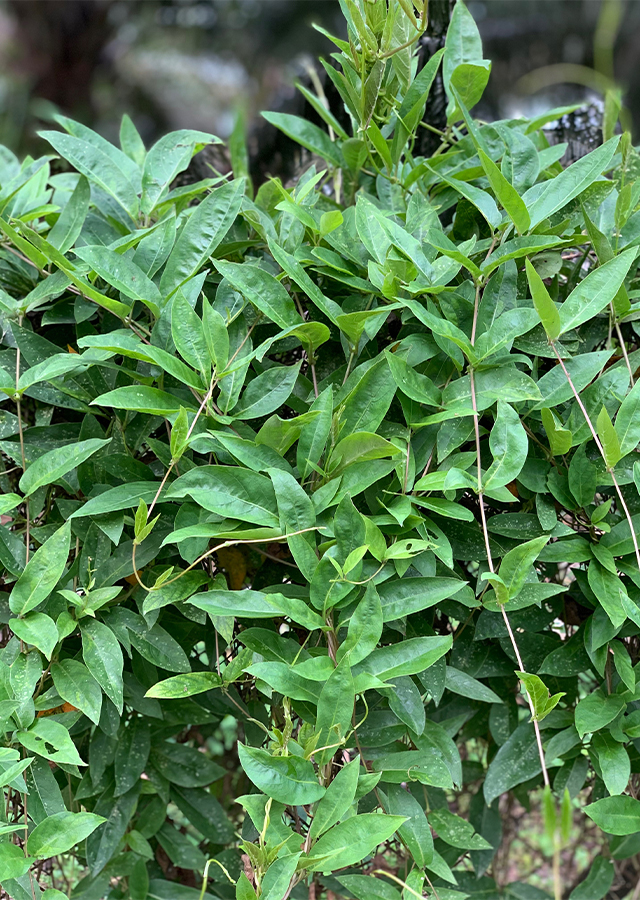
Daun simbuan (Paederia foetida) is a climbing liana up to 7 meters long of the Rubiaceae family, native to Bangladesh, Bhutan, and Cambodia, now distributed as far as Melanesia and North America. In East Java, its distinctively aromatic leaves are made into pelas or gembrot sembukan dishes, besides being commonly eaten as a fresh side dish. Traditionally, simbuan is also believed to relieve stomach pain, dysentery, and rheumatism.
Agroecology
This plant grows wild in open fields, shrubland, or along riverbanks. Simbuan can live from lowlands to highlands, at an optimum elevation of 700-1,300 m above sea level.
Morphology
- Roots taproot, with brown roots.
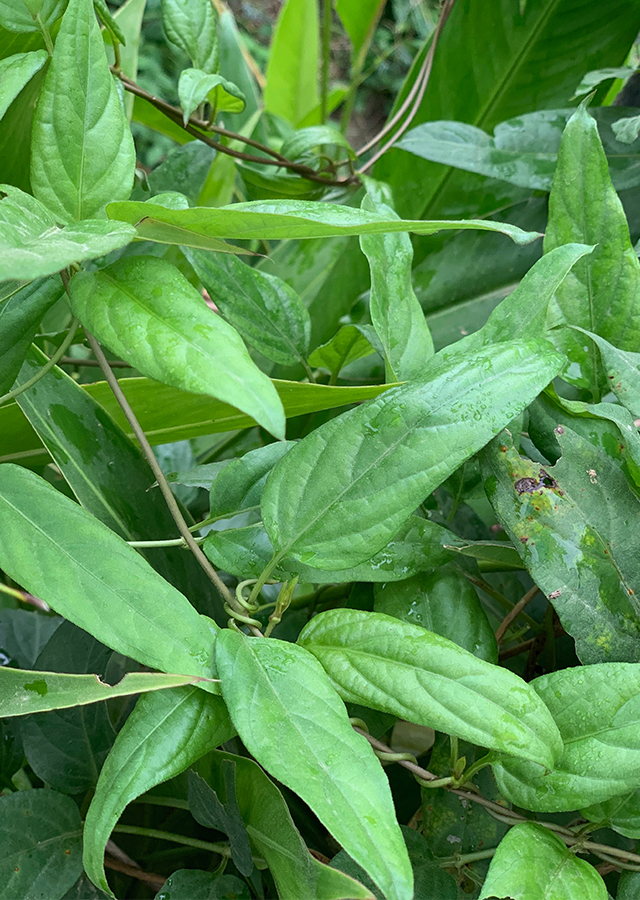
- Stem solid, jointed, grooved, smooth, and becoming rough with age. Diameter 2–5 mm, and brown roots can grow from its nodes.
- Leaves green, simple, opposite, ovate, with a pointed tip. Leaves have pinnate venation, long-stalked, leaf surface either finely hairy or hairless.
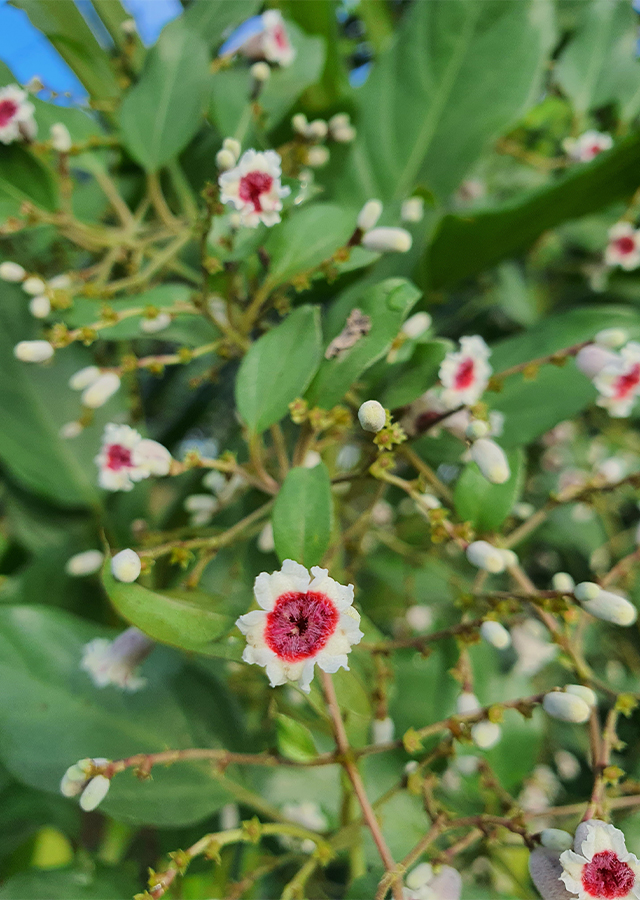
- Flowers small, funnel-shaped.
- Fruit a berry, round, glossy, 4-6 mm in diameter, and yellow.
Cultivation
Propagated generatively (by seed) and vegetatively (by layering).
Chemical Content
Asperuloside, deacetylasperuloside, paederoside, scandoside, iridoid glycosides, paederosidic acid, 6β-O-sinapoylscandoside, essential oil, arbutin, oleanolic acid, sitosterol.
Benefits
Anti-inflammatory, antidiuretic, carminative; treats stomach pain (ulcers), intestinal disorders, dysentery, eye ailments, earache, difficult urination, rheumatism; treats ringworm.
Simplisia
- Select fresh leaves. Remove any adhering debris. Wash and drain.
- Slice the leaves and place on a tray, then sun-dry, covered with a thin dark cloth.
- Once dry, place in clean, tightly sealed, airtight plastic.
Local Names
Has several local names, including Kasembukan (Java), Kahitutan (Sunda), Gumi siki (Ternate), Bintaos (Madura).
Traditional Recipes
The following recipes reflect traditional knowledge passed down through generations, not a substitute for professional medical diagnosis or advice. Consult a healthcare provider before use.
1. Stomach Ulcers
- 25 fresh simbuan leaves.
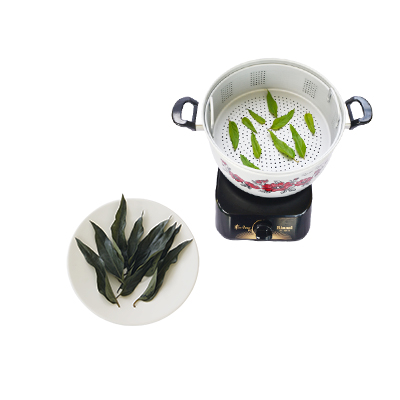
- Clean the leaves, then steam. Avoid boiling as it will reduce the leaves' potency.
- Eat as a vegetable or salad.
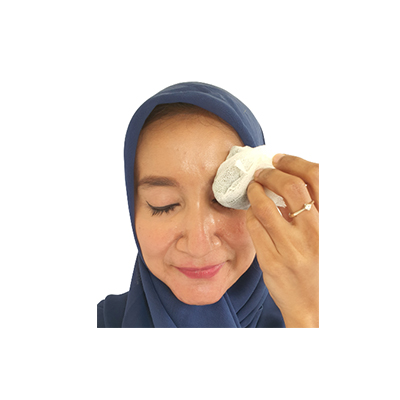
2. Eye Ailments (Heat and Swelling)
- A sufficient amount of simbuan leaves, wash thoroughly, then boil in water until boiling.
- Once the water is warm, take the leaves, wrap in cloth, and place over the affected eye until the leaves cool, then replace the compress.