Pangium edule Reinw.
Summary
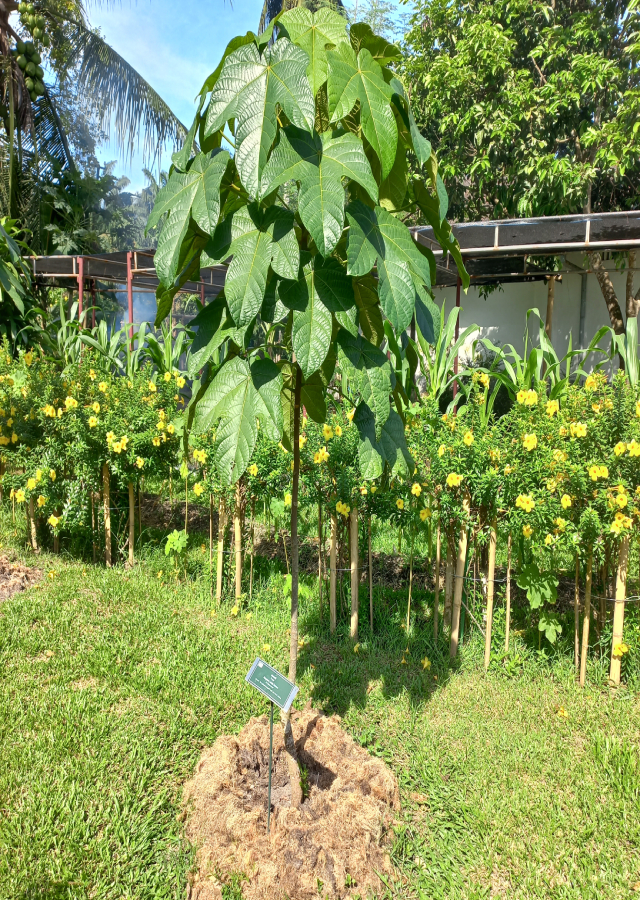
Kluwek (Pangium edule) is a tree 25 meters tall, even reaching 60 meters, from the Achariaceae family, a plant native to Indonesia distributed throughout the Malesia region. Its seeds, which are toxic when raw, are processed into a distinctive seasoning and cooking oil after undergoing a special fermentation process. Kluwek is traditionally believed to have antiseptic properties and to help with food poisoning and skin diseases.
Agroecology
Kluwek grows scattered in primary or secondary rainforest areas, in areas experiencing deforestation, growing wild or cultivated along riverbanks or in teak forest areas. This tree grows well in areas with elevations between 10-1,000 m above sea level on alluvial, podzolic, rocky, or nutrient-poor clay soils. This plant generally grows on riverbanks, waterlogged areas, and community gardens. Kluwek trees do not require specific soil type requirements, but grow well when the soil has a pH of 5.5-6.5, with average annual rainfall of 2,000-5,000 mm, in full sun.
Morphology
- Roots a very sturdy taproot.
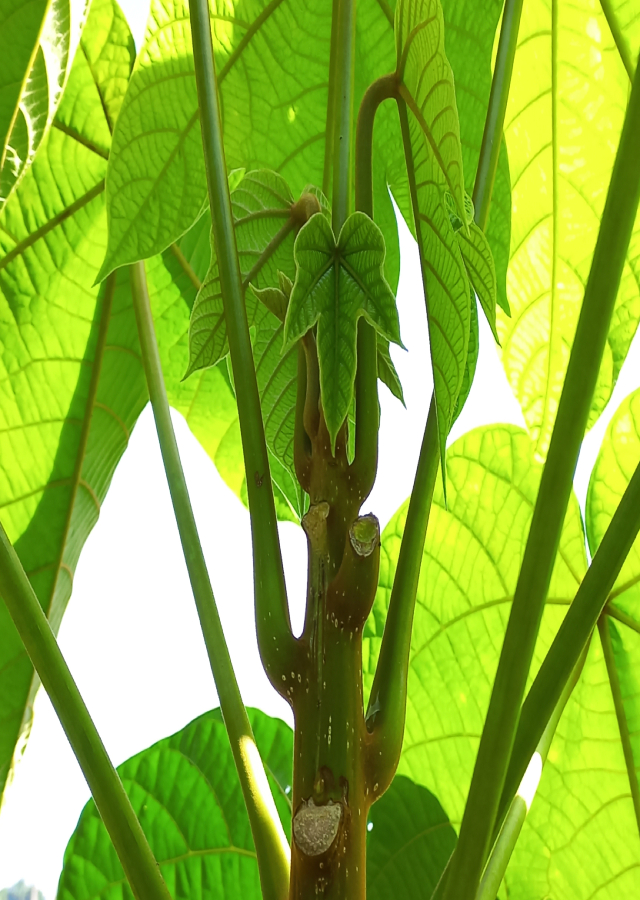
- Stem with a large trunk, young twigs hairy and gray in color. Bark reddish or grayish-brown and sometimes rough with many hardened fissures.
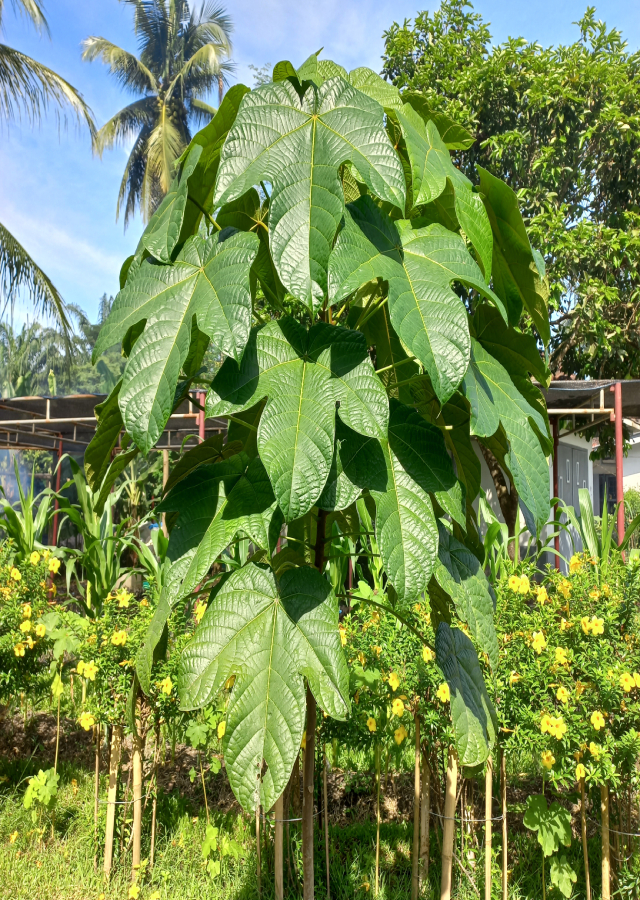
- Leaves single, clustered at the tips of twigs and long-petioled. Leaf blades of young trees are three-lobed while in mature trees the leaf blades are ovate, widening at the base into a heart shape with a tapering leaf tip. The upper surface is smooth and glossy green, the lower surface is brown and densely hairy. The veins are prominent on the underside. Leaf length is about 20-60 cm and width 15-40 cm. Fallen leaves leave a clear scar.
- Flowers of kluwek are greenish-brown, growing in the leaf axils or nearly at the tips of twigs. Male flowers are arranged in panicles, while female flowers generally appear singly at the tips of twigs.
- Fruit asymmetrical, ovate with both ends blunt. Its size varies, with a length of 7-10 cm or more. Fruit diameter is about 10-25 cm, the flesh is pale yellow, soft, and edible. The fruit skin is reddish-brown with a rough surface containing lenticels.
- Seeds large, numerous, neatly arranged on the fruit's core like cempedak fruit, gray, pyramid-shaped and hard. Large fruits contain up to 30 seeds, while small fruits contain about 12 seeds. The seed contains an endosperm rich in fat. In fresh fruit, the endosperm is white; after long storage, the endosperm color changes to blackish. Between the endosperm and the shell is a thin brown membrane. The seed coat is rough with a pericarp 6-10 mm thick, woody and grooved.
Cultivation
- Kluwek can be propagated through seeds, although it takes a long time, about 4 months, for seedlings to be ready for planting. Therefore, seeds must be pretreated (scarification) because kluwek has a hard seed coat, so seed dormancy must first be broken.
- Begins fruiting continuously throughout the season starting at around 15 years of age.
Chemical Content
Cyanogenetic glycosides, gynocardine, palmitic, lauric, myristic, myristoleic, palmitoleic, stearic, oleic, linoleic, linolenic, arachidic, erucic, lignoceric acids, alkaloids, flavonoids, steroids, and triterpenes.
Benefits
Remedy for pinworms and antidote for food poisoning, as an antiseptic and disinfectant for cleaning external wounds, anticancer, has antibacterial properties that can treat leprosy, scabies, and various other skin diseases, treats headaches, remedy for head lice.
Local Names
Kapayang, Kapencueng, Kapecong, Simaung (Minangkabau), Pangi, Kalowa (Bugis, Betawi, Bali, Manado), Pacung, Picung (Sunda), Pakem, Pucung (Java), Kalowa (Sumbawa, Makassar), Nagafu (Tanimbar).
Traditional Recipes
The following recipes reflect traditional knowledge passed down through generations, not a substitute for professional medical diagnosis or advice. Consult a healthcare provider before use.
1. Wounds
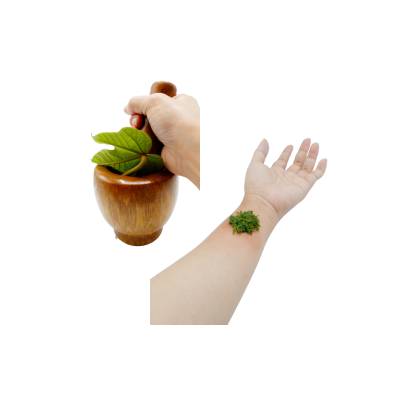
- Take 10 g fresh kluwek leaves and wash until clean.
- Pound the leaves until smooth or into a paste.
- Apply the leaf paste to the wound.

2. Remedy for head lice
- Prepare fresh kluwek leaves as needed.
- Heat the leaves over a flame.
- Place them around the head and cover with cloth.
Reference Sources
- Royal Botanic Garden. 2017. Plant of the World Online: Pangium edule Reinw. http://www.plantsoftheworldonline.org/taxon/urn:lsid:ipni.org:names:111972-1. 14-09-2021.
- Stuartxchange. 2021. Philipphine Medicinal Plants: Pañgi. http://www.stuartxchange.com/Pangi.html. 14-09-2021.
- S. Ramdana, Suhartati. 2015. PANGI (Pangium edule REINW.) SEBAGAI TANAMAN SERBAGUNA DAN SUMBER PANGAN. Buletin Eboni. Vol 12, No 1 (2015). https://ejournal.forda-mof.org/ejournal-litbang/index.php/buleboni/article/view/5052/4473. 14-09-2021.
- Useful Tropical Plants Database. 2021. Pangium edule. https://tropical.theferns.info/viewtropical.php?id=Pangium+edule. 14-09-2021.