Parkia speciosa Hassk.
Summary
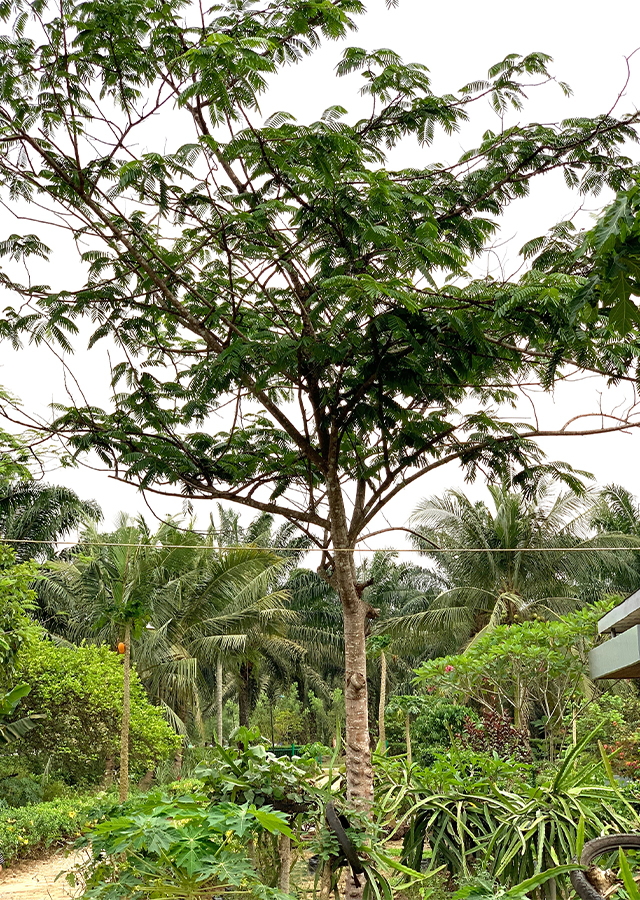
Petai (Parkia speciosa) is an upright tree up to 45 meters tall of the Fabaceae family, distributed from Northeast India to Malaysia and Indonesia. Its distinctively aromatic fruit is a favorite vegetable throughout Southeast Asia, while its wood is used in the paper industry. Petai is traditionally believed to lower high blood pressure and help address anemia.
Agroecology
Petai is found in humid tropical lowlands up to elevations of 1,500 m above sea level, rainfall 1,000-2,000 mm/year. Prefers latosol to loamy soil types, pH 5.5-7. Prefers full sunlight and grows in wet climate regions, not tolerant of drought conditions.
Morphology
- Roots taproot.
- Stem hard wood, reddish-brown bark, branches covered with fine hairs.
- Leaves compound alternating. 18–42 pairs of leaflets, oblong, green.
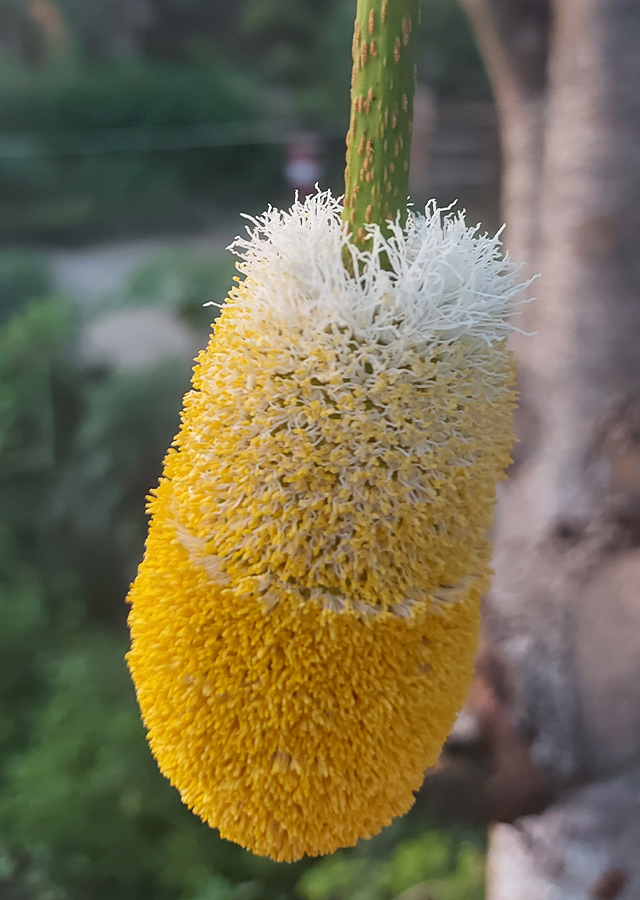
- Flowers collected on a single head called a capitulum, yellow in color. The capitulum is long-stalked and hangs down.
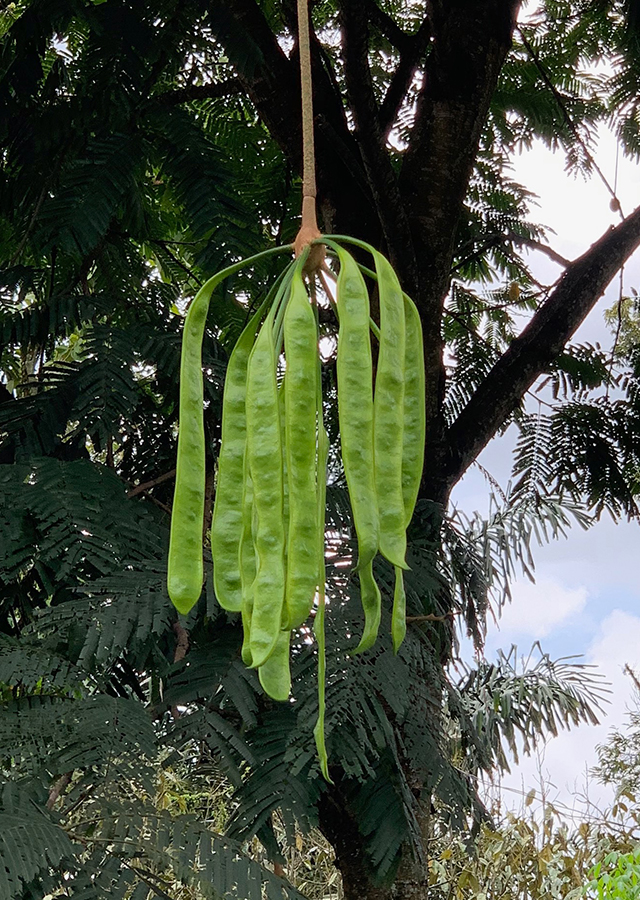
- Fruit a straight, long, green pod. Each pod contains many seeds, with a pungent smell.
Cultivation
Propagated generatively (by seed), as well as vegetatively (budding). Seeds are selected from the fruit of superior, healthy parent plants.
Chemical Content
Flavonoids, alkaloids, phenols, terpenoids (β-sitosterol, stigmasterol, lupeol, campesterol, squalene), cyclic polysulfides, thiazolidine-4-carboxylic acid, saponins, hexathionine, tetrathiane, trithiolane, penthathiopane, pentathiocane, tetrathiepane, djenkolic acid.
Benefits
Treats liver and kidney problems, worm infections, stress, stomach ulcers, large warts, anemia, constipation and stops smoking habits, lowers high blood pressure and stroke, prevents morning sickness in pregnant women, has antioxidant, antidiabetic activity.
Simplisia
- Wash petai leaves using running water until clean then drain.
- Separate the petai leaves from the leaf stalk.
- Air-dry the leaves away from direct sunlight for 6 days until evenly dry.
- Once dry, grind using a blender.
- Store in a clean, airtight container.
Local Names
Parira (Karo), Palia, Pelia (Toba), Patai (Minangkabau), Petar (Lampung), Foopatu (Buru), Pateh (Ambon), Puti (Sumba), Pode (Bima), Pote (Sawu), Paloh (Ceram), Pateka (Ambon) and Sindutan (Java).
Traditional Recipes
The following recipes reflect traditional knowledge passed down through generations, not a substitute for professional medical diagnosis or advice. Consult a healthcare provider before use.
1. Worm Infections
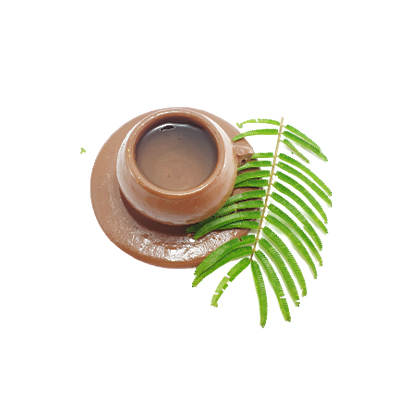
- Wash 25 g fresh petai leaves thoroughly. Boil with 2 glasses of water for 15 minutes.
- Drink the concoction twice a day, 1/2 glass each time (morning and evening).
2. Preventing Morning Sickness in Pregnant Women
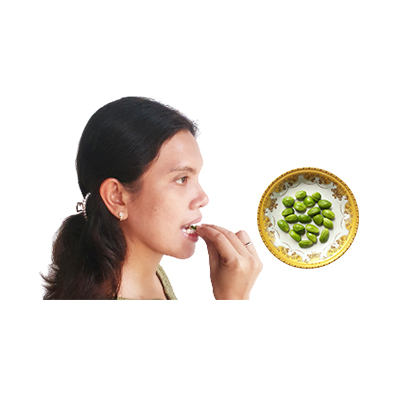
- Peel the petai fruit, take the seeds and separate from the seed coat.
- Wash thoroughly and rinse with boiled water.
- Consume petai between meals.
Reference Sources
- Ahmad NI, Rahman SA, Leong YH, Azizul NH. 2019. A review on the phytochemicals of Parkia Speciosa, Stinky Beans as potential phytomedicine. J. Food Sci. Nutr. Res. 2(3): 151-173.
- Balaji K SA, Nedumaran, Devi T, Sikarwar MS, Fuloria S. 2015. Phytochemical analysis and in vitro antioxidant activity of Parkia speciosa. International Journal of Green Pharmacy 9(4): 50-54
- Butar B, Hayati R, Robiyanto, Untari EK. 2016. Potensi ekstrak etanol daun Petai (Parkia speciosa Hassk.) terhadap kadar Superoksida Dismutase (SOD) pada plasma Tikus yang mengalami stres oksidatif. Pharmaceutical Science and Research Universitas Indonesia 3( 2).
- Chhikara N, Devi HR, Jaglan S, Sharma P, Gupta P, Panghal A. 2018. Bioactive compounds, food applications and health benefits of Parkia speciosa (stinky beans): a review. Agric. & Food Secur. 7: 46-55.
- Elidar Y. 2017. Budidaya Tanaman Petai di Lahan Pekarangan dan Manfaatnya Untuk Kesehatan. Jurnal Abdimas Mahakam 1(2).
- Ko HJ, Ang LH, Ng LT. 2014. Antioxidant activities and polyphenolic constituents of Bitter Bean Parkia Speciosa. International Journal of Food Properties 17: 1977–1986
- Kurniawati DA. 2014. Aktivitas antibakteri ekstrak kulit petai (Parkia speciosa Hassk.) terhadap bakteri Escherichia coli dan Staphylococcus aureus. Skripsi. Fakultas Matematika dan Ilmu Pengetahuan Alam. Institut Pertanian Bogor. Bogor.
- Mahardika C. 2013. Fraksionasi Ekstrak Kulit Petai Berpotensi Antioksidan. Fakultas Matematika dan Ilmu Pengetahuan Alam. Institut Pertanian Bogor. Bogor.
- Nurdyansyah F., Widiastuti DA, Mandasari AA. 2019. Karakteristik simplisia dan ekstrak etanol kulit Petai (Parkia speciosa) dengan metode maserasi. Prosiding Seminar Sains dan Enterpernership VI Tahun 2019. Semarang.
- Sonia N, Dsouza MR, Alisha. 2018. Pharmacological evaluation of Parkia speciosa Hassk. for antioxidant, anti-inflammatory, anti-diabetic and anti-microbial activities in vitro. Int. J. of. Life Sciences 11: 49-59.