Passiflora edulis Sims.
Summary
Purple passion fruit (Passiflora edulis) is a climbing plant up to 9 meters long of the Passifloraceae family, originating from southern Brazil to Paraguay, spreading throughout the tropical world via Europe in the 19th century. North Sumatra and South Sulawesi are its main production centers in Indonesia. Its sweet-tart fruit is believed to help relieve chronic allergy symptoms and boost immunity.
Agroecology
Grows well in areas at elevations of 1,200-2,000 m above sea level and does not flower at elevations below 1,000 m above sea level. Prefers fertile soil conditions, normal pH, fairly good drainage to avoid waterlogging. In Southeast Asia it is planted in areas with annual rainfall of 2,000-3,000 mm/year.
Morphology
- Roots fibrous root system, yellowish-brown in color and grows spreading.
- Stem four-sided, twining branches, tendril length 19-25 cm, green tendril color, brown stem color.
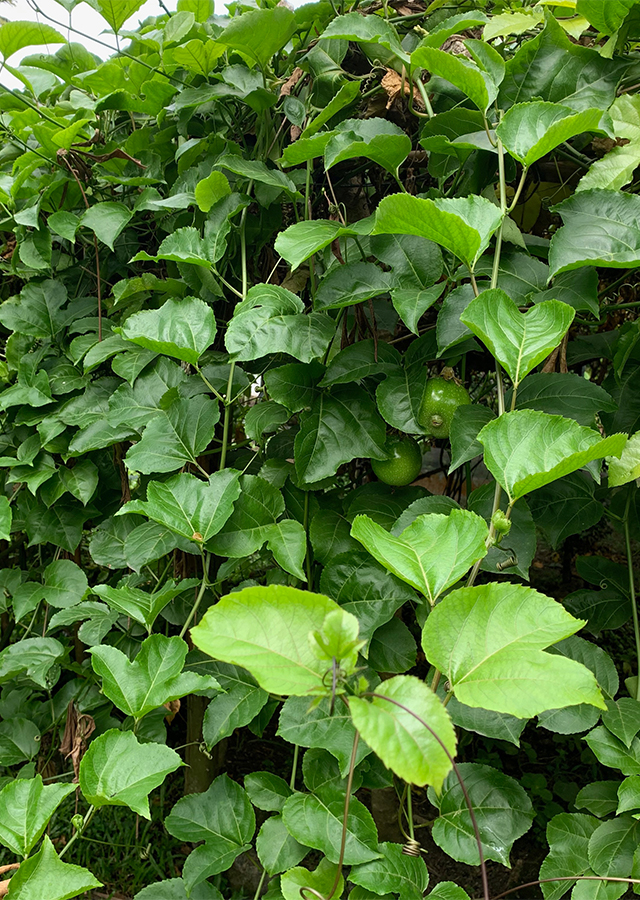
- Leaves green, single, palmate, heart-shaped base, tapering tip, serrated edges.
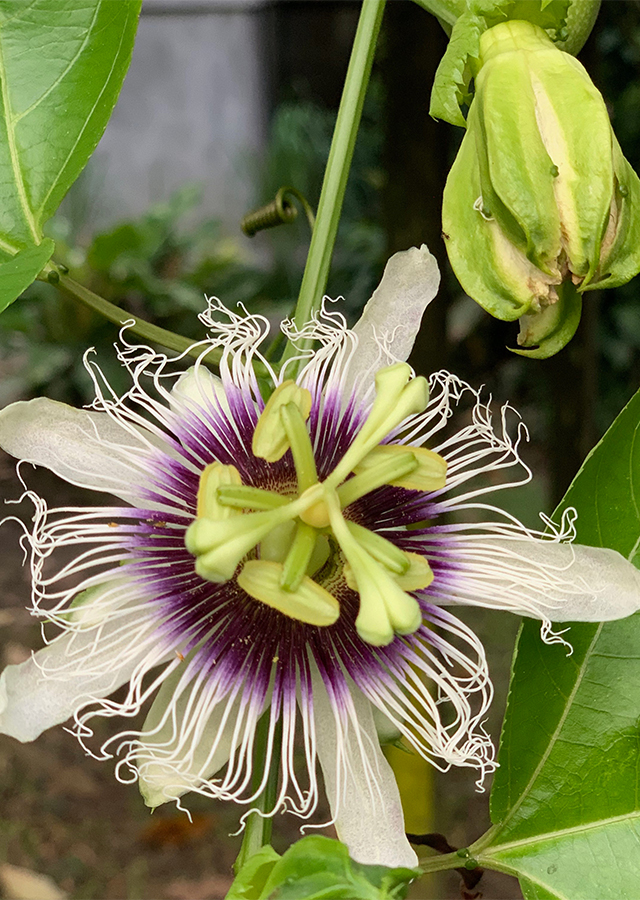
- Flowers single, white on top and purple at the base, fragrant.
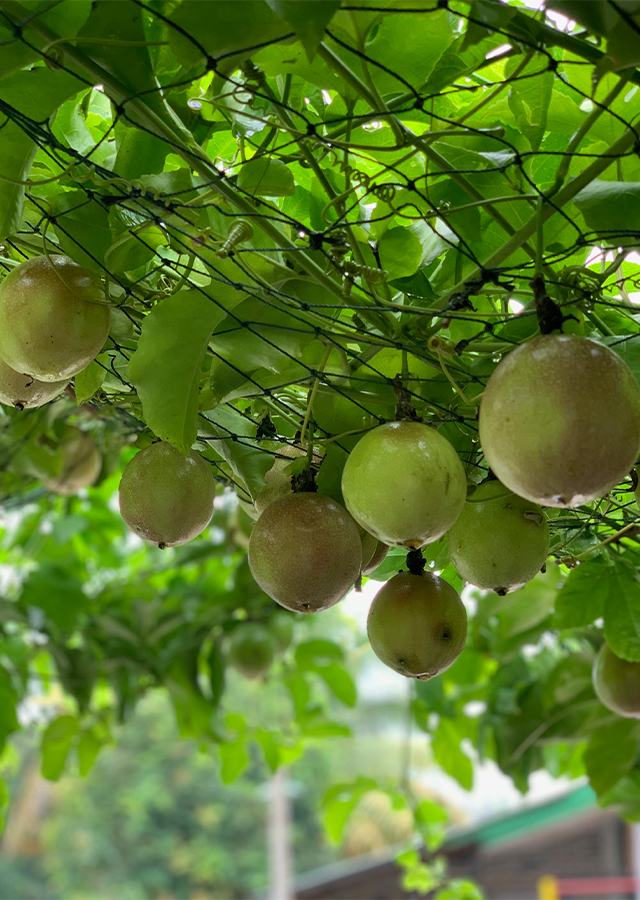
- Fruit not perfectly round, smooth and hard skin, dark purple, sour taste, white endocarp.
- Seeds round black, inside the funiculi containing liquid.
Cultivation
Propagated generatively (by seed) and vegetatively (stem cuttings).
Chemical Content
Tannins, cyanogenic glycosides, apigenin, flavonoids (quercetin, luteolin, vitexin, isoorientin), saponins, alkaloids (harmidine, harmine, harmol), polyphenols, triterpenes, essential oil.
Benefits
Kills cancer cells, relieves chronic allergy symptoms, liver and kidney disease, constipation, boosts immunity, separates and removes toxins from the body, stimulates young cell growth in facial skin.
Simplisia
- Collect fresh purple passion fruit peel, clean off any attached dirt. Wash thoroughly then drain. Dry, air-dry first then cut into smaller pieces.
- Dry in a drying cabinet.
- Grind the dried material into powder and store in a tightly closed container.
Local Names
Markisa, Rambusa, Buah monyet, Areuy pasi (Sunda), Markisah (Malay), Buwah negri (Java).
Traditional Recipes
The following recipes reflect traditional knowledge passed down through generations, not a substitute for professional medical diagnosis or advice. Consult a healthcare provider before use.
1. Constipation
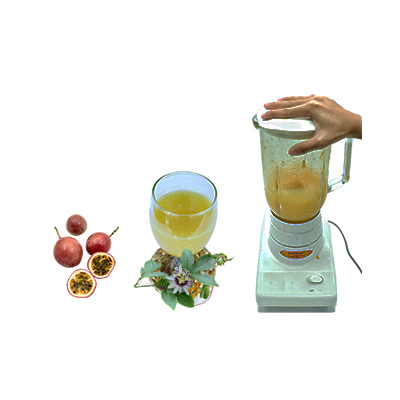
- Take the contents of 5 passion fruits then add water as needed. Blend with a blender, then strain to become juice.
- Drink all at once.
Reference Sources
- Akanbi BO, Bodunrin OD, Olayanju S. 2011. Phytochemical screening and antibacterial activity of Passiflora edulis. Researcher 3(5): 9-12.
- Li H, Zhou P, Yang Q, Shen Y, Deng J, Li L, Zhao D. 2011. Comparative studies on anxiolytic activities and flavonoid compositions of Passiflora edulis 'edulis' and Passiflora edulis 'flavicarpa'. Journal of ethnopharmacology 133(3): 1085-1090.
- Prosea. 2016. Passiflora edulis. https://uses.plantnet-project.org/en/Passiflora_edulis_ (PROSEA) 07-11-2019
- Rudnicki M, de Oliveira MR, da Veiga Pereira T, Reginatto FH, Dal-Pizzol F, Moreira JCF. 2007. Antioxidant and antiglycation properties of Passiflora alata and Passiflora edulis extracts. Food Chemistry 100(2): 719-724