Passiflora quadrangularis L.
Summary
Markisa besar (Passiflora quadrangularis) is a vine 15-45 meters long from the Passifloraceae family that originates from Brazil and Colombia. Its large fruit is typically eaten fresh or processed into juice, while its flowers and fruit are also used in cosmetics. Markisa besar is traditionally believed to treat asthma, insomnia, and dysentery.
Agroecology
Markisa besar grows in hot, humid, low to medium elevation areas in tropical to subtropical climates. It grows better at elevations between 200-500 m. The plant requires temperatures not lower than about 16 °C during flowering to ensure fruit set. It can be damaged if temperatures drop far below 10 °C. Requires soil rich in humus, moist but well-drained, and a shaded position. Prefers soil close to neutral, disliking very acidic or very alkaline conditions. Passiflora species tend to flower and fruit more freely when grown in soil of moderate fertility.
Morphology
- Roots a taproot system (radix primaria) with sympodial branching.
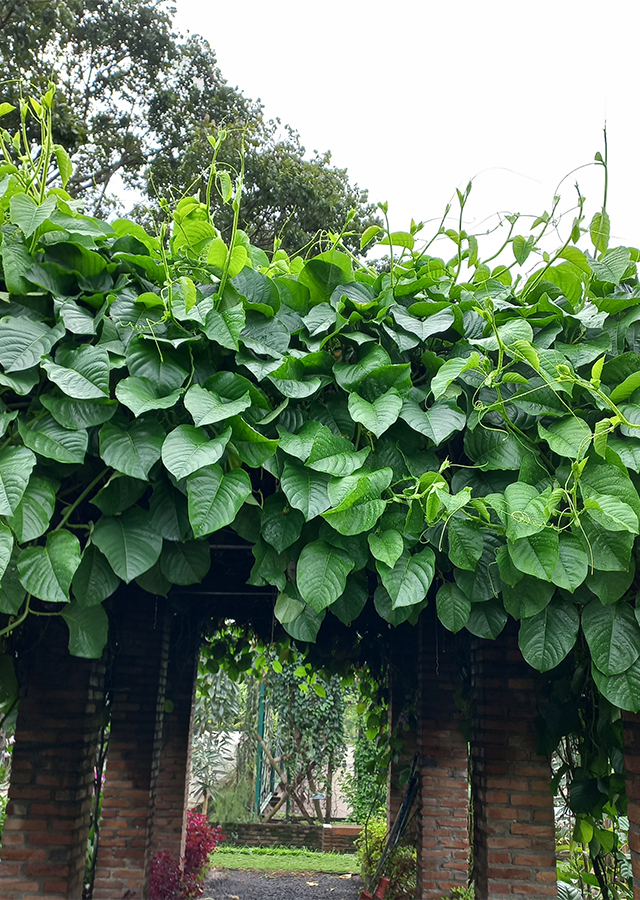
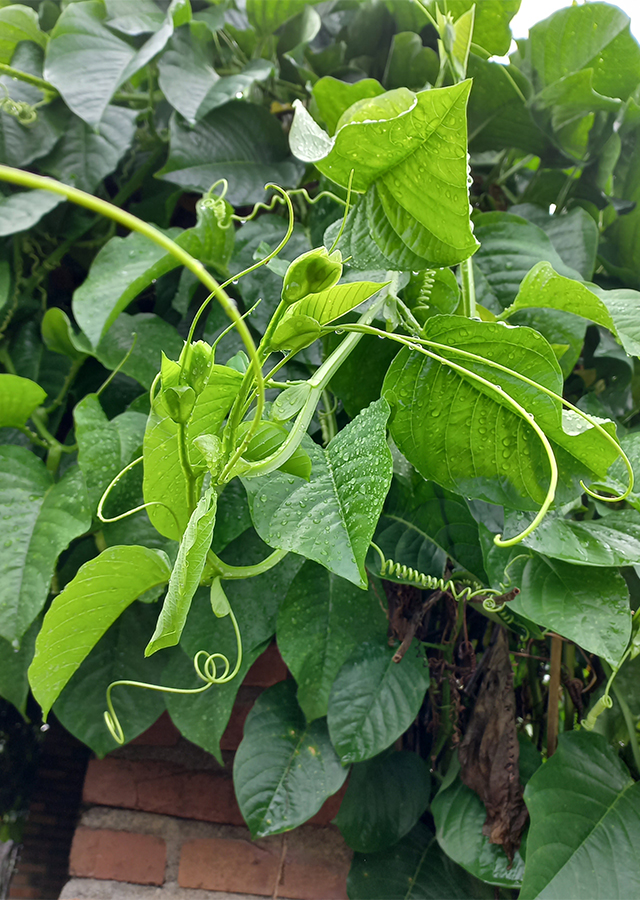
- Stem herbaceous with slight woodiness at the base. Stem 4-angled, with prominent wings at the angles. Tendrils located in the leaf axils, with leaf-like ovate stipules (up to 3.5 cm long).
- Leaves broadly oblong to oblong-ovate, 10-20 cm long and 8-15 cm wide, arranged alternately along the stem. Base rounded becoming heart-shaped, tip abruptly tapering. Leaf blade thin, with concave veins visible on the upper surface and prominent on the lower surface.
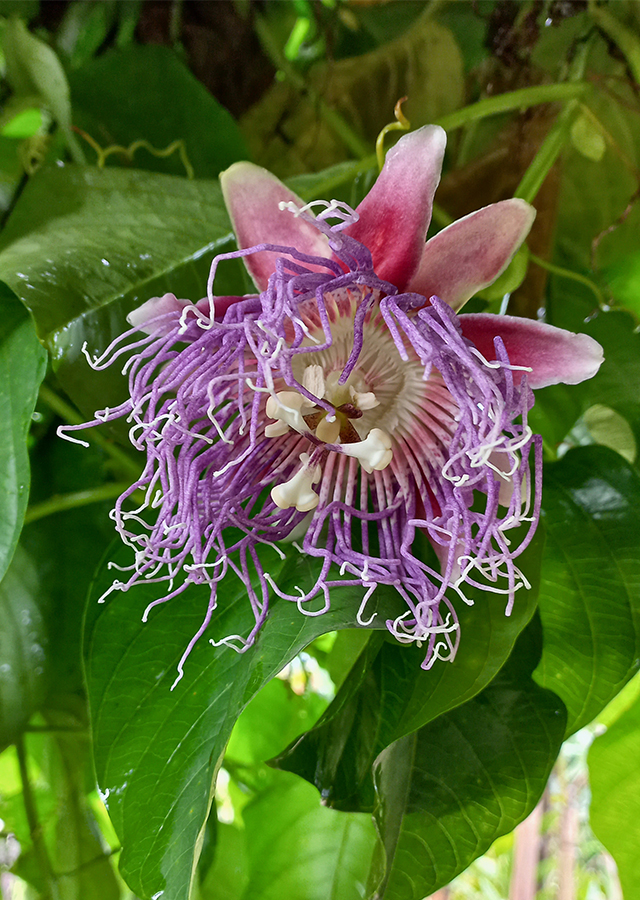
- Flowers solitary and fragrant. Each flower about 12 cm in diameter, with a bell-shaped calyx, 5 greenish sepals outside while whitish, pink or purplish inside; 5 white and pink petals, about 4.5 cm long; corona filaments purple, white, and blue.
- Fruit melon-shaped, oblong, aromatic, about 10-30 cm long and 15 cm wide. The fruit surface may be elongated with 3 lobes or ribs, skin greenish-white to pale yellow and thin. The flesh is white or pink and about 4 cm thick, the central cavity contains juice and sweet-sour yellowish pulp.
- Seeds brown.
Cultivation
Propagation by seeds and cuttings. Seeds are best sown as soon as ripe together with their fruit flesh, which helps break the seed coat and speeds up germination. Shoot cuttings are taken at the node. Cuttings root best in neutral to slightly acidic compost, though 100% sharp sand also gives good results. Cuttings from mature wood are taken at a node.
Chemical Content
Alkaloids, glycosides, flavonoids, essential oil, gynocardin (cyanogenic glycoside), carboline alkaloids, and benzoflavones, hydrocyanic acid, norepinephrine, 5-hydroxytryptamine, cyclopropane triterpene glycosides.
Benefits
Treats liver ailments, headaches, asthma, diarrhea, dysentery, neurasthenia and insomnia, remedy for worms and ulcers. Has analgesic, antiscorbutic, antispasmodic, astringent, diaphoretic, hypnotic, narcotic, sedative, and vasodilatory properties.
Simplisia
- Prepare markisa besar flower leaves, wash clean with running water then drain.
- Dry under sunlight or with an oven at 40 °C until moisture content reaches 10%.
- Blend into powder and sieve with a 60-mesh sieve.
- Store in a clean, airtight place.
Local Names
No information found. Further research needed.
Traditional Recipes
The following recipes reflect traditional knowledge passed down through generations, not a substitute for professional medical diagnosis or advice. Consult a healthcare provider before use.
1. Difficulty sleeping
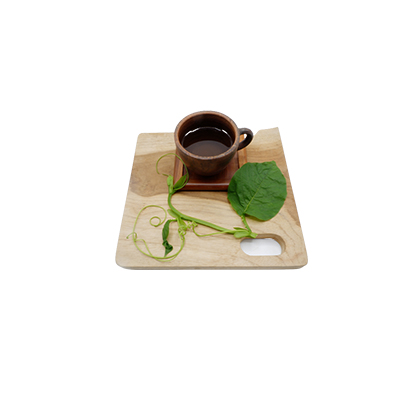
- Take 5-15 g of the whole markisa besar plant and wash until clean.
- Boil in water until boiling.
- Strain the decoction.
- Drink.
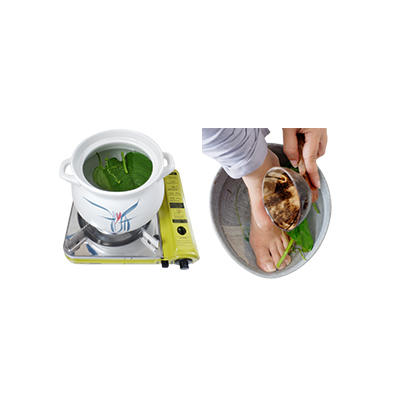
2. Leg ulcers
- Take the whole markisa besar plant as needed and wash until clean.
- Boil the ingredients until boiling.
- Once cool, use the water to wash the affected skin.
Reference Sources
- Useful Tropical Plants Database. 2021. Passiflora quadrangularis. http://tropical.theferns.info/viewtropical.php?id=Passiflora+quadrangularis. 15-09-2021.
- National Parks. 2021. Passiflora quadrangularis L. https://www.nparks.gov.sg/florafaunaweb/flora/7/0/7076. 15-09-2021.
- Royal Botanic Gardens. 2017. Plant of the World Online: Passiflora quadrangularis L.. http://www.plantsoftheworldonline.org/taxon/urn:lsid:ipni.org:names:675390-1. 15-09-2021.
- Stuartxchange. 2017. Philipine Medicinal Plants: Granadilla. http://www.stuartxchange.org/Granadilla.html. 15-09-2021.