Pelargonium zonale (L.) L'Hér.
Summary
Geranium (Pelargonium zonale) is a flowering shrub up to 1 meter tall of the Geraniaceae family, native to South Africa, growing naturally on rocky hills and slopes. Its leaves can locally be eaten as a vegetable, besides being popular as a potted ornamental. Geranium is also believed to help relieve muscle pain, anxiety, and speed wound healing.
Agroecology
This plant thrives with full sunlight of at least 6 hours and dry soil. Requires a cool temperature of 20-26°C and grows in highlands.
Morphology
- Stem succulent and hairy, becoming woody with age.
- Leaves often have a narrow, dark, zigzag pigmentation zone. The leaves are reniform and petiolate with an average diameter of 5-6 cm.
- Flowers borne in umbels, individual flowers strongly zygomorphic, with narrow, bright pink petals with reddish lines along the petal.
Cultivation
- Propagated by seed and stem cuttings.
- Stem cuttings: cut a healthy, non-flowering stem 10 cm long, remove large leaves and dip in rooting hormone. Roots emerge after 8-10 days.
Chemical Content
Gallic acid, alpha pinene, myrcene, limonene, menthone, linalool, geranyl butyrate, citronellyl formate, ß-citronellol, ß-caryophyllene, caryophyllene oxide.
Benefits
Helps prevent wrinkles, relieves muscle pain and stiffness, eases anxiety and symptoms of depression, addresses candida, bacterial and viral infections, supports brain function, aids wound healing, acts as an anticancer agent.
Simplisia
- Separate the leaves from the stems. Wash with water until clean then drain.
- Dry in the sun covered with a thin black cloth for 7 days. Grind into powder.
- Pack the dried material in a clean, airtight container.
Local Names
No information found. Further research needed.
Traditional Recipes
The following recipes reflect traditional knowledge passed down through generations, not a substitute for professional medical diagnosis or advice. Consult a healthcare provider before use.
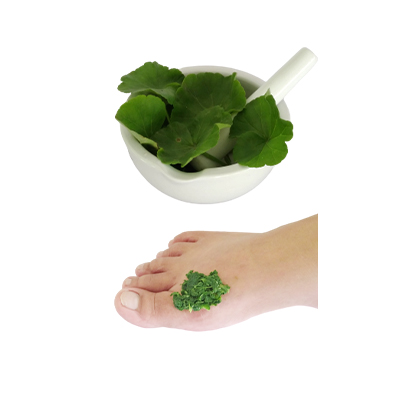
1. Rheumatism
- Prepare 15 g fresh geranium leaves, pound until mashed.
- Rub onto the affected part of the body.
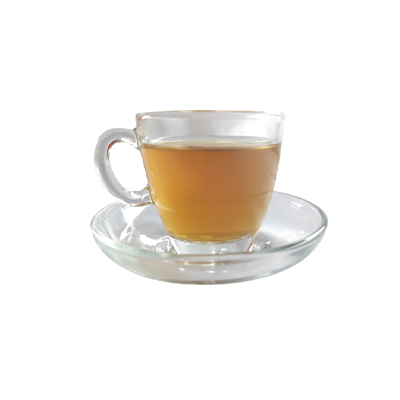
2. Providing a calming effect
- Put 2 tbsp dried geranium leaf powder into 250 ml hot water, let stand 5 minutes.
- Strain and drink.
Reference Sources
- CABI. Invasive Species Compendium. https://www.cabi.org/isc/datasheet/120129 03-01-2021
- Tropical Plants Database, Ken Fern. tropical.theferns.info. Pelargonium zonale. http://temperate.theferns.info/plant/Pelargonium+zonale 03-02-2021
- CABI. Invasive Species Compendium https://www.cabi.org/isc/datasheet/120129#tosummaryOfInvasiveness 03-02-2021