Pentas lanceolata (Forssk.) Deflers
Summary
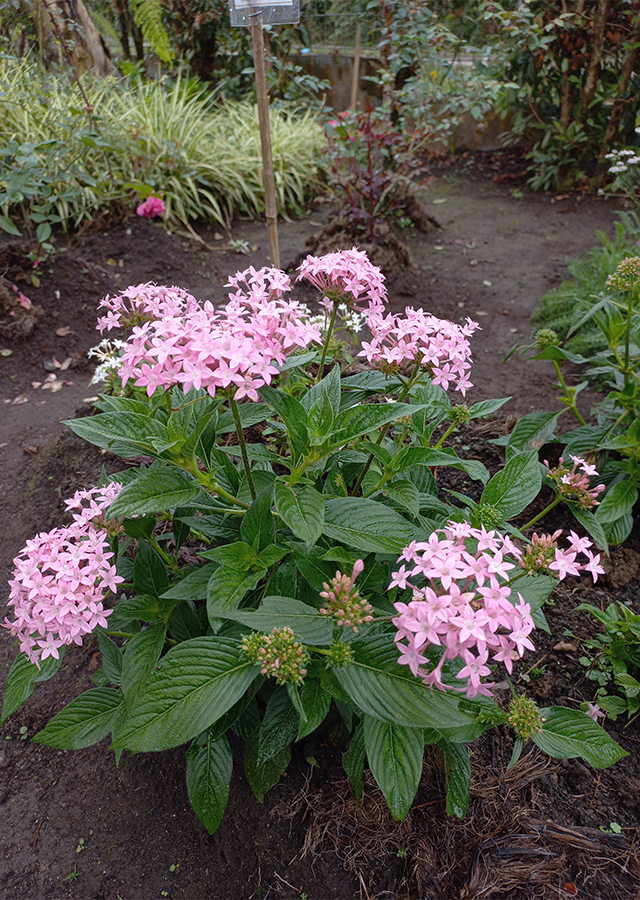
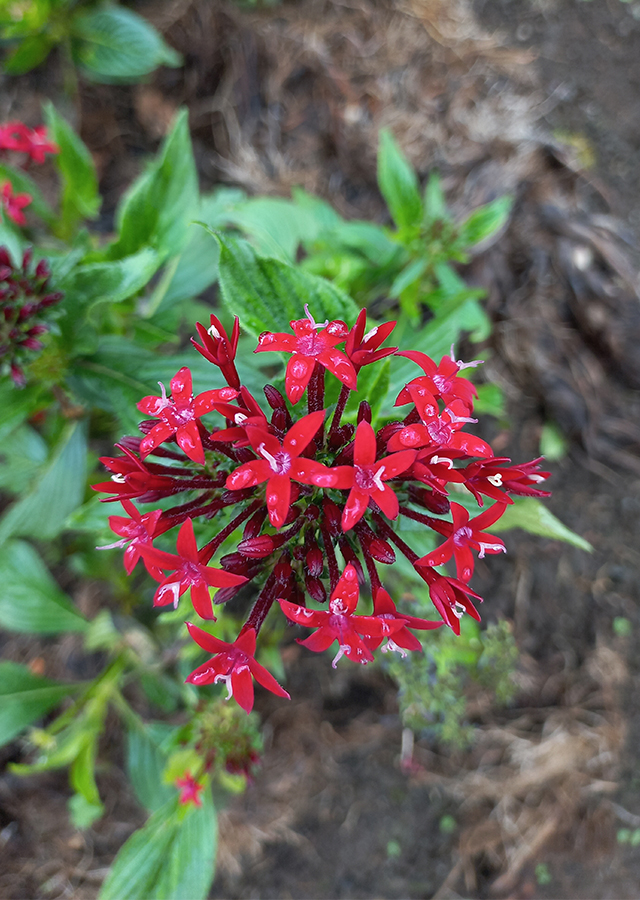
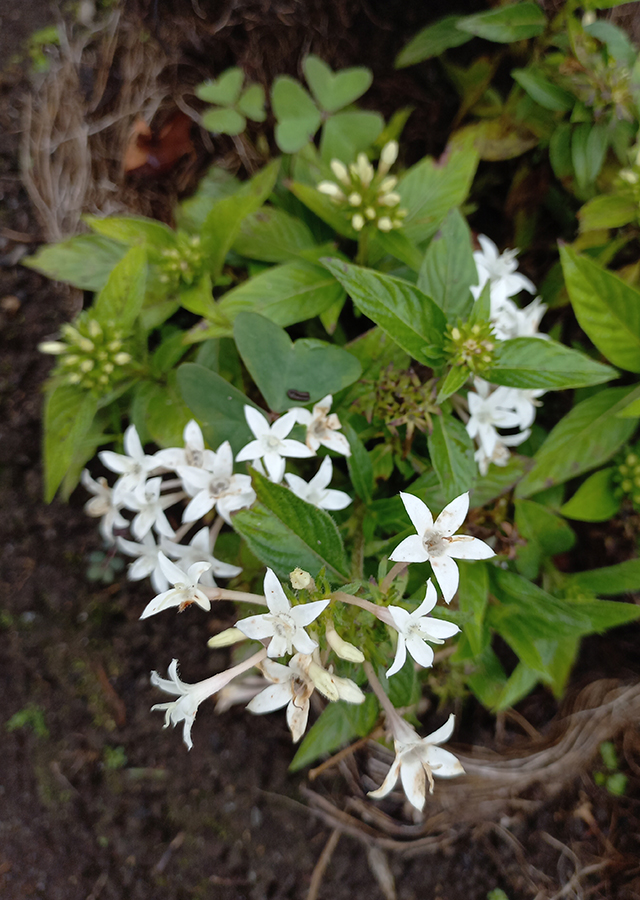
Bunga pentas (Pentas lanceolata) is a shrub 30-60 cm tall from the Rubiaceae family that originates from East Africa and the Arabian Peninsula, spanning from Ethiopia to Yemen. This plant is popular as a potted ornamental worldwide. In traditional African medicine, bunga pentas is used as a remedy for tapeworms, acne, and malaria.
Agroecology
Bunga pentas grows best in warm, humid habitats with an average annual temperature of 27 °C. Although this species tolerates various soil types and textures, it prefers well-drained soil with a pH of 6.1 to 8.5. P. lanceolata thrives in full sun but can also tolerate partial shade conditions. This plant can also adapt to grow in water-scarce environments such as dry shrubland and semi-arid habitats.
Morphology
- Stem square-shaped, moderately to densely pilosulous, becoming often hairless as it ages.
- Leaves dark green, opposite leaves ovate to lanceolate with entire smooth margins (8-14 cm long). Leaves strongly veined and pubescent (hairy).
- Flowers star-shaped, 5 petals 1-1.5 cm wide and appearing in large terminal clusters known as corymbs. This species blooms freely.
- Fruit a dry, dehiscent fruit known as a capsule (4-5 mm long).
Cultivation
For generative propagation with seeds, sow seeds on the soil surface and germination will occur within 5-12 days when outdoor daily temperatures are around 22 °C. Propagation can also be done vegetatively using stem cuttings.
Chemical Content
Alkaloid, flavonoid, carbohydrate, phenol, terpenoid, coumarin, phytosterol, and quinone.
Benefits
As a remedy for tapeworms, itchy rash, acne, malaria, skin diseases, gonorrhea, syphilis, and as a laxative. Has antiviral, antibacterial, and wound-healing properties.
Local Names
No information found. Further research needed.
Traditional Recipes
The following recipes reflect traditional knowledge passed down through generations, not a substitute for professional medical diagnosis or advice. Consult a healthcare provider before use.
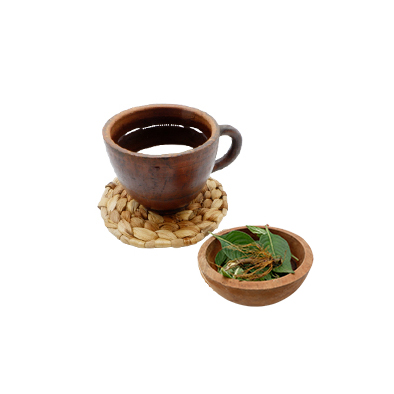
1. Diarrhea
- Take bunga pentas leaves or root and wash until clean.
- Boil the ingredients until boiling.
- Let stand until warm/cool.
- Strain, then give as a drink to infants suffering from diarrhea.
- Can also be given through the nose, this method may be painful and is usually applied to infants and small children if they refuse to drink the remedy.
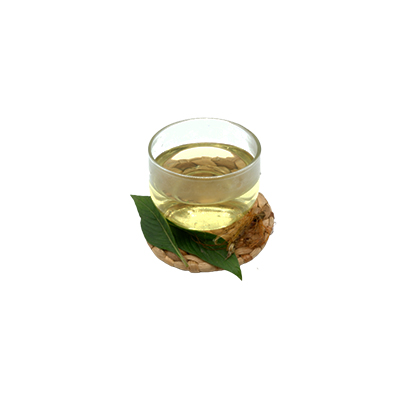
2. Boils
- Take bunga pentas leaves or root and wash until clean.
- Boil the ingredients until boiling.
- Let stand until warm/cool.
- Strain, then drink.
Reference Sources
- Royal Botanic Gardens. 2017. Plants of the World Online: Pentas lanceolata (Forssk.) Deflers. http://powo.science.kew.org/taxon/urn:lsid:ipni.org:names:760275-1. 09-11-2021.
- CAB International. 2021. Pentas lanceolata (Egyptian starcluster). https://www.cabi.org/isc/datasheet/120131. 09-11-2021.
- Flora Fauna Web. 2021. Pentas lanceolata. https://www.nparks.gov.sg/florafaunaweb/flora/3/2/3232. 09-11-2021.
- Mirutse Giday, Zemede Asfaw, Zerihun Woldu Tilahun Teklehaymanot. 2009. Medicinal plant knowledge of the Bench ethnic group of Ethiopia: an ethnobotanical investigation. Journal of Ethnobiology and Ethnomedicine 2009. Published: 13 November 2009.