Peperomia pellucida (L.) Kunth
Summary
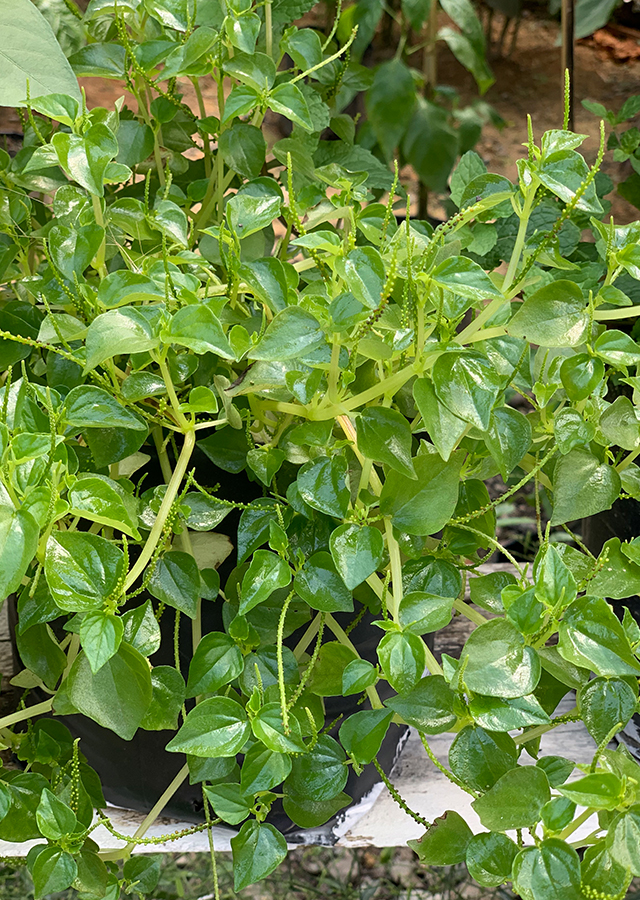
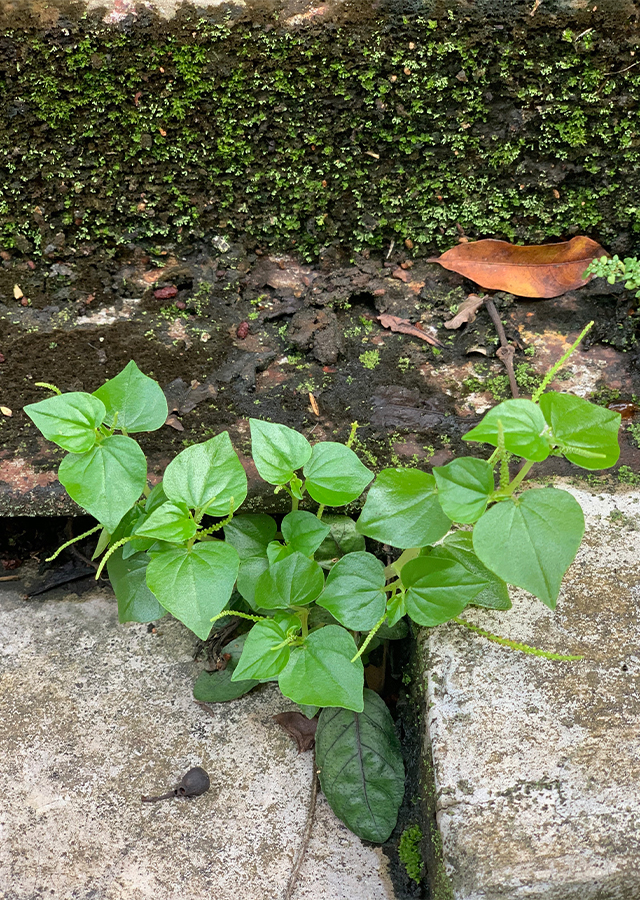
Sirih cina (Peperomia pellucida) is an annual herb 10-20 cm tall of the Piperaceae family, originating from Central and South America, now growing as a wild weed in Southeast Asia. Its succulent leaves can be cooked or eaten as a salad, containing the compound phytol which has antimicrobial properties. Traditionally, sirih cina is believed to relieve gout, headache, and be antidiarrheal.
Agroecology
Grows well in regions with rainfall up to 3,000 mm/year, elevation 500-1,200 m above sea level, andosol and latosol soil types with organic matter content up to 5%, without shade. Generally found around house yards especially in moist places.
Morphology
- Roots taproot branching so it appears fibrous, white in color.
- Stem has high water content, round and soft stem shape throughout, light green in color. The average height of this plant is between 10-20 cm.
- Leaves heart-shaped, glossy thick green, high water content (succulent), waxy layer on the upper leaf surface.
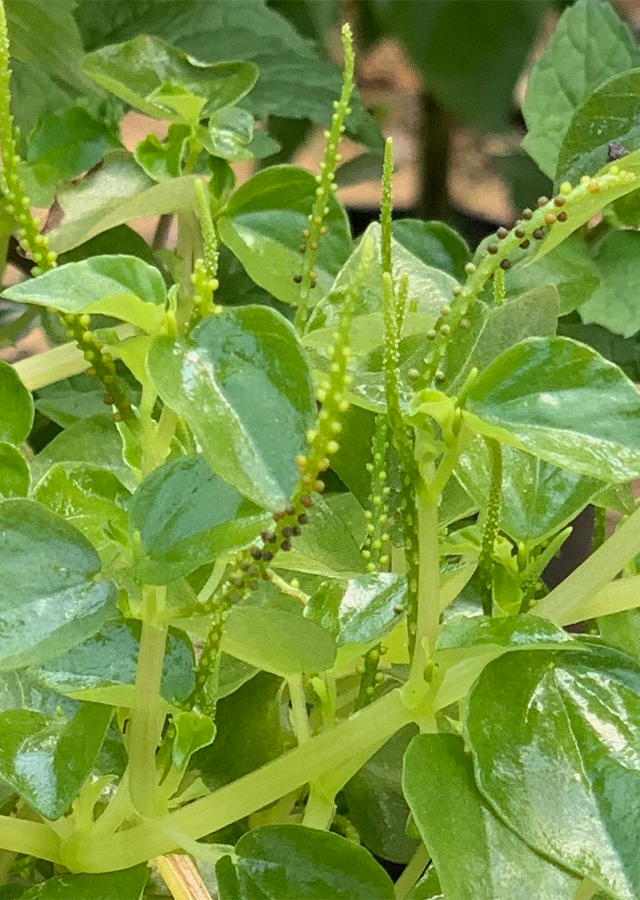
- Flowers shaped like pepper fruit arranged in a spike cluster, growing upright, pointed flower tip.
- Fruit green in color, small size.
- Seeds brown in color, small size.
Cultivation
Propagated generatively (by seed), with moist soil conditions and protected from sunlight.
Chemical Content
Calcium oxalate, essential oils, alkaloids, flavonoids, glycosides, phenols, saponins, steroids, terpenoids, tannins, patuloside A, dillapiole, inulin, terpenes, phytosterols.
Benefits
Treats gout or rheumatism, reduces headache, has anti-inflammatory, antibiotic, antidiabetic, antioxidant, antidiarrheal, and antimicrobial activity.
Simplisia
- Take the whole plant.
- Wash with clean water.
- Dry using an oven at 40-60°C, until reaching a moisture content of 8%.
- Store in a clean plastic/container then vacuum-seal.
Local Names
Saladaan (Sunda), Rangu-rangu, Sladanan, Suruhan (Java), Tumpangan air (Sumatra, Jakarta), Gofu goroho (Ternate).
Traditional Recipes
The following recipes reflect traditional knowledge passed down through generations, not a substitute for professional medical diagnosis or advice. Consult a healthcare provider before use.
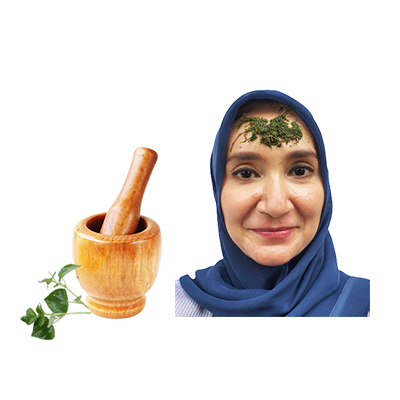
1. Headache
- Prepare an adequate amount of sirih cina leaves.
- Wash thoroughly with running water.
- Knead the leaves.
- Apply to the head as a poultice.
Reference Sources
- Hanani E, Ladeska V, Astuti AC. 2017. Pharmacological and phytochemical evaluation of Indonesian Peperomia pellucida (Pieraceae). Int. J. Biol. & Pharm. Res. 8(1): 10-17.
- Kartika IGAA, M Insanu, Safitri D, Putri CA, Adnyana IK. 2016. New update: traditional uses, phytochemical, pharmacological and toxicity review of Peperomia pellucida (L.) Kunth. Ph. Ol. 2: 30-43.
- Khan A, Rahman M, Islam S. 2008. Antipyretic activity of Peperomia pellucida leaves in Rabbit. Turk. J. Biol. 32: 37-41
- Narayanamoorthi V, Vasantha K, Rency RC, Maruthasalam A. 2015. GC MS determination of bioactive components of Peperomia pellucida (L.) Kunth. Biosci. Discovery 6(2):83-88.
- Theresa EK, Ibibia. 2012. Phytochemical and antimicrobial analysis of extracts of Peperomia pellucida (L). J. Pharm. Res. 5(5): 2934-2937.
- Ukieyanna. 2012. Aktivitas antioksidan, kadar fenolik, dan flavonoid total tumbuhan Suruhan (Peperomia pellucida L. Kunth). Skripsi. Fakultas Matematika dan Ilmu Pengetahuan Alam. Institut Pertanian Bogor. Bogor.
- Anonymous. 2018. Manfaat Tanaman Sirih Cina. http://kronika.id/manfaat-tanaman-sirih-cina/ 12-01-2020
- Anonymous. 2017. Morfologi Sirih cina atau Ketumpang air (Peperomia pellucida. https://www.sampulpertanian.com/2017/05/morfologi-sirih-cina-atau-ketumpang-air.html 12-01-2020