Peperomia tetraphylla (G.Forst.) Hook. & Arn.
Summary
Peperomia tetraphylla, popularly called Peperomia Hope, is a succulent epiphytic herb native to Hawaii and now distributed across tropical and subtropical regions. This plant holds an important place in the Ayurveda, Unani, and Siddha medicine systems, used among others for microbial infections, diarrhea, and diabetes, besides often being grown as an ornamental ground cover.
Agroecology
This plant grows at elevations of 180-2,800 m asl in Australia, Asia, Africa, New Zealand, and other islands in the Pacific Ocean. Growing Peperomia tetraphylla is better in a well-drained soil mix, dense with organic nutrients and highly porous. Growing Peperomia tetraphylla is better in slightly acidic soil with a pH ranging from 6.0 to 6.6. This plant requires plenty of light exposure, but must also be protected from direct sun. Although they like humidity, they can tolerate drought. But they will not tolerate waterlogging. Good air temperature ranges between 65-75°F (18-24°C).
Morphology
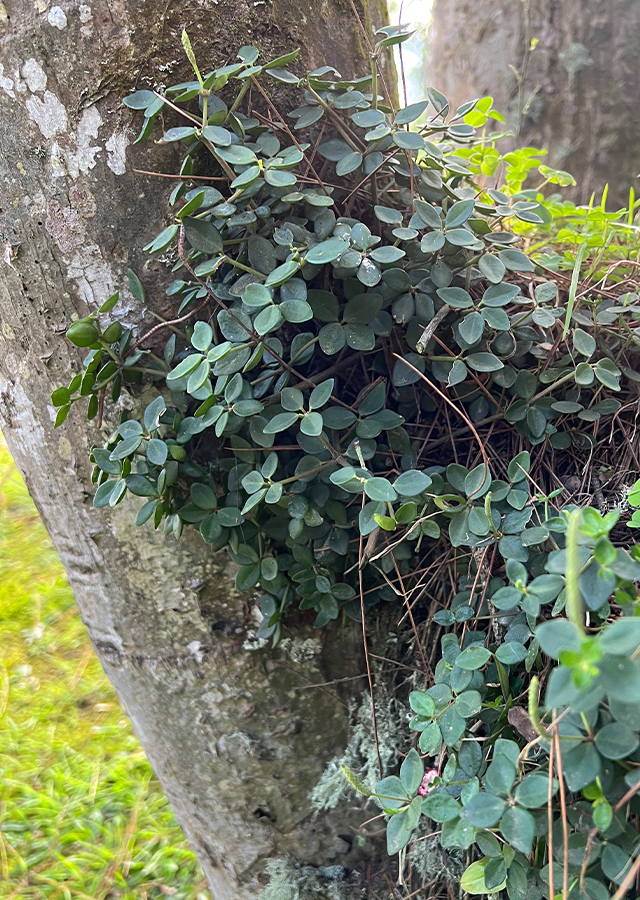
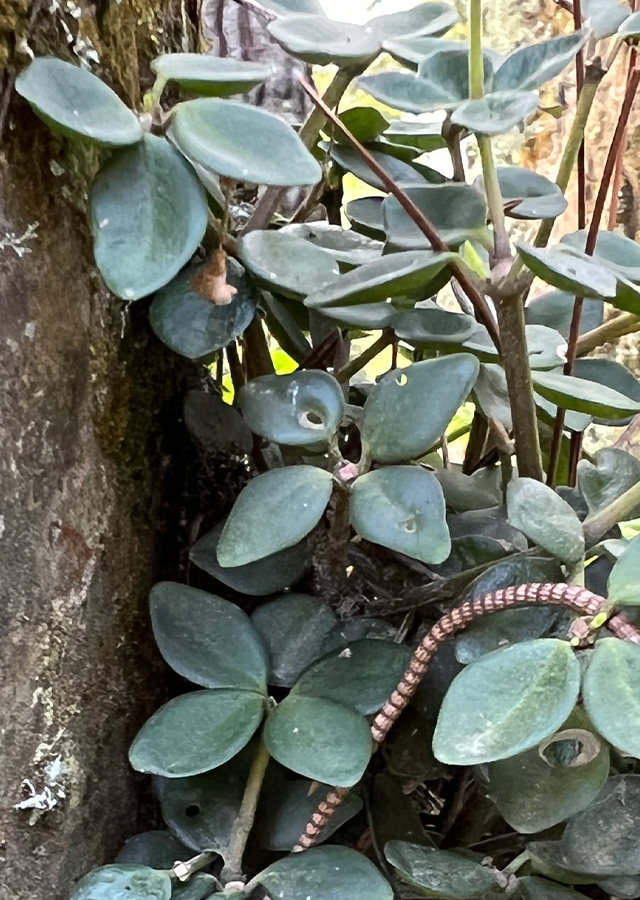
- Stem stoloniferous, hairless/smooth, creeping, tufted, sometimes forming mats on tree branches, rooting at each node.
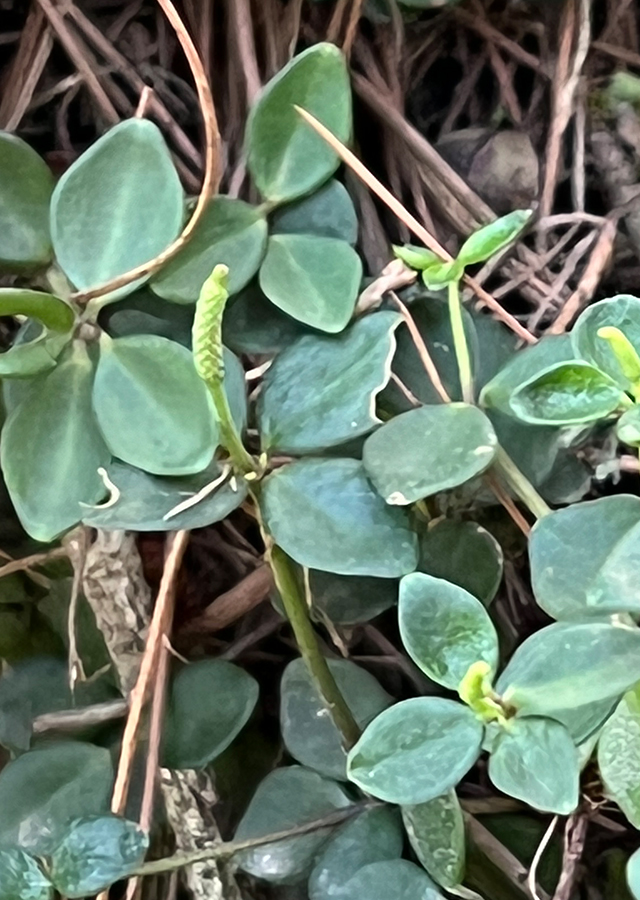
- Leaves sometimes reddish below, whorled (3-)4, elliptic to ± round, oblong or rhombic, 0.6-1.7 cm long, 0.4-1.3 cm wide, rounded at the tip, pointed at the base, fleshy, glossy and hairless, faintly 3-nerved; petiole 1-3 mm long.
- Flowers in a green or yellowish spike, (0.5-)1.5-4.5 cm long; peduncle (0.6-)1-1.5(-3) cm long; bracts round, 0.6 mm wide, entire or crenate, usually hairless.
- Fruit ellipsoid or narrowly ovoid, ± 1 mm long, partially sunken into the rachis with an indistinct cupule-like structure at the base, and a symmetrical style at the tip.
- Seeds bean-shaped, reddish brown, 1-1.2 mm long, 0.3-0.4 mm wide.
Cultivation
Propagation is done through leaf cuttings, stem cuttings, and layering.
Chemical Content
Alkaloids, steroids, flavonoids, terpenoids, glycosides, tannins, amino acids.
Benefits
Used medicinally in Asia, as a tonic and to treat kidney disorders. Crushed leaves are used as a poultice to relieve skin irritation caused by the Rhus striata plant. Used in the treatment of convulsions, skin diseases, cough, asthma, diarrhea, and diabetes.
Local Names
Informasi tidak ditemukan. Butuh penelusuran lebih lanjut.
Traditional Recipes
The following recipes reflect traditional knowledge passed down through generations, not a substitute for professional medical diagnosis or advice. Consult a healthcare provider before use.
1. Cough
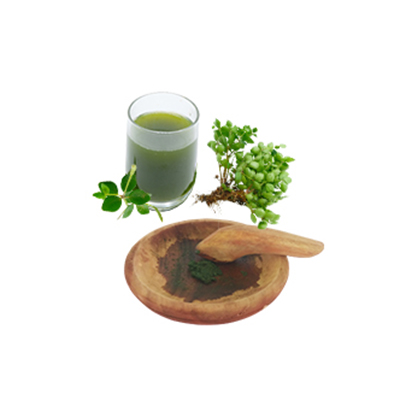
- Take an adequate amount of the whole Peperomia Hope plant and wash until clean.
- Grind until it becomes a paste.
- Squeeze to extract the liquid.
- Drink to treat cough.
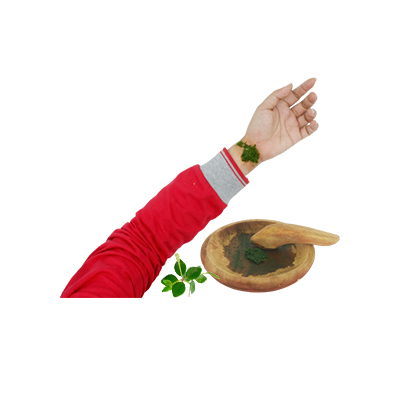
2. Skin irritation
- Prepare an adequate amount of Peperomia Hope leaves and wash until clean.
- Grind until it becomes a paste.
- Apply as a poultice to relieve skin irritation.
Reference Sources
- Royal Botanic Gardens. 2021. Plants of the World Online: Peperomia tetraphylla (G.Forst.) Hook. & Arn.. https://powo.science.kew.org/taxon/urn:lsid:ipni.org:names:1068802-2#descriptions.
- Useful Tropical Plants. 2022. Peperomia tetraphylla. http://tropical.theferns.info/viewtropical.php?id=Peperomia+tetraphylla
- Plantophiles. 2021. Peperomia tetraphylla Best Care Tips. https://plantophiles.com/plant-care/peperomia-tetraphylla/#:~:text=Propagate%20Peperomia%20tetraphylla%20from%20leaf%20cuttings,-Wait%20for%20spring&text=Cut%20a%20few%20healthy%20leaves,What%20is%20this%3F&text=Let%20the%20cuts%20dry%20out,50%20peat%2Fperlite%20soil%20mix.
- M. Nishanthi, E. Mohanambal, S. Narendiran, M. Shankar, M. Vijey Aanandhi, B. Vijayakumar. 2012. Extraction and Preliminary Phytochemical Investigation on Whole Plant of Peperomia tetraphylla (G.Forst.Hook & Arn). International Journal of Phytopharmacology 3(2), 2012, 173-177.