Peronema canescens Jack
Summary
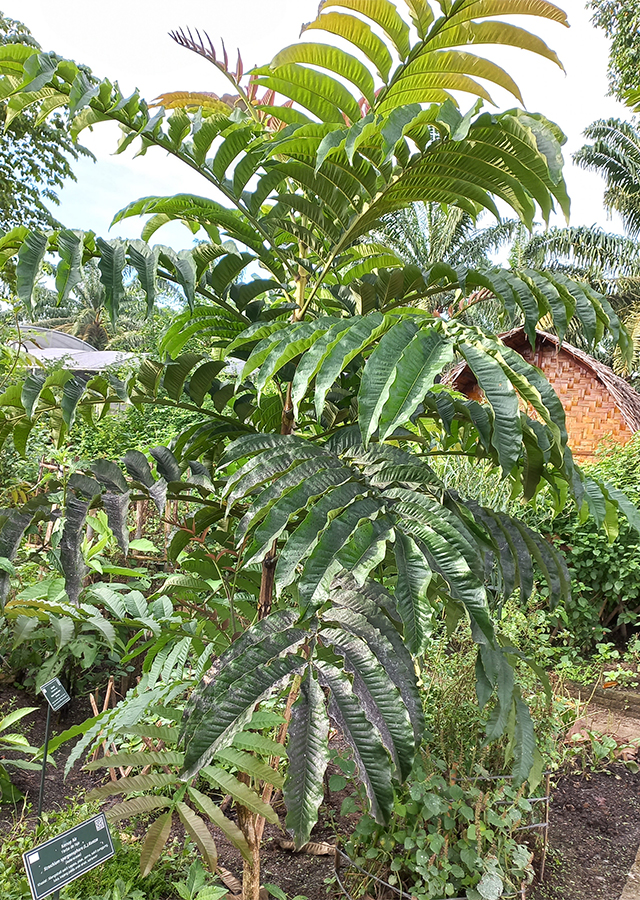
Sungkai (Peronema canescens) is a tree up to 20 meters tall of the Lamiaceae family, native to Southeast Asia, distributed from South Sumatra to Kalimantan. Communities in South Sumatra and Lampung traditionally use its leaves as a fever remedy, while the Dayak tribe of East Kalimantan uses it to address worm infections and colds. Sungkai also has economic value as furniture wood and a reforestation plant.
Agroecology
Sungkai can grow well in secondary tropical lowland forests, where it is found at elevations from sea level up to 600, sometimes 900 meters. Generally found in secondary forests, forest clearings, riverbanks, open roadsides and grows best in moist to wet places or soil containing sufficient water, so this plant is not resistant to very dry conditions. This plant is able to live in various soil types, but prefers red-yellow podzolic soil type. Its growth prefers areas with monthly temperature conditions ranging between 21-32°C and average annual rainfall between 2,100-2,700 mm/year.
Morphology
- Root a short, shallow taproot, brown in color.
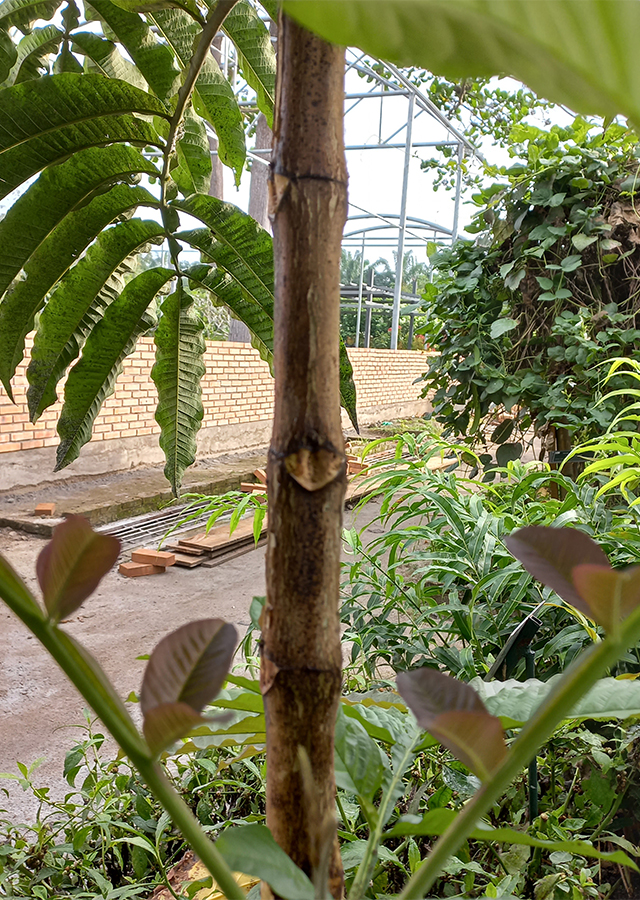
- Stem straight, slightly curved, unbranched up to 9-15 m, outer bark gray or light brown, shallowly grooved, peeling in small thin flakes. Cross-section of outer bark brown, yellow, or pink in color. Its wood has a heartwood with a light brown color resembling teak wood and has grooves. Its twigs are full of fine hair. Sympodial branching direction.
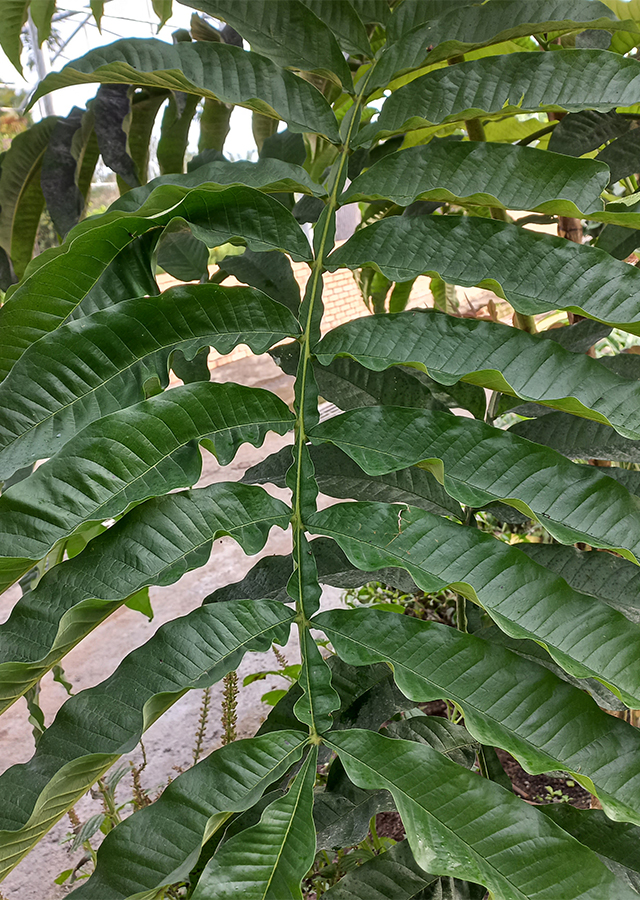
- Leaves opposite position, purplish when young then turning green. Leaf petiole and rachis winged. Compound leaves, arranged of 3-11 opposite pairs. Leaflets lance-shaped, tapering base, tapering to pointed leaf tip, thin texture, flat leaf edges, smooth surface, has a bitter taste, distinctive smell.
- Flowers a panicle. Sepals numbering 5, somewhat tightly closed, fused with the fruit, hairy.
- Fruit single, a four-chambered drupe, seeded, dry, round, small with a diameter of 3-3.5 mm, many-seeded, yellowish-white, scattered position, fruit skin velvet-like hairy.
Cultivation
- Propagated generatively (seed) and vegetatively (stem cuttings). However propagation by seed is difficult given that sungkai only flowers 1-2 times a year, its seed viability is very low and decreases quickly so its seeds are not durable for long storage.
- In vegetative propagation (stem cuttings), a stem with a length of 20-25 cm and diameter of 15-20 mm will produce the best rooting. After 4-6 months, young plants can be transplanted.
Chemical Content
Alkaloid, flavonoid, phenolic compounds, terpenoid, steroid, phenol, tannin, saponin.
Benefits
Fever, ringworm, mouthwash for toothache, treats wounds, colds, worm infections, malaria, bruises, boosts stamina, has antioxidant, antidiabetic, antibacterial, analgesic, immunomodulator activity.
Local Names
Jati sebrang, Ki sabrang, Kurus, Kurus sungkai or Sekai.
Traditional Recipes
The following recipes reflect traditional knowledge passed down through generations, not a substitute for professional medical diagnosis or advice. Consult a healthcare provider before use.
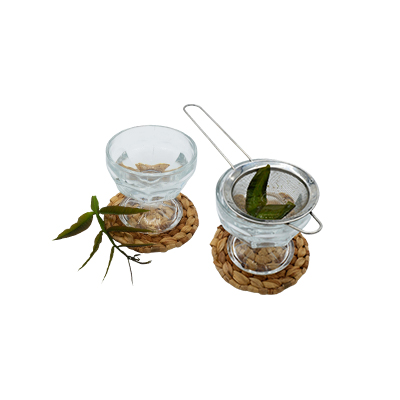
1. Promoting menstruation and improving women's womb fertility
- Prepare young sungkai leaves, wash thoroughly.
- Boil young sungkai leaves until boiling.
- Strain the decoction.
- Drink.
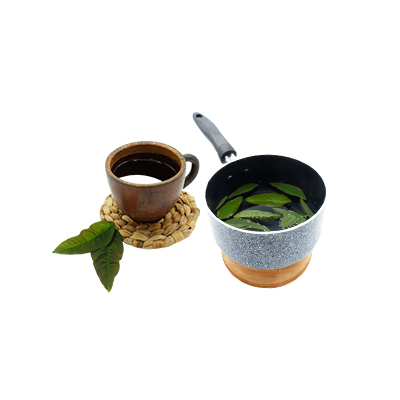
2. Fever
- Take young sungkai leaves as needed then wash thoroughly.
- Boil young sungkai leaves until boiling.
- Strain the decoction.
- Drink.
Reference Sources
- IPBiotics. 2014. Peronema canescens. http://ipbiotics.apps.cs.ipb.ac.id/index.php/tumbuhan/1157. 09-09-2021.
- Useful Tropical Plants Database. 2021. Peronema canescens. https://tropical.theferns.info/viewtropical.php?id=Peronema+canescens. 09-09-2021.
- Royal Botanic Gardens. 2017. Plants of the World Online: Peronema canescens Jack. http://www.plantsoftheworldonline.org/taxon/urn:lsid:ipni.org:names:863995-1. 09-09-2021.
- PROSEA. 2017. Peronema (PROSEA). https://uses.plantnet-project.org/en/Peronema_(PROSEA). 09-09-2021.
- Latief M dkk. 2021. Antidiabetic Activity of Sungkai (Peronema canescens Jack) Leaves Ethanol Extract on the Male Mice Induced Alloxan Monohydrate. Pharmacology and Clinical Pharmacy Research. 6(2).
- Biodiversity Warriors. 2020. SUNGKAI (Peronema canescens). https://biodiversitywarriors.kehati.or.id/artikel/sungkai-peronema-canescens/. 09-09-2021.
- Suhirman S. 2020. Daun Sungkai (Peronema canescens) Berpotensi sebagai Imunomodulator. Warta Penelitian dan Pengembangan Tanaman Industri 26(3).