Persicaria barbata (L.) H.Hara
Summary
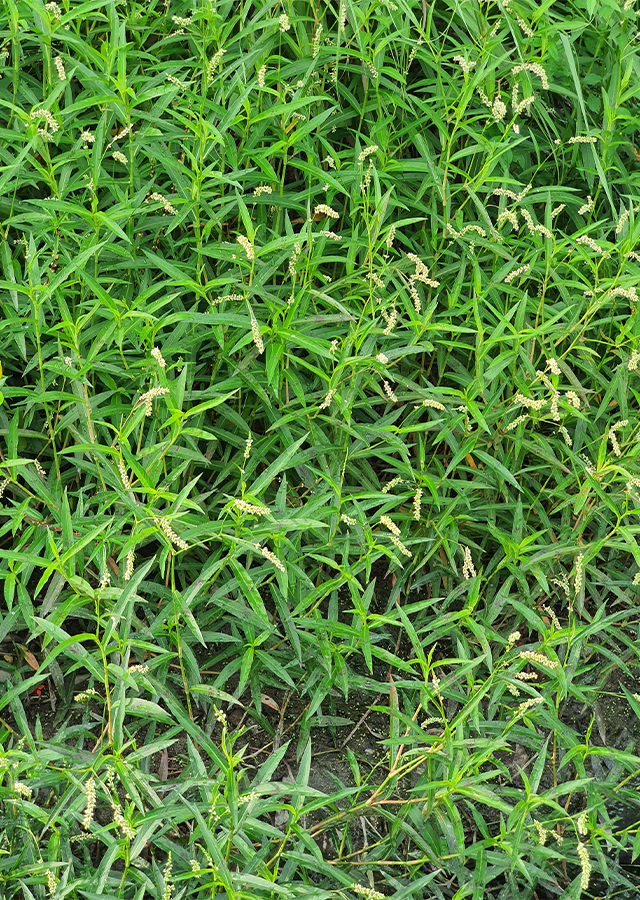
Pacingan (Persicaria barbata) is a herb up to 40-90 cm tall of the Polygonaceae family, native to the Arabian Peninsula and tropical Asia, distributed from China to Papua New Guinea. Its tender leaves and young shoots are eaten as a vegetable, while in some areas it is used as a traditional fish poison. Pacingan is also believed to be antioxidant and to help address dysentery and cholera.
Agroecology
Widely found in wet areas along rivers and ditches, from sea level up to elevations of 1,200 m above sea level. Growth will be suppressed at elevations of 1,700 m above sea level.
Morphology
- Root fibrous, white or brown in color.
- Stem sturdy, upright, hairy, and branched.
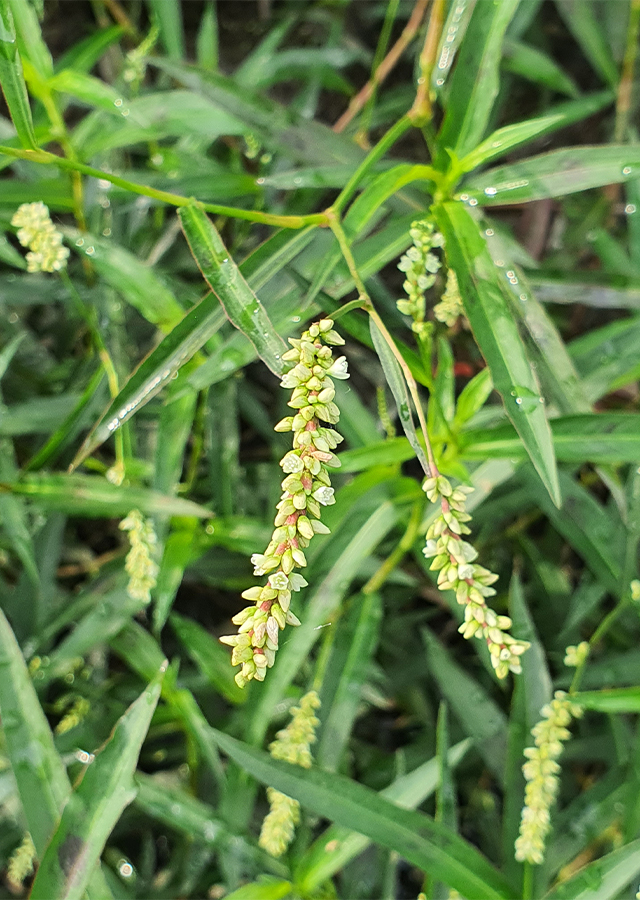
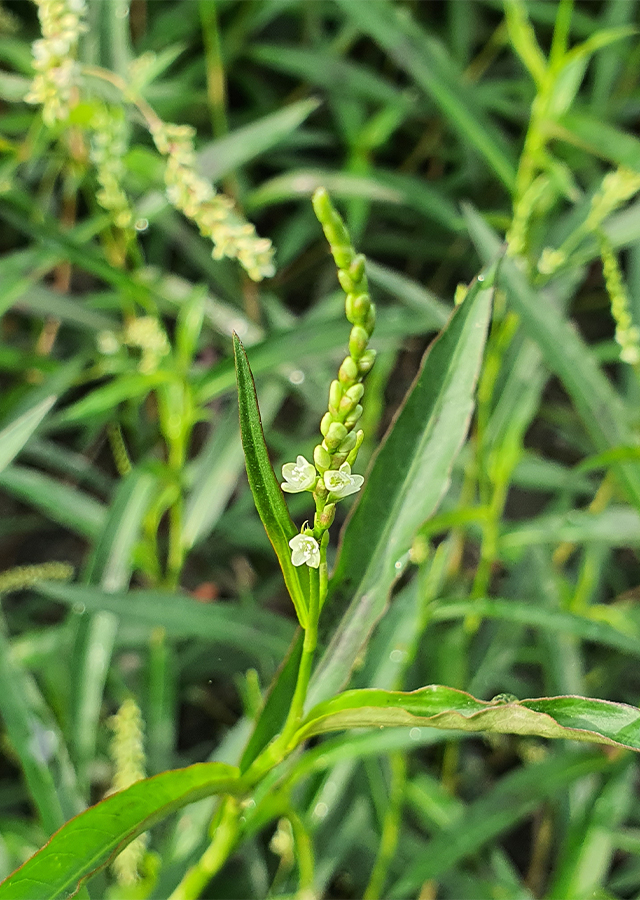
- Leaves arranged crosswise, size 7-15 cm x 1.5-2.5 cm, lance-shaped, tapering base, tapering tip.
- Flowers bisexual, white or pink in color.
- Seeds bean-shaped.
Cultivation
- Propagated generatively (seed) or vegetatively (offset separation).
- Germination is very easy, once large enough it can be planted in a pot during summer.
- If still winter, store the seedlings in a shaded place first.
Chemical Content
Glycoside, polyphenol, flavonoid, saponin, sterol, sitosterone, viscozulenic acid, acetophenone.
Benefits
Antioxidant, treats dysentery and cholera, treats wounds, fever reducer, reduces colic pain, anti-inflammatory, diuretic, external remedy for scabies, ulcers, boils, antifungal.
Simplisia
- Collect fresh, non-rotten leaves.
- Wash thoroughly with running water and drain then slice the leaves.
- Dry the leaves until completely dry and moisture content less than 8%.
- Store in a clean container.
Local Names
Known by local names Jukut carang (Sunda), Mengkrengan (Java), Salah nyowo (Java), Tolang-tolangan (Kangean).
Traditional Recipes
The following recipes reflect traditional knowledge passed down through generations, not a substitute for professional medical diagnosis or advice. Consult a healthcare provider before use.
1. Swelling, scabies and wounds
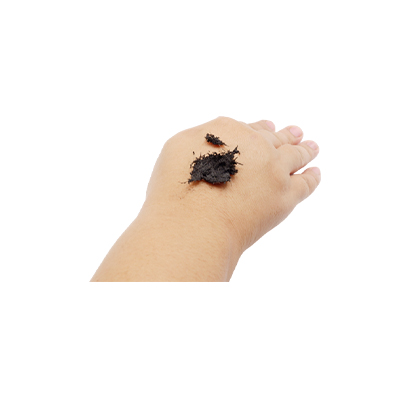
- Prepare root as needed.
- Pound the material into a paste.
- Apply to the affected area.
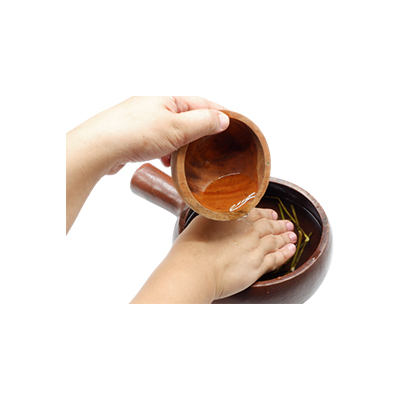
2. Boils
- Prepare pacingan stem as needed.
- Wash the material thoroughly.
- Boil the stem until boiling.
- Let cool then use to wash the boil.
Reference Sources
- Tropical Plants Database, Ken Fern. tropical.theferns.info. Persicaria barbata. http://tropical.theferns.info/viewtropical.php?id=Persicaria+barbata 27-01-2021
- Stuartexchange. Philippine Medicinal Plants. Subsuban. http://Stuartexchange.org/Subsuban 26-01-2021
- Bengkak, Kudis, Bisul dan Luka https://link.springer.com/article/10.1186/1746-4269-6-35/tables/1 30-10-2020