Petiveria alliacea L.
Summary
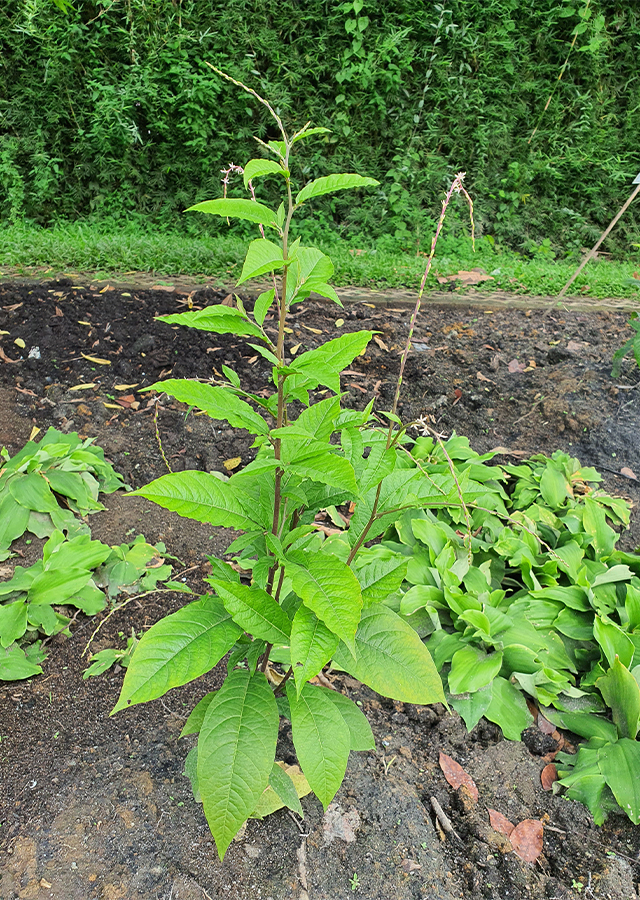
Singawalang (Petiveria alliacea) is a shrub up to 1.5 meters tall of the Petiveriaceae family, native to the Americas, entering Indonesia through India, and an important ingredient in traditional Latin American medicine. In Nigeria, Yoruba shamans use the whole plant in ritual ceremonies. Singawalang is traditionally believed to be antibacterial and to help lower fever.
Agroecology
Singawalang can thrive in gardens in warm, moist to dry regions up to elevations of 1,500 m above sea level. Prefers fertile soil with good drainage, acidic to alkaline pH and shaded conditions. Average annual air temperature 15-30ºC, average annual rainfall 500-3,000 mm/year.
Morphology
- Root a taproot.
- Stem upright, soft and watery, greenish-brown, smells like garlic.
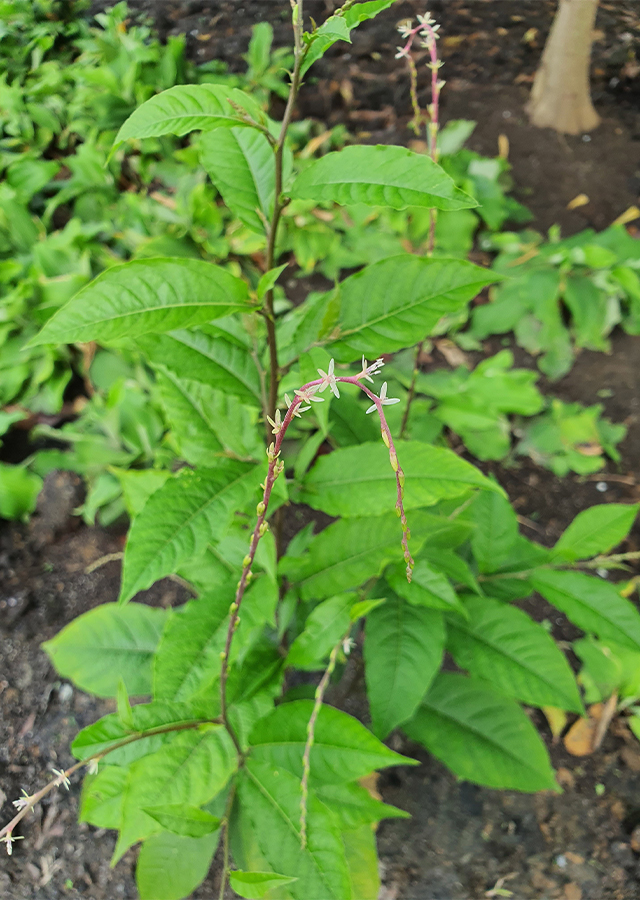
- Leaves round elongated or oblong, 6-19 cm long, tapering or pointed leaf tip, and blunt rounded base. Smells like garlic.
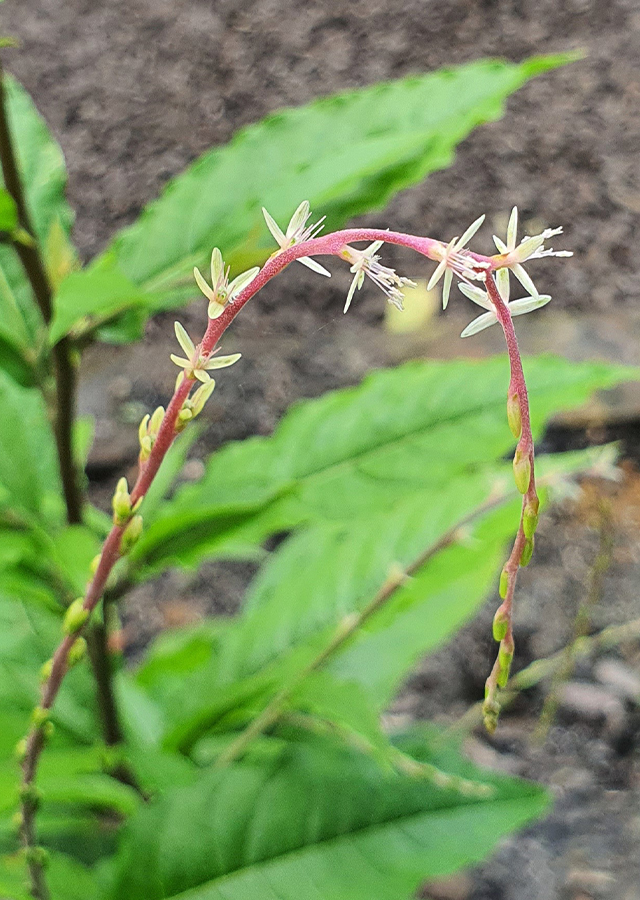
- Flowers bisexual, greenish-white to pink in color, linear-oblong shape. No sepals, stamens 4-8.
- Fruit oblong and narrow, spur-shaped arranged on a stalk, thorny. Each fruit consists of 1 seed.
Cultivation
Propagated by seed and stem cuttings that are not too mature.
Chemical Content
Flavonoids, triterpenes, steroids, benzaldehyde, dibenzyl-disulfide, benzyl-thiol, dibenzyl-trisulfide, stilbene.
Benefits
Softens skin, ulcers, treats boils, TB, pneumonia, vomiting blood, antibacterial, antifungal, migraine, rheumatism, malaria, diuretic (urine promoter), expectorant (phlegm remover), sudorific (sweat promoter), vermifuge, lowers fever, antispasmodic (relieves cramps), and remedy for those with nerve disease.
Simplisia
- Prepare the whole fresh singawalang plant.
- Wash thoroughly with running water then drain. Cut the material into pieces.
- Dry in the sun for several days covered with a black cloth until evenly dry.
- Pack in a clean, closed container.
Local Names
No information found. Further research needed.
Traditional Recipes
The following recipes reflect traditional knowledge passed down through generations, not a substitute for professional medical diagnosis or advice. Consult a healthcare provider before use.
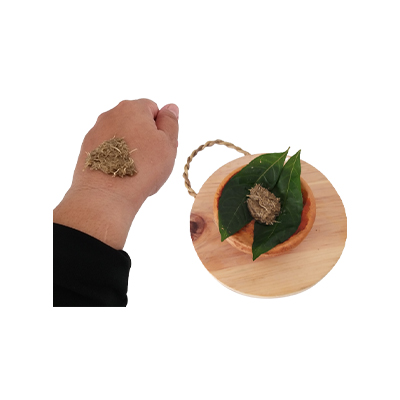
1. Treating insect bites
- Prepare root as needed.
- Wash thoroughly.
- Pound into a paste and add lime as needed.
- Apply to the affected area.
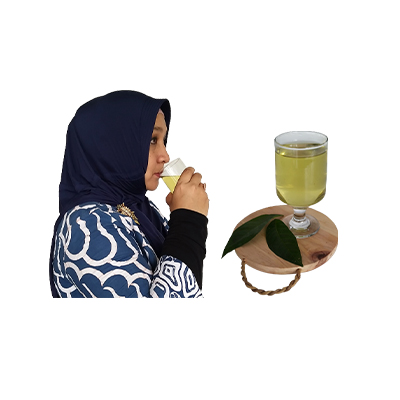
2. Treating TB
- Wash 1 handful of singawalang leaves thoroughly.
- Boil with 2 glasses of water until the water reduces to 1 glass.
- Drink 3 times a day.
Reference Sources
- CABI. (No date). Invasive Species Compendium. Petiveria alliacea (guinea hen weed). https://www.cabi.org/isc/datasheet/70236 22-02-2021.
- Fern, Ken. (2014). Useful Tropical Plants. Petiveria alliacea. http://tropical.theferns.info/viewtropical.php?id=Petiveria+alliacea 23-02-2021.
- PFAF. (No date). Petiveria alliacea - L. https://pfaf.org/USER/Plant.aspx?LatinName=Petiveria+alliacea 22-02-2021
- Pl@nt Use. (No date). Petiveria alliacea (PROTA). https://uses.plantnet-project.org/en/Petiveria_alliacea_(PROTA) 22-02-2021