Petunia × atkinsiana (Sweet) D.Don ex W.H.Baxter
Summary
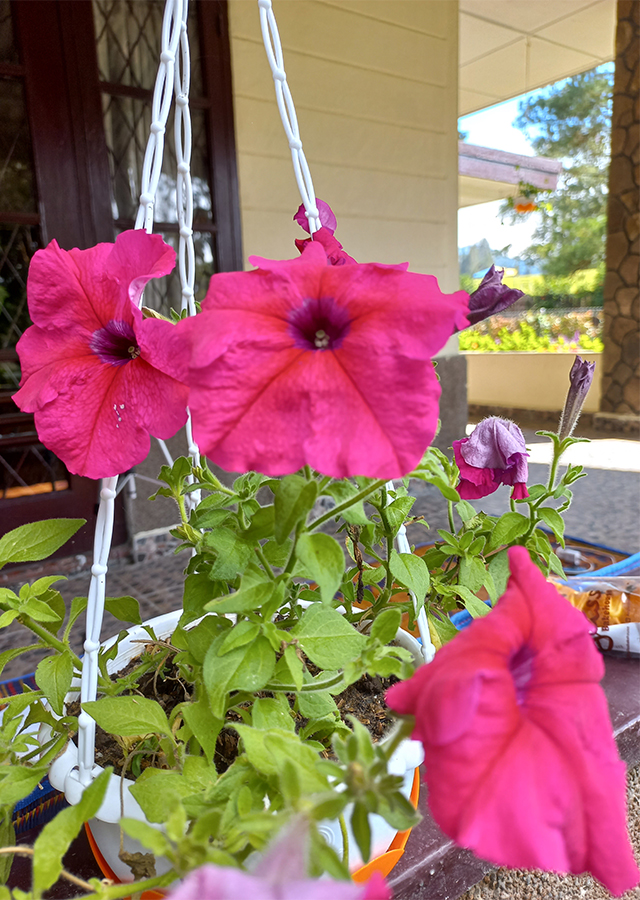
Petunia (Petunia x atkinsiana) is an annual or short-lived herb 30-80 cm tall from the Solanaceae family, a hybrid of two South American species, Petunia integrifolia and Petunia axillaris. Its flowers can be eaten fresh in salads or as a garnish. The Chinese community traditionally uses petunia to treat stomach ache, bruises, and constipation.
Agroecology
Petunia can be found growing around field edges, roadsides, and around old house sites. This plant prefers a sunny position or full sun. A shaded position can encourage the plant to produce lush foliage, but flowering becomes hindered. Petunia grows and flowers best in light, well-drained soil, and also prefers moist, fertile soil with a soil pH of 5-7. This plant is not frost-hardy, but is tolerant of heat, drought, and poor soil.
Morphology
- Roots taproot.
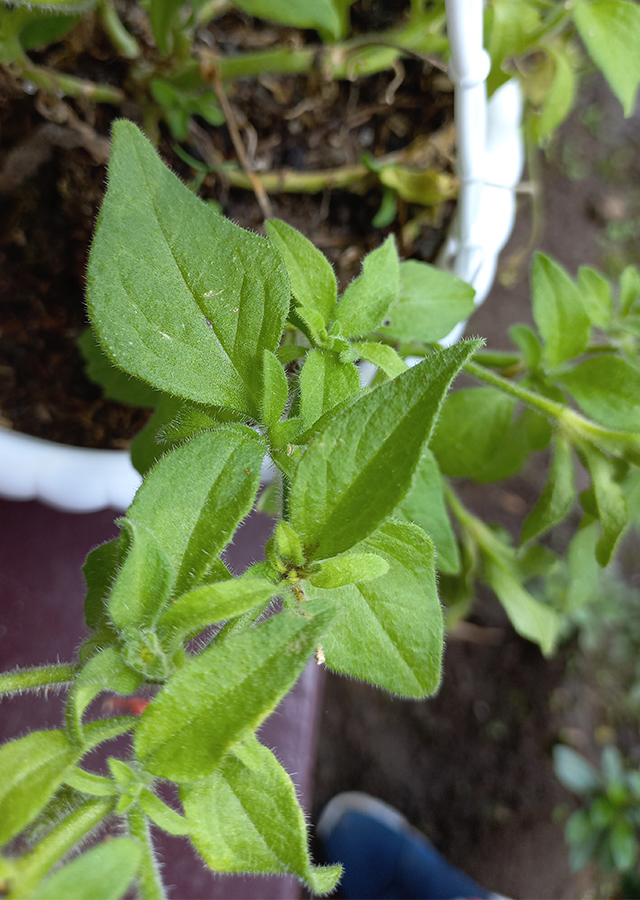
- Stem branched, with glandular hairs, initially growing upright but later falling over or trailing, sticky-hairy
- Leaves ovate to elliptic shaped, apex pointed to rounded, margins entire, green. Lower leaves alternate and petiolate, while upper leaves sessile and reduced.
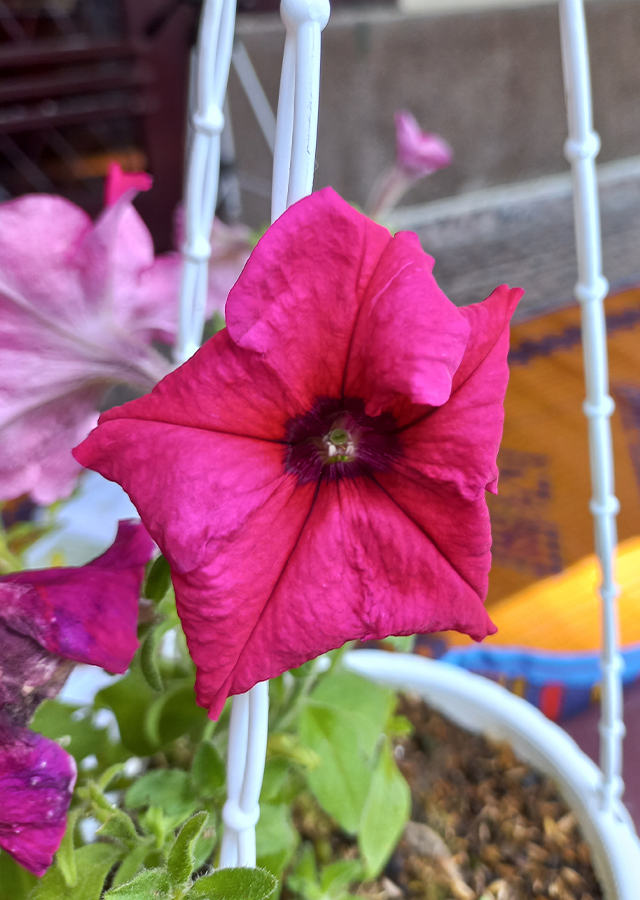
- Flowers axillary and solitary, with a corolla in various colors (white, pink, purple, striped), funnel- or somewhat swollen tube-shaped. Pentamerous flower with five epipetalous stamens, stamens inserted at the lower part of the corolla tube, anther length 2-3 mm, style upright.
- Fruit an ellipsoidal capsule 10-15 mm long, thin, the upper part of each valve split into 2 lobes. The ripe fruit is surrounded by an enlarged, glandular-hairy calyx consisting of five cord-shaped lobes.
- Seeds numerous per fruit, small, subglobose, light brown to dark brown, containing abundant endosperm.
Cultivation
- Propagation is done generatively using seed.
- Seeds germinate best at 15-20°C.
Chemical Content
Information not found. Further research is needed.
Benefits
Treats stomach ache, bruises, bloating and constipation, ascariasis (an infection caused by roundworms).
Local Names
Informasi tidak ditemukan. Butuh penelusuran lebih lanjut.
Traditional Recipes
The following recipes reflect traditional knowledge passed down through generations, not a substitute for professional medical diagnosis or advice. Consult a healthcare provider before use.
1. Bruises
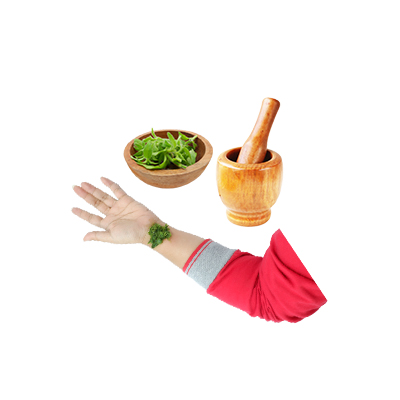
- Prepare an adequate amount of fresh young petunia leaves.
- Clean off any attached dirt by washing in running water.
- Grind until it becomes a paste.
- Apply to the bruised skin.
Reference Sources
- Royal Botanic Gardens. 2021. Plant of the World Online: Petunia × atkinsiana (Sweet) D.Don ex W.H.Baxter. 26-011-2022.
- Useful Tropical Plants Database. 2021. Petunia × atkinsiana. https://tropical.theferns.info/viewtropical.php?id=Petunia+%C3%97+atkinsiana. 26-01-2022.
- PlanNet. Petunia x atkinsiana (Sweet) D.Don ex W.H.Baxter. https://plantnet.rbgsyd.nsw.gov.au/cgi-bin/NSWfl.pl?page=nswfl&lvl=sp&name=Petunia~x+atkinsiana. 26-01-2022.
- Alabama Plant Atlas. 2022. Petunia × atkinsiana. http://floraofalabama.org/Plant.aspx?id=3541. 26-01-2022.
- Hongkong Baptist University. 2007. Petunia hybrida (J. D. Hooker) Vilmorin. https://libproject.hkbu.edu.hk/was40/detail?channelid=1288&lang=en&searchword=herb_id=D01152. 26-01-2022.