Phaleria macrocarpa (Scheff.) Boerl.
Summary
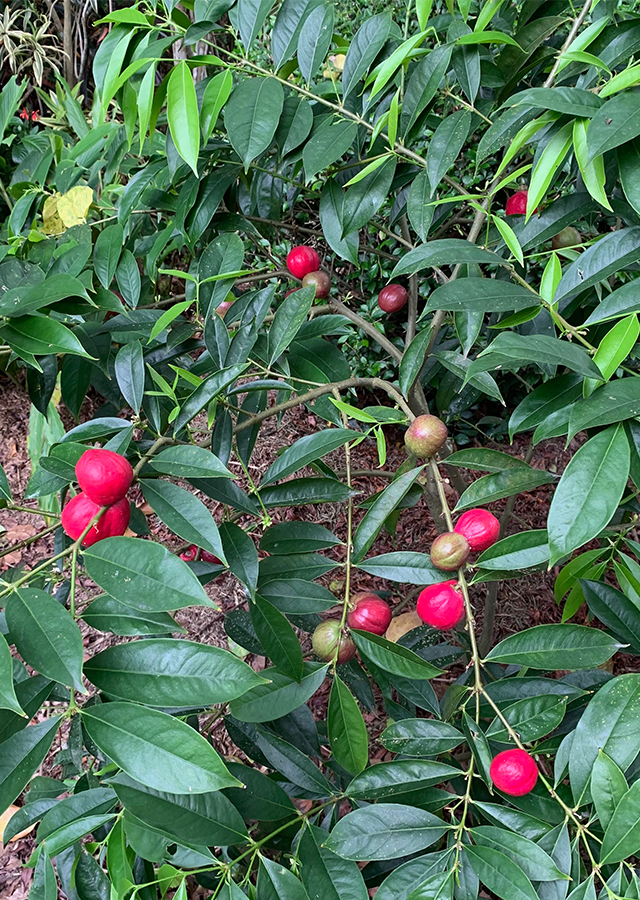
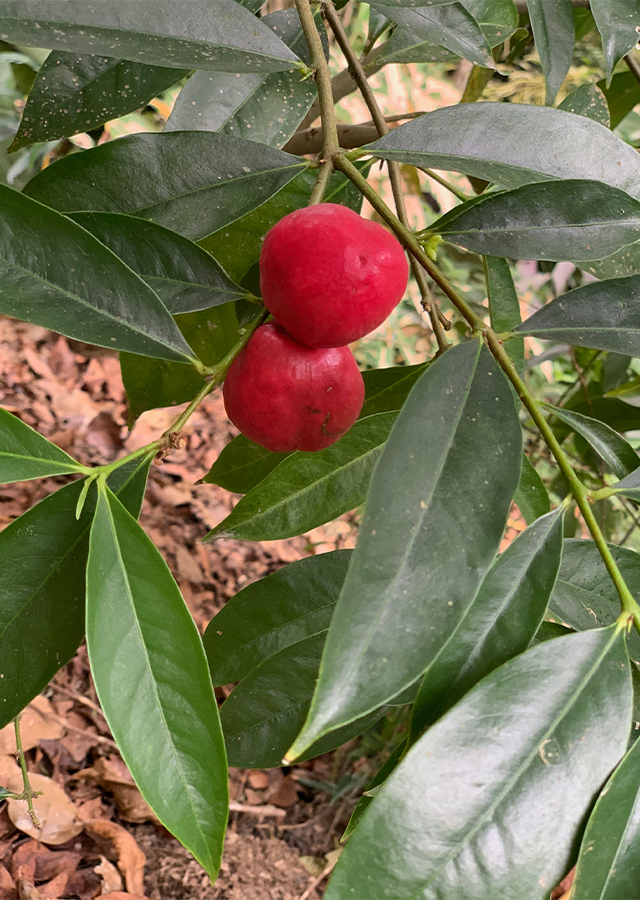
Mahkota dewa (Phaleria macrocarpa) is a tree up to 1-18 meters tall of the Thymelaeaceae family, a plant native to Papua that is also found in Papua New Guinea and now widely cultivated in Java. Its bright red fruit is a distinctive feature as a popular traditional medicine ingredient in Indonesia and Malaysia. Mahkota dewa is believed to help treat dysentery, allergies, and various ailments such as diabetes and liver problems.
Agroecology
Grows well from lowlands to highlands up to an elevation of 1,200 m above sea level. Prefers loose soil with high organic matter content. Generally grows wild at the edges of gardens, forests, or in house yards.
Morphology
- Roots taproot, yellowish-brown in color.
- Stem round, rough surface, latex-producing, brown bark, sympodial branching.
- Leaves single, opposite, oblong shape, pinnate venation, smooth surface.
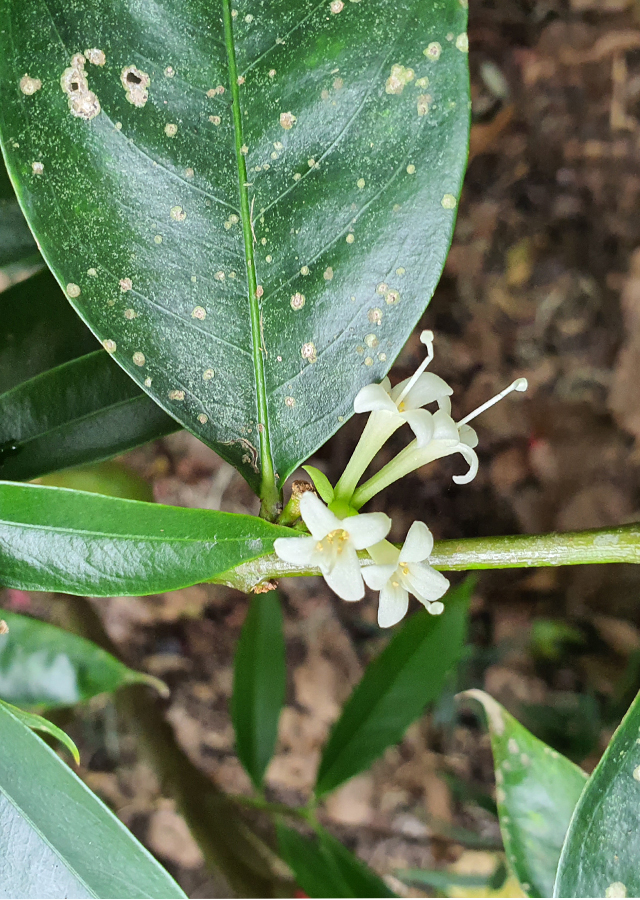
- Flowers compound, white, growing spread on the stem or in leaf axils.
- Fruit round, consisting of skin, flesh, shell, and seed. Fruit flesh is white, fibrous, and watery. Young fruit is green, ripe fruit is maroon.
Cultivation
- Propagated generatively (by seed) and vegetatively (by air-layering).
- Seed propagation is done by first sowing in sand media.
- Plant seeds at a depth of 1 cm with a spacing of 3 m x 3 cm.
- Air-layered results can be transplanted after 6-8 weeks.
Chemical Content
Flavonoid compounds, alkaloids, saponins, hydroquinone phenolics, tannins, steroids, monoterpenes, sesquiterpenes.
Benefits
Helps skin tissue formation, treats impotence, dysentery, allergies, tumors, flu remedy, rheumatism, diabetes, liver problems or relieving jaundice to cancer, cosmetic or beauty ingredient.
Simplisia
- Pick healthy, fresh leaves and wash thoroughly to remove any attached dirt.
- Dry for 15 days until the moisture content reaches 10%.
- Grind using a blender until it becomes powder.
Local Names
Crown of God, Makuta dewa, Makuto mewo, Makuto ratu, Makuto rojo (Java), Simalakama (Malay), Boh (Aceh).
Traditional Recipes
The following recipes reflect traditional knowledge passed down through generations, not a substitute for professional medical diagnosis or advice. Consult a healthcare provider before use.
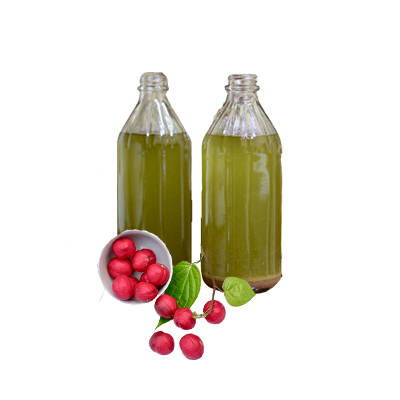
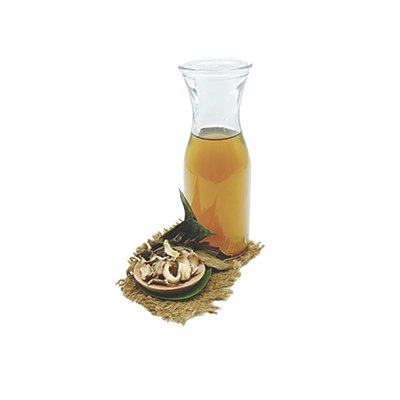
1. Mahkota Dewa Oil: For Wounds and Skin Disorders
- Prepare 800 g red mahkota dewa (sliced), 90 g mature betel leaf (sliced), and 1 liter coconut oil (Barco).
- Blend all ingredients using a blender. Steam in a heat-resistant glass container, cover the container, and cover the steamer.
- Boil for 1.5 hours over low-medium heat. Cool and strain.
- The residue can be used as a bath mixture; strain before use.
2. Relieving Jaundice
- Prepare 15 g mahkota dewa fruit, 7 sambiloto leaves, 3 dewa leaves, 15 g dewa leaf tuber, 15 g white turmeric, and 15 g temulawak.
- Discard the mahkota dewa seeds. Cut all ingredients into pieces and dry in the sun. Boil with 5 glasses of water until it boils and the water is reduced to 3 glasses.
- Drink 3 times a day, 1 glass each time.
Reference Sources
- Prosea, Phaleria macrocarpa https://uses.plantnet-project.org/en/Phaleria_macrocarpa_(PROSEA) 26-01-2021
- Hutabarat Eva. 2017. Minyak mahkota dewa. Medan
- Direktorat Obat Asli Indonesia Badan Pengawas Obat dan Makanan RI . 2011. Formularium Ramuan Etnomedisin Obat Asli Indonesia vol 1 (Meringankan sakit kuning)
- International Journal of Pharmaceutical Sciences and Reseach https://ijpsr.com/chemical%20constituentsandantibacterialactivityofPhaleriamacrocarpa 26-01-2021