Phanera kockiana (Korth.) Benth.
Summary
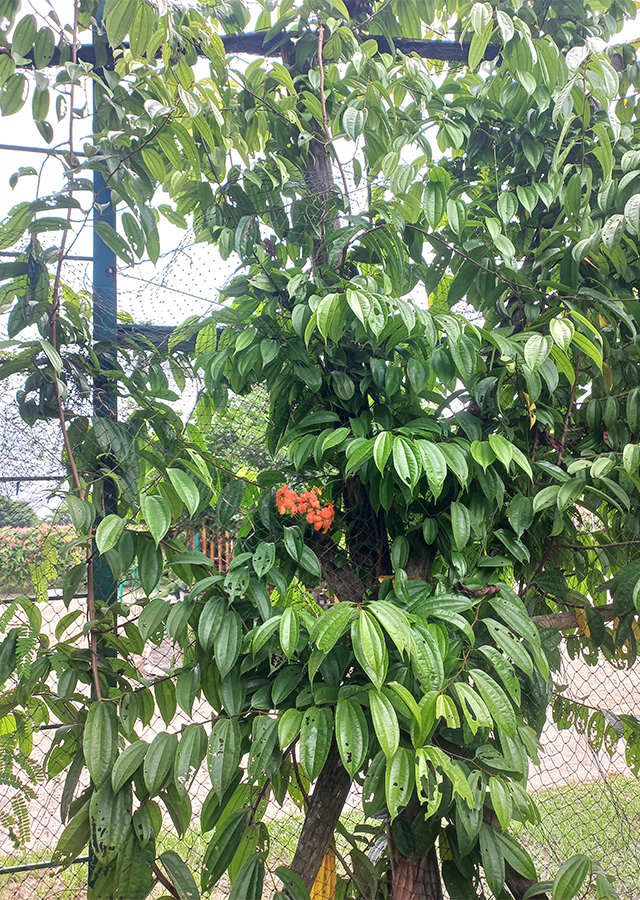
Phanera kockiana or katup-katup is native to the Malay Peninsula and also found in tropical forests of Thailand and Sumatra. Its habit of climbing trees in the wild makes this plant well-suited for covering fences, trellises, or pergolas, and it is also cultivated as a garden ornamental in Malaysia for its beautiful flowers. As traditional medicine, various parts of katup-katup are used to address nervous weakness, insomnia, fatigue, and toothache.
Agroecology
Best cultivated in full sun and in deep, fertile, well-drained soil. The plant can be pruned to encourage a bushier growth form. Watering should be regular, but not stagnant, and fertilization should be done with a balanced product with the addition of micronutrients.
Morphology
- Stem woody, climbing, with a twining growth habit. Young branches reddish brown, tomentose, smooth.
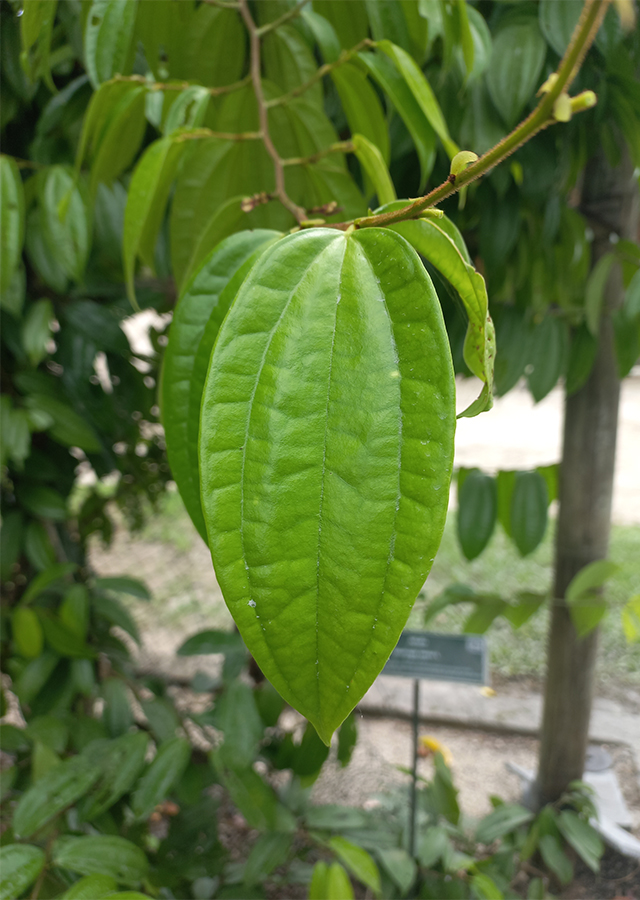
- Leaves arranged alternately along the stem. Ovate to elliptic shaped with a long acute tip, 7-14 cm long and 4-6 cm wide, glossy green, with 3 prominent veins running from the base to the leaf tip.
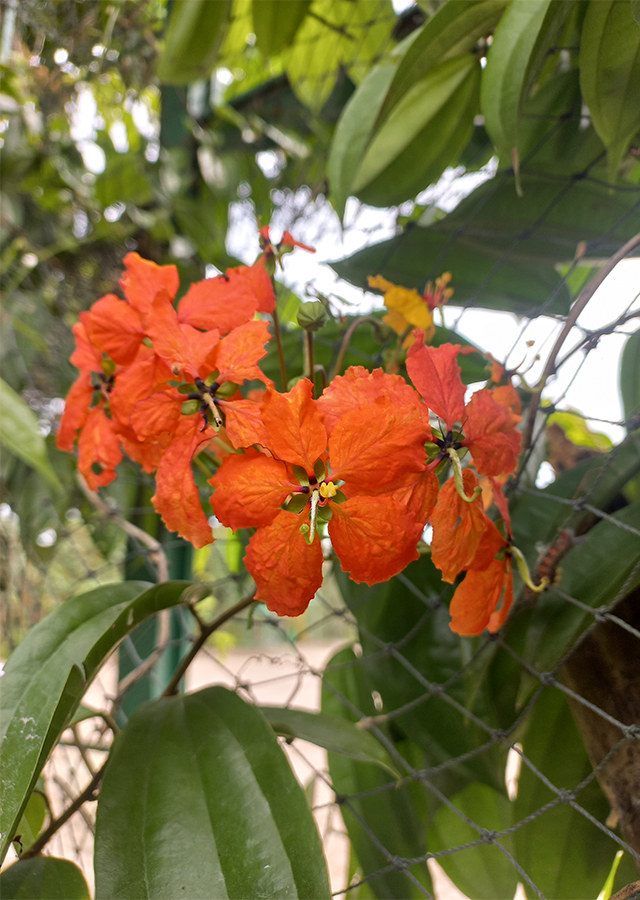
- Flowers bisexual, growing in clusters. Each flower has 5 small green sepals and 5 large petals. The flowers are yellow but turn reddish orange with age.
- Fruit a flattened pod with persistent sepals at its base.
- Seeds: the pod is hard, long and flat, producing between one and four round, flat seeds that burst open when ripe.
Cultivation
- Katup-katup can be propagated with seed, marcotting (air layering), and stem cuttings.
- Propagation with seed is difficult and takes a long time to begin flowering. Seed will germinate within 2-4 weeks at temperatures above 24°C (75°F).
- Marcotting (air layering) may be a better option for propagating the plant. It can also be propagated by cutting a woody stem about 12 cm (5 inches) long, removing its leaves/stem cutting.
Chemical Content
Tannins, flavonoids (chalcone, flavonone, isoflavone, flavanone, flavonol, and anthocyanidin).
Benefits
Treats gonorrhea, nervous weakness, insomnia, fatigue, and treats toothache. Has antibacterial and antioxidant activity.
Local Names
Ketup-ketup, Bunga merak.
Traditional Recipes
The following recipes reflect traditional knowledge passed down through generations, not a substitute for professional medical diagnosis or advice. Consult a healthcare provider before use.
1. Toothache
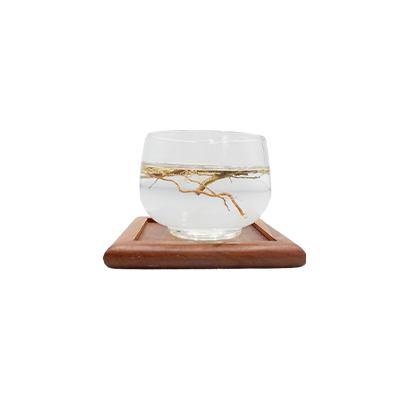
- Take katup-katup bark and root and wash until clean.
- Boil until it boils.
- Let it cool to warm or cold then gargle.
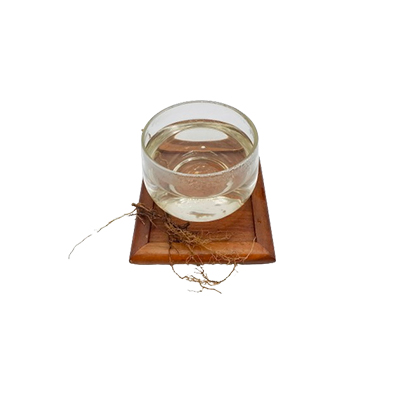
2. Insomnia
- Take katup-katup root and wash until clean.
- Boil until it boils.
- Let it cool to warm then drink.
Reference Sources
- Royal Botanic Gardens, Kew. (2023). Plants of the World Online: Phanera kockiana (Korth.) Benth. https://powo.science.kew.org/taxon/urn:lsid:ipni.org:names:513543-1. 19-01-2024.
- Flora Fauna Web. (2022). Phanera kockiana (Korth.) Benth. var. kockiana. https://www.nparks.gov.sg/florafaunaweb/flora/1/3/1324. 19-01-2024.
- Ling Chew, Yau Yan Limb, Johnson Stanslas, Gwendoline Cheng Lian Ee, Joo Kheng Goh. 2014. BIOACTIVITY-GUIDED ISOLATION OF ANTICANCER AGENTS FROM BAUHINIA KOCKIANA KORTH. African Journal of Traditional, Complementary and Alternative Medicines 11(3). DOI:10.4314/ajtcam.v11i3.40. (PDF) Bioactivity-Guided Isolation of Anticancer Agents from Bauhinia Kockiana Korth (researchgate.net). 19-01-2024.
- Botanic Guru. Red Trailing Bauhinia. Bauhinia kockiana. Red Trailing Bauhinia - Botanic Guru. 19-10-2023.19-01-2024.
- A Pasaribu, K Nurtjahja. 2020. Isolation And Characterization Of Flavonoid From Leaves Of Bauhinia kockiana Lour And Antibacterial Activity. Journal of Physics Conference Series 1542(1):012045. DOI:10.1088/1742-6596/1542/1/012045. (PDF) Isolation And Characterization Of Flavonoid From Leaves Of Bauhinia kockiana Lour And Antibacterial Activity (researchgate.net). 19-01-2024.