Phaseolus lunatus L.
Summary
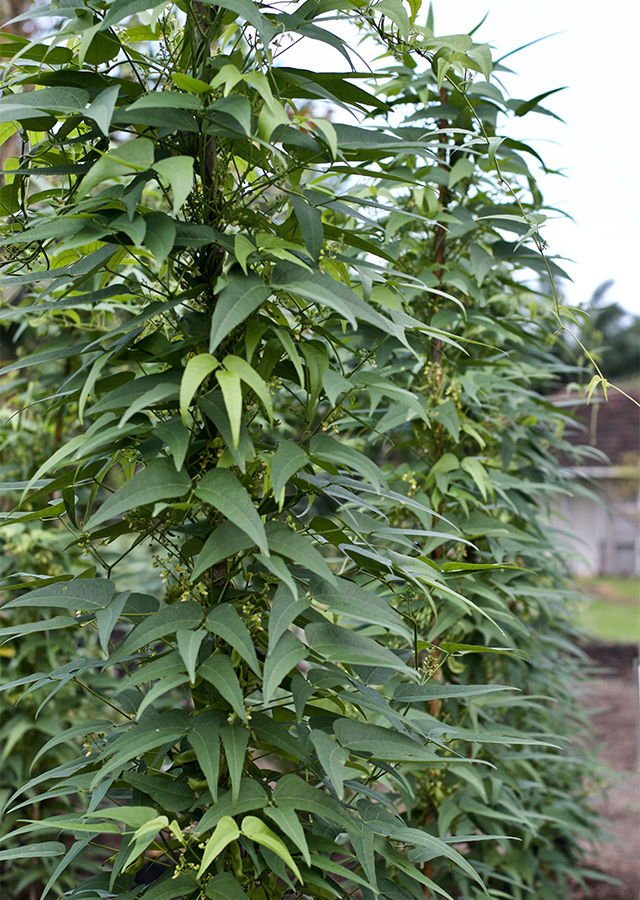
Kacang jawa, or lima bean (Phaseolus lunatus), is an annual or perennial climbing plant up to 4 meters long of the Fabaceae family, native to Central and South America, spreading worldwide since the era of Western exploration. Its pods and leaves are commonly eaten after cooking as a source of plant protein. Traditionally, lima bean is also believed to aid digestion and support heart health.
Agroecology
Grows well in tropical lowlands up to an elevation of 1,500 m above sea level, annual temperature of 16-27 °C, average rainfall of 900-1,500 mm/year. Requires fairly fertile soil at pH 6-7 with good drainage, favoring sandy loam soil.
Morphology
- Stem pentagonal or cylindrical.
- Leaves compound with three leaflets, leaflets ovate, smooth margins, pointed tip.
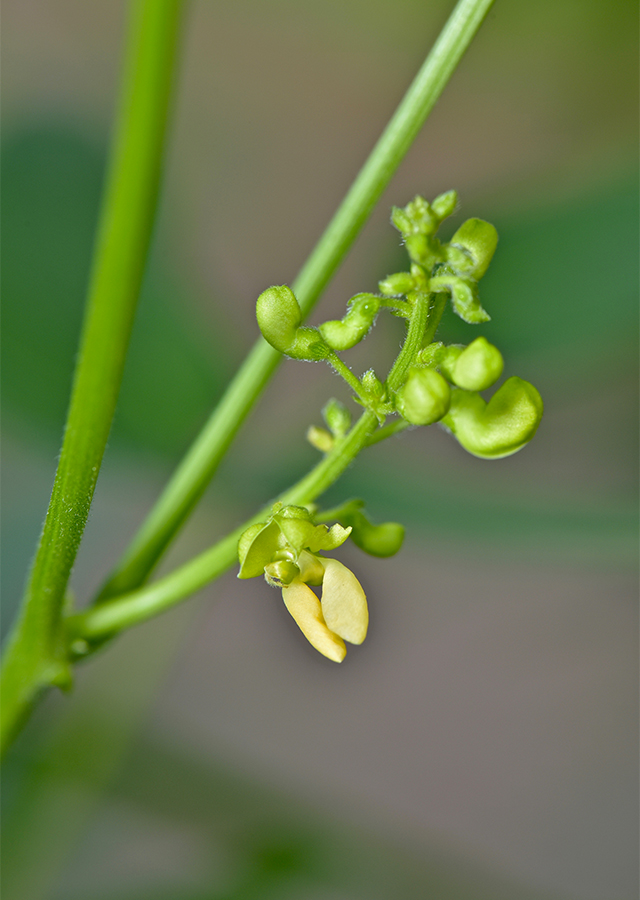
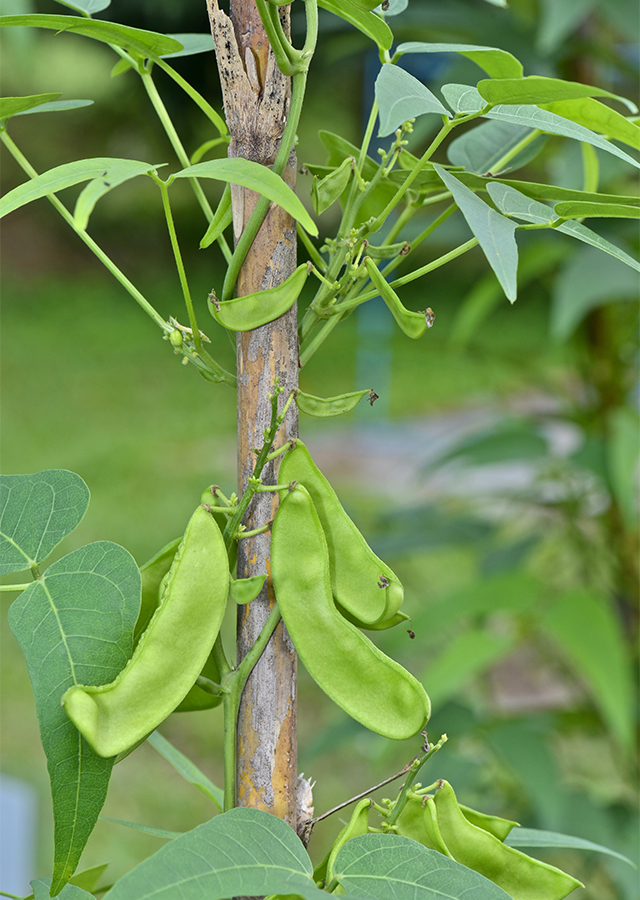
- Flowers relatively small, bell-shaped calyx. Corolla with a hood-shaped standard petal, pale green or purple, wings white or purple, keel sharply folded, white or sometimes colored. Inflorescence a raceme in the leaf axil, with many nodes and blooms, bracteoles persistent. 10 stamens in two bundles. Pods oblong, usually curved, containing 2-4 seeds.
- Seeds kidney-shaped, light to dark brown, speckled/patterned.
Cultivation
Propagated generatively (by seed). Seeds are planted directly in the field without prior nursery sowing.
Chemical Content
Flavonoids, alkaloids, phytin, lectins, saponins, tannins, phenolics (gallic acid, caffeic acid, ellagic acid, rutin, quercetin, kaempferol).
Benefits
Prevents constipation and aids digestion; supports tissue repair and growth; boosts heart health; anticancer; stabilizes blood sugar; helps prevent pregnancy complications; boosts energy; stimulates appetite.
Simplisia
- Prepare fresh leaves and wash thoroughly.
- Air-dry for several days until dry, or use an oven until the moisture content is 10%.
- Store in a closed, airtight container.
Local Names
Kacang mas, Roay (Sunda), Kara, Kratok (Java), Saru (Minahasa) and Kacang merah (Pontianak).
Traditional Recipes
The following recipes reflect traditional knowledge passed down through generations, not a substitute for professional medical diagnosis or advice. Consult a healthcare provider before use.
1. Appetite Stimulant for Children
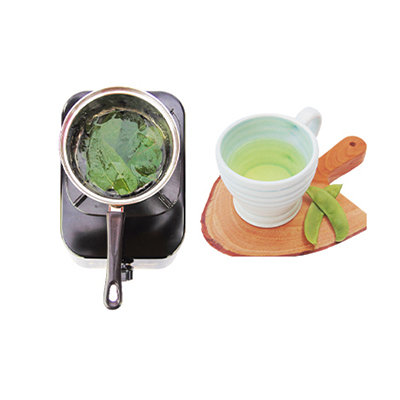
- Wash 5 g of fresh lima bean leaves thoroughly.
- Boil in ½ cup of water over low heat for 15 minutes.
- Once the mixture is warm, strain and drink all at once.
Reference Sources
- Baudoin, J.P. (2016). (PROSEA) - PlantUse English. Phaseolus lunatus. https://uses.plantnet-project.org/en/Phaseolus_lunatus_(PROSEA). 15-08-2020.
- CABI. (2015). Invasive Species Compendium. Phaseolus lunatus (lima bean). https://www.cabi.org/isc/datasheet/40620. 15-08-2020.
- Fern, Ken. (2019). Useful Tropical Plants. Phaseolus lunatus. http://tropical.theferns.info/viewtropical.php?id=Phaseolus+lunatus. 15-08-2020.
- StuartXchange. (2018). Philippine Medicinal Plants: Patani. http://www.stuartxchange.com/Patani 14-08-2020.
- WI Master Gardener (2007). Bleeding Heart Vine, Clerodendrum lunatus. https://wimastergardener.org/article/bleeding-heart-vine-clerodendrum-thomsoniae/. 15-08-2020.