Phaseolus vulgaris L.
Summary
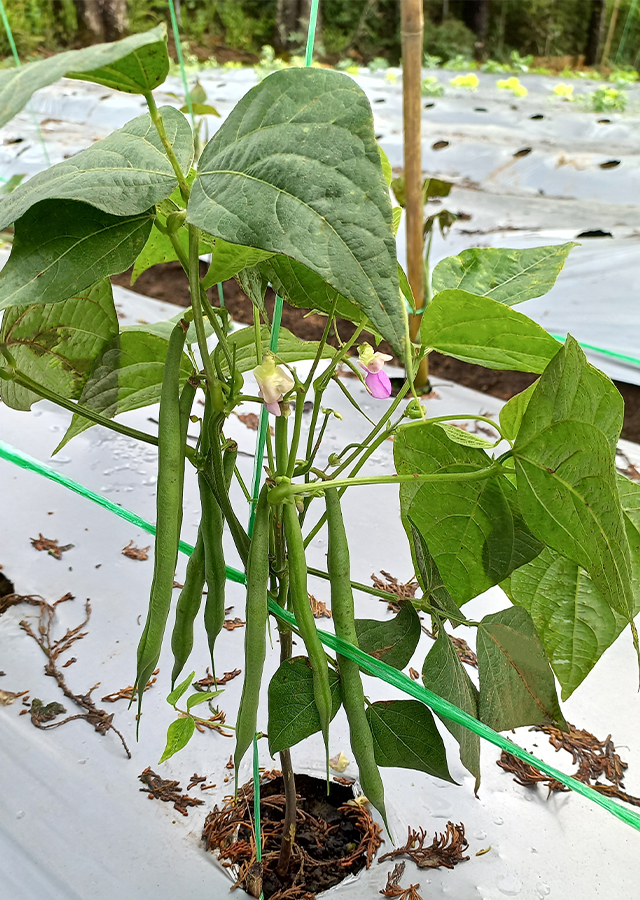
Buncis (Phaseolus vulgaris) is an erect or climbing annual herb from the Fabaceae family that originates from Mexico and Central America, nicknamed 'poor man's meat' for its high protein content through natural nitrogen fixation. Its young pods are commonly cooked as a vegetable worldwide. In Benin, juice from crushed buncis leaves is traditionally used to treat wounds.
Agroecology
Buncis is usually found at elevations above 600 m asl, although good plants can be obtained down to sea level. Temperatures in the range of 19-27 °C are preferred, above 30 °C many flowers will drop, and above 35 °C seeds are rarely produced. The climbing plant form can succeed in high-rainfall areas, requiring a warm, sunny position in fertile, well-drained soil, preferring light soil with plenty of moisture during the growing season. Does not like heavy, wet, or acidic soil. Grows well in reasonably heavy loamy soil provided it is well-drained. Prefers a pH in the range of 5.5 to 6.5.
Morphology
- Roots taproot, dirty yellow.
- Stem upright, round, soft, twining or climbing, green.
- Leaves compound, trifoliolate, square-stalked, leaf blade elliptical, 8-13 x 5-9 cm, base rounded, tip tapering, margin smooth, dark green, secondary veins pinnate.
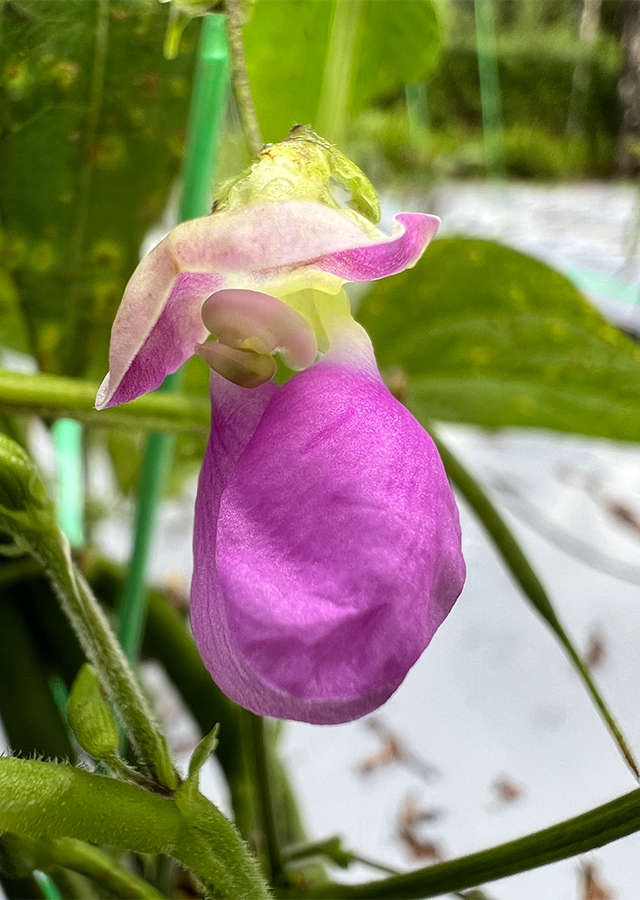
- Flowers compound, raceme-shaped, emerging from the leaf axil. Has a stalk with a length of ± 5 cm and purplish-green color, calyx triangular, hairy, 2-3 cm long, corolla butterfly-shaped and purple, stamens fused, pistil hairy, purple.
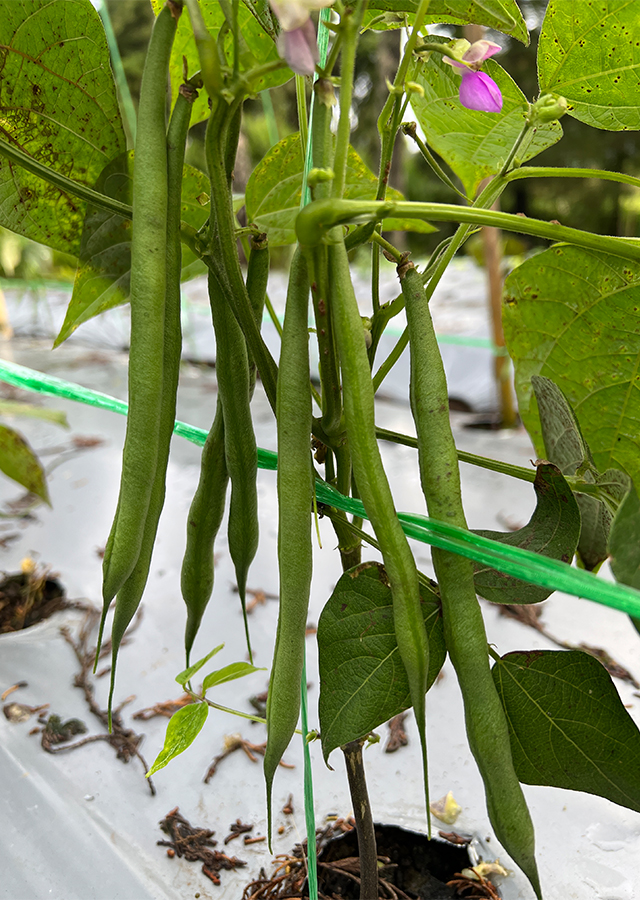
- Fruit pod type, ± 10 cm long, green when young, brown when old.
- Seeds elliptical, smooth surface, glossy, white.
Cultivation
- Propagation generatively (seeds). Soak seeds for 12 hours in warm water and sow where the plant will be grown.
- Germination occurs within 10 days. Optimal soil temperature for germination is 18-20 °C.
Chemical Content
Alkaloid, anthocyanin, catechin, flavonoid (quercetin), glycoside, phasin, phytic acid, saponin polyphenol, steroid, tannin, and terpenoid.
Benefits
Treats acne, wounds, burns, diabetes, diarrhea, edema, dysentery, eczema, sciatica, tenesmus, eases difficult childbirth, treatment of infertility, fever, bee stings, body odor, facilitates umbilical cord separation from newborns, helps stimulate babies who cannot breastfeed, treats pharyngitis, treatment of bee stings and vaginal infections, treats obesity or overweight. Beans are considered depurative, solvent, carminative, diuretic, antidiarrheal, emollient.
Simplisia
- Take fresh buncis leaves and wash until clean.
- Dry the leaves under direct sunlight or using an oven.
- Once the leaves are completely dry, blend finely and sieve to obtain a powder.
- Store in a well-closed container protected from light to maintain the quality of the preparation.
Local Names
Kacang buncis, Kacang kapok (Sunda), Boncis, Buncis (Java).
Traditional Recipes
The following recipes reflect traditional knowledge passed down through generations, not a substitute for professional medical diagnosis or advice. Consult a healthcare provider before use.
1. Wounds
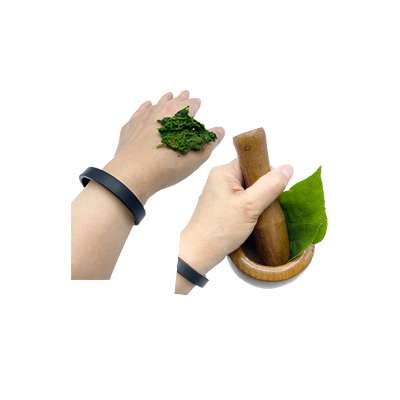
- Prepare buncis leaves as needed and wash with running water until clean.
- Mash the leaves into a paste.
- Apply the leaf paste to the wounded skin.
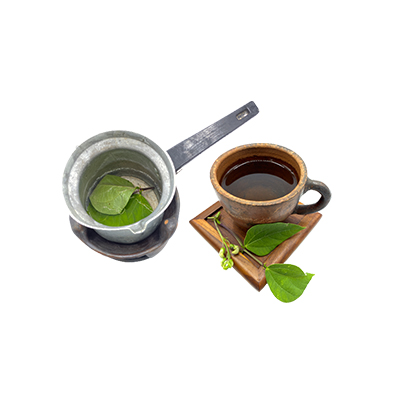
2. Babies who cannot breastfeed
- Take buncis leaves and wash until clean.
- Boil until boiling.
- Let stand until warm/cool.
- Strain, then give as a drink to babies who cannot breastfeed.
Reference Sources
- Flora Fauna Web. 2019. Phaseolus vulgaris L.. https://www.nparks.gov.sg/florafaunaweb/flora/8/3/8356. 15-10-2021.
- Royal Botanic Gardens. 2017. Plants of the World Online : Phaseolus vulgaris L. http://powo.science.kew.org/taxon/urn:lsid:ipni.org:names:514191-1. 15-10-2021.
- Useful Tropical Plants. 2021. Phaseolus vulgaris. http://tropical.theferns.info/viewtropical.php?id=Phaseolus%20vulgaris. 15-10-2021.
- Stuartxchange. 2019. Philippine Medicinal Plants. Bitsuelas. http://www.stuartxchange.org/Bitsuelas. 15-10-2021.
- Bogor Agricultural University. 2014. View TumbuhanObat #Phaseolus vulgaris L.. http://ipbiotics.apps.cs.ipb.ac.id/index.php/tumbuhanObat/479. 15-10-2021.