Phoenix dactylifera L.
Summary
Phoenix dactylifera or the date palm is believed to originate from the valleys of the Nile and Euphrates rivers during the era of Ancient Egypt and Mesopotamia, and has been cultivated since at least 6000 BC, earning it the Arab name 'Tree of Life.' Its fruit, commonly eaten to break the fast, is believed to quickly restore the body's energy, while various parts of the plant are also used in traditional medicine and the cosmetic industry as a moisturizer and skin protector.
Agroecology
The date palm is a plant of dry tropical regions, where it is found at elevations up to 1,500 m asl. Its growth requires hot, dry conditions to fruit, and fruit does not form easily in cooler or more humid climates. Grows best in areas where the mean annual daytime temperature is in the range of 26-45°C, but can tolerate 10-52°C. When dormant, the plant can survive at temperatures down to about -15°C, but leaves and young growth can be severely damaged at -4°C. This species also requires areas with mean annual rainfall in the range of 200-300 mm, but tolerates 100-400 mm. Its water needs must be met with groundwater (tree roots can reach depths of 2-6 m) or irrigation. Date palms can grow well in full sun, even when small. This species prefers soil with a soil acidity (pH) in the range of 6.5-8, and tolerates pH 6-8.5. Date palms are also tolerant of salt or saline soil and various soil types.
Morphology
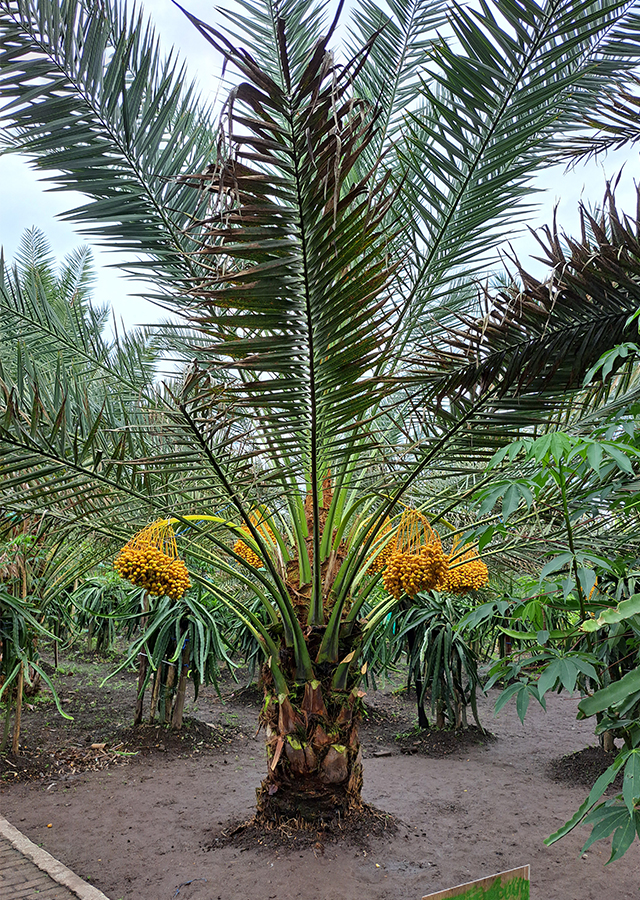
- Trunk single, slender, straight, with distinct petiolar scars.
- Leaves pinnate, containing about 150 leaflets that have spines on the petiole. Leaflets narrowly lanceolate, stiff and grayish.
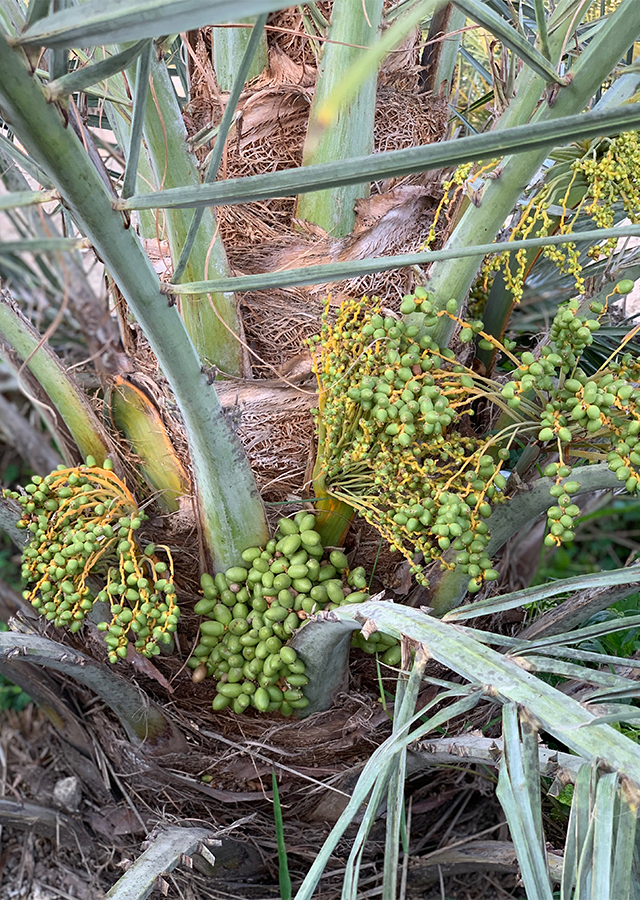
- Flowers small, yellowish and borne singly. Inflorescence produced among the leaves, with a single bract at the base.
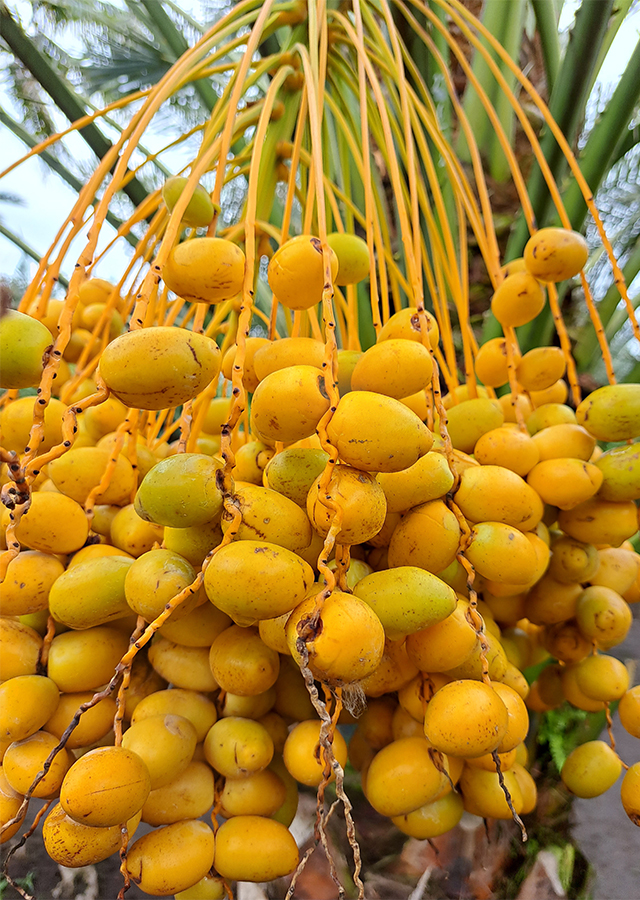
- Fruit cylindrical or oblong-ellipsoid, with flesh surrounding a hard seed inside. Ripe fruit golden yellow to reddish brown.
- Seeds single, hard, brown.
Cultivation
- Plant propagation through seed. However, before sowing, first soak the seed for 24 hours in warm water and sow in a container. Germination usually occurs within 2-3 months.
- Plant propagation through offshoots. Plants can begin fruiting within 2-4 years and usually reach full production at 5-8 years, although productivity can increase up to 9-15 years.
- Pollination is very important for producing good fruit, so pollen is usually artificially introduced to female flowers by cutting the male inflorescence and placing it strategically within the female inflorescence. Male trees are planted with female trees at a ratio of about 1:50 to provide sufficient pollen.
Chemical Content
Phenolic compounds (cinnamic acids (caffeic acid, p-coumaric acid, ferulic acid, m-coumaric acid, o-coumaric acid, and their derivatives such as dactyliferic acid), hydroxylated benzoic acid derivatives (gallic acid, protocatechuic acid, p-hydroxybenzoic acid, vanillic acid)), flavonoid glycosides (luteolin, methyl luteolin, quercetin, and methyl quercetin), flavanols (catechin, epicatechin), sterols and/or triterpenes, tannins, saponins, α-amyrin, alkaloids, coumarins, phytosterol and phytoestrogen compounds, oleic, lauric, palmitic, capric, myristic, myristoleic, palmitoleic, stearic, linoleic, and linolenic acids.
Benefits
Treats respiratory disease (asthma), diarrhea and dysentery, peptic ulcers, skin disorders, cardiovascular disorders, colds, cystitis, gonorrhea, edema, runny nose, sore throat, toothache, reduces fever, increases fertility in women, fights cancer, good for bone and teeth growth, optimizes fetal growth, improves breast milk quality, maintains the fitness and energy of nursing mothers, treats memory disorders, loss of consciousness and nerve disorders, inflammation, paralysis, relieves alcohol hangover, relieves headache and hemicrania, relieves stomach gas and pain especially after heavy meals, speeds up recovery from fever and smallpox, prevents constipation. Has antioxidant, antitumor, antidiabetic, anti-inflammatory, and antiulcer activity.
Simplisia
- Prepare date seeds, wash clean with running water then drain.
- Dry under direct sunlight for several days or with an oven at 40°C until the moisture content reaches 10%.
- Grind until it becomes powder.
- Store the simplicia powder in plastic or a clean, airtight container.
Local Names
Informasi tidak ditemukan. Butuh penelusuran lebih lanjut.
Traditional Recipes
The following recipes reflect traditional knowledge passed down through generations, not a substitute for professional medical diagnosis or advice. Consult a healthcare provider before use.
1. Relieves alcohol hangover
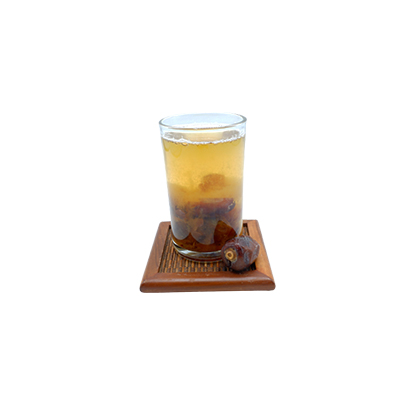
- Prepare an adequate amount of dates.
- Soak in water and wait a while.
- Drink the soaking water to relieve an alcohol hangover.

2. Dysentery
- Prepare an adequate amount of date flesh.
- Eat the date flesh.
- The sweet date flesh is beneficial for dysentery.
Reference Sources
- Royal Botanic Gardens. Plants of the World Online: Phoenix dactylifera L. https://powo.science.kew.org/taxon/urn:lsid:ipni.org:names:668912-1#synonyms. 17-05-2022.
- Tropical Plants Database, Ken Fern. 2021. Phoenix dactylifera. https://tropical.theferns.info/viewtropical.php?id=Phoenix+dactylifera. 17-05-2022.
- Stuartxchange. 2014. Philippine Medicinal Plants: Date palm. http://www.stuartxchange.org/DatePalm.html. 17-05-2022.
- IDN Medis. 2022. Kurma: Manfaat – Efek Samping dan Tips Konsumsi. https://idnmedis.com/kurma. 17-05-2022.
- N Vyawahare, R Pujari, A Khsirsagar, D Ingawale, M Patil, V Kagathara. Phoenix dactylifera: An update of its indegenous uses, phytochemistry and pharmacology. The Internet Journal of Pharmacology. 2008, 7(1).