Phyla nodiflora (L.) Greene
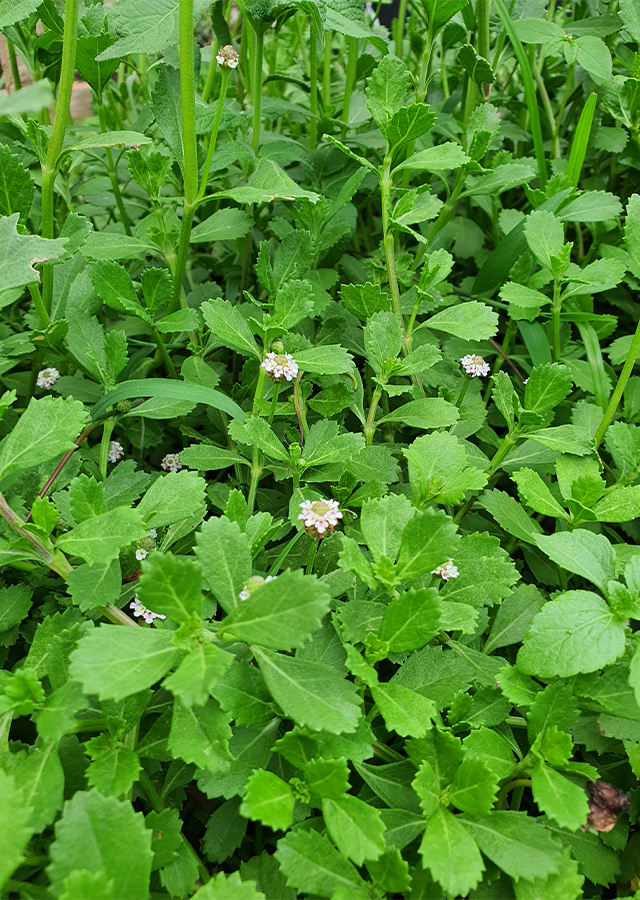
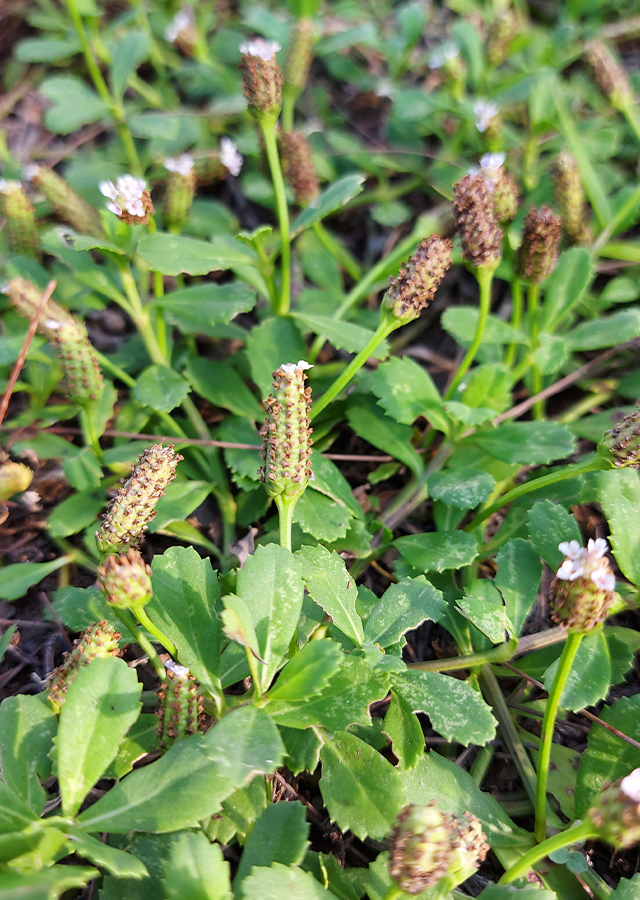
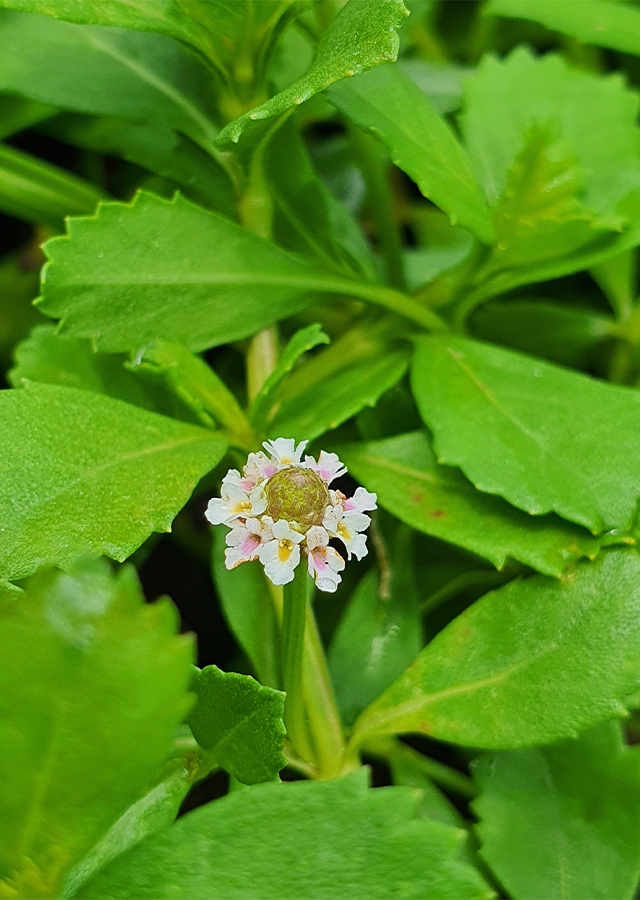
Summary
Gigi gergaji (Phyla nodiflora) is a creeping herb 0.8-1 meter tall of the Verbenaceae family, originating from South America and Africa, now popular in the Australia-Pacific region as a foot-traffic-tolerant ground cover plant. Its leaves can even be used as a tea substitute. Traditionally, gigi gergaji is believed to reduce fever, relieve cough, and help address skin diseases.
Agroecology
This plant lives at elevations below 400 m above sea level. Generally found in moist places such as areas with high rainfall. Tolerant of flooding and drought conditions.
Morphology
- Roots taproot that can reach 2 m in length with fibrous roots at some stem nodes.
- Stem 2-3 mm thick, up to 95 cm long, purplish-green when young, grayish on mature stems.
- Leaves oval shaped, serrated at the leaf tip edges, grayish-green in color.
- Flowers purplish-white in color, 10 mm diameter.
- Fruit 1-1.5 mm diameter.
Cultivation
Propagated using seed or by cutting the plant's stem segments (cuttings).
Chemical Content
Triterpenoid, flavonoid, phenol, steroid, nodifloretin, glycosides-nodiflorin A, nodiflorin B, lippiflorin A, tannin, rutin, β-sitosterol, luteolin, nepetin, batatilfolin, hispidulin, larycitrin, stigmasterol.
Benefits
Reduces fever, relieves cough and flu, relieves ulcers, treats various skin diseases, boils, canker sores, eases breathing, vaginal discharge, has antioxidant and anti-inflammatory activity.
Simplisia
- Wash the whole plant thoroughly with clean water.
- Then dry the material for 3-4 days under shade.
- Grind the dried material until fine then sift.
- Store the dried material in a tightly closed container at room temperature.
Local Names
Buah katak
Traditional Recipes
The following recipes reflect traditional knowledge passed down through generations, not a substitute for professional medical diagnosis or advice. Consult a healthcare provider before use.
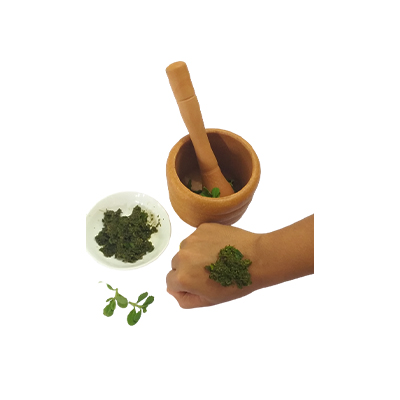
1. Boils and Skin Problems
- Take an adequate amount of fresh leaves.
- Wash thoroughly.
- Mash the leaves into a paste.
- Apply to the affected area.
Reference Sources
- California Native Plant Society. (No date). Common Lippia-Phyla nodiflora. https://calscape.org/Phyla-nodiflora-(). 13-11-2020.
- Fern, Ken. (2014). Useful Tropical Plants: Phyla nodiflora. http://tropical.theferns.info/viewtropical.php?id=Phyla+nodiflora. 13-11-2020.
- Sharma, R.A. and Singh, R. (2013). A Review on Phyla nodiflora Linn.: A Wild Wetland Medicinal Herb. Int. J. Pharm. Sci. Rev. Res. Vol. 20(1): 57-63. https://globalresearchonline.net/journalcontents/v20-1/11.pdf. 11-02-2021.
- Stuart Xchange. (2015). Philippines Medicinal Plants: Busbusi-Phyla nodiflora (L.), Greene. http://www.stuartxchange.org/Busbusi. 13-11-2020.