Phyllanthus emblica L.
Summary
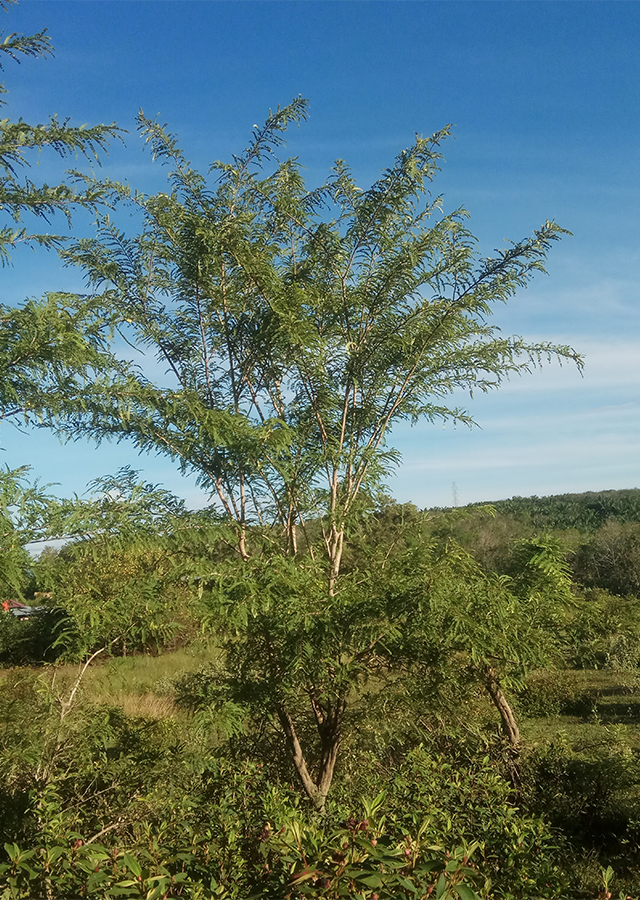
Kimalaka (Phyllanthus emblica) is a shrub up to 7.5-18 meters tall of the Phyllanthaceae family, a close relative of ceremai native to India and Nepal, now distributed across Java, Ternate, and North Sumatra. Its sour fruit becomes a cooking seasoning and traditional dye ingredient, while its wood is used for furniture. Kimalaka is traditionally believed to be antimutagenic and to help address anemia and diabetes.
Agroecology
Kimalaka is a wild plant growing in tropical and subtropical regions. From areas near the coast up to elevations of 1,500 m above sea level. Tolerant of alkaline soil. This tree is fire-resistant (not easily burned) and is a pioneer tree or the first to grow after a forest fire.
Morphology
- Root a taproot.
- Stem upright, round, whitish-brown in color.
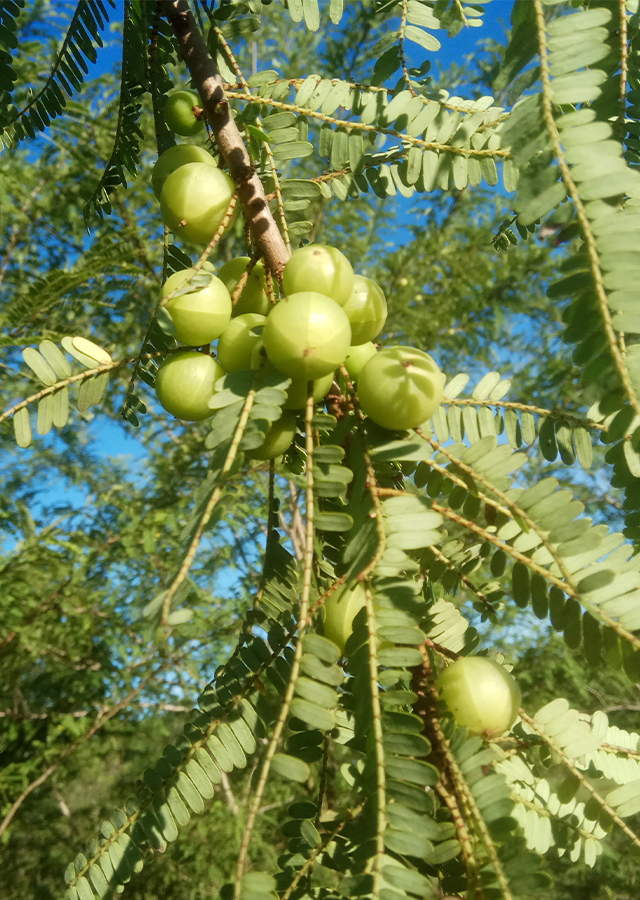
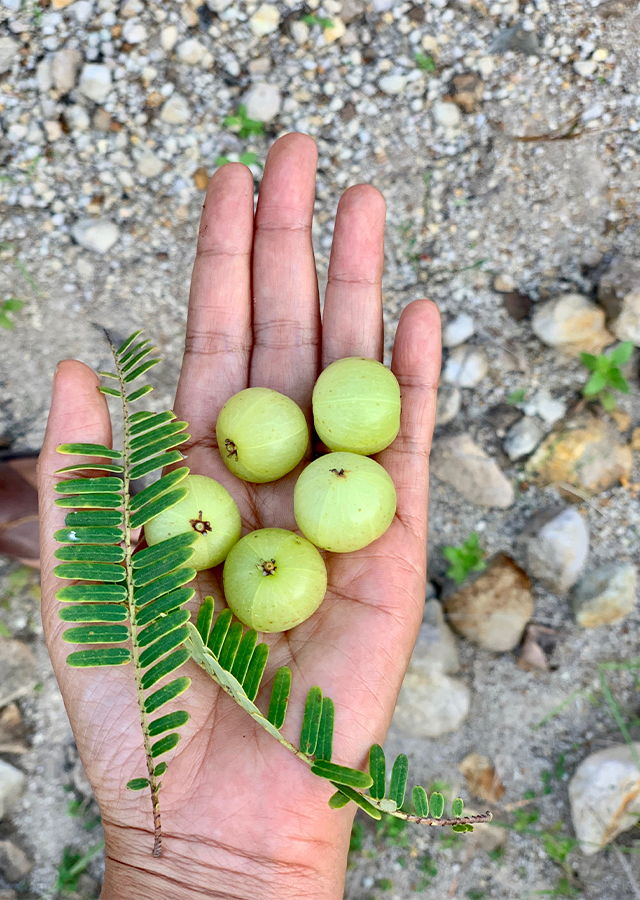
- Leaves compound, small elongated, alternately positioned on slender twigs.
- Flowers male and female greenish-yellow in color, arranged in small clusters growing in leaf axils.
- Fruit resembles ceremai fruit, but rounder and less ribbed. Greenish-yellow or brownish, with 6 ribs. Taste sour and slightly astringent (slightly bitter).
- Seeds triangular-shaped and brown in color.
Cultivation
Propagated generatively from seed and vegetatively by cuttings and air layering.
Chemical Content
Tannin (proanthocyanidins, gallotannin, ellagitannin, gallic acid, ellagic acid) and flavonoid (kaempferol), polyphenol, bisabolane-type sesquiterpenoid.
Benefits
As an antimutagenic, antituberculosis, treats anemia, stomach ache, fever, dizziness, dyspepsia (digestive disorders), hemorrhage (bleeding), diabetes, asthma and bronchitis, treats cancer, treats heart problems.
Simplisia
- Prepare 100 g malaka fruit, cut into pieces, then dry in the sun for several days.
- Once dry, blend until completely fine, sift until there are no clumps.
- Store in an airtight container, can last up to 6 months.
Local Names
Buah Malaka (Aceh), Mlaka or Kemlaka (Java), Balaka, Balangka (Minangkabau), Mlakah (Madura) and Karsinta (Flores).
Traditional Recipes
The following recipes reflect traditional knowledge passed down through generations, not a substitute for professional medical diagnosis or advice. Consult a healthcare provider before use.
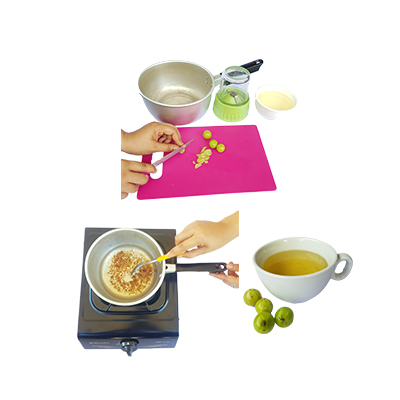
1. Amla oil to strengthen the scalp and for therapeutic massage
- Prepare 4 amla/malaka fruits, 200 ml coconut oil.
- Chop the amla fruit then blend without water. Heat a pan, pour in the coconut oil and add the mashed amla little by little while continuously stirring, use low heat for 10 minutes, turn off the heat. Let stand for 10 hours. Strain.
- Apply to the scalp or use for therapeutic massage.
Reference Sources
- ThePlantList. A working list of all plant species. Phyllanthus emblica http://www.theplantlist.org/tpl/record/kew-153790#:~:text=Phyllanthus%20emblica%20L.%20is%20an,982%201753%20 28-01-2021
- PubMed.gov. Chemical constituents from Phyllanthus emblica and thecyto protective effects on H2O2 induced PC12 cellinjuries. http://pubmed.ncbi.nlm.nih.gov/ChemicalconstituentsfromPhyllanthusemblicaandthecytoprotectiveeffectsonH2O2inducedPC12cellinjuries 28-01-2021