Phyllanthus niruri L.
Summary
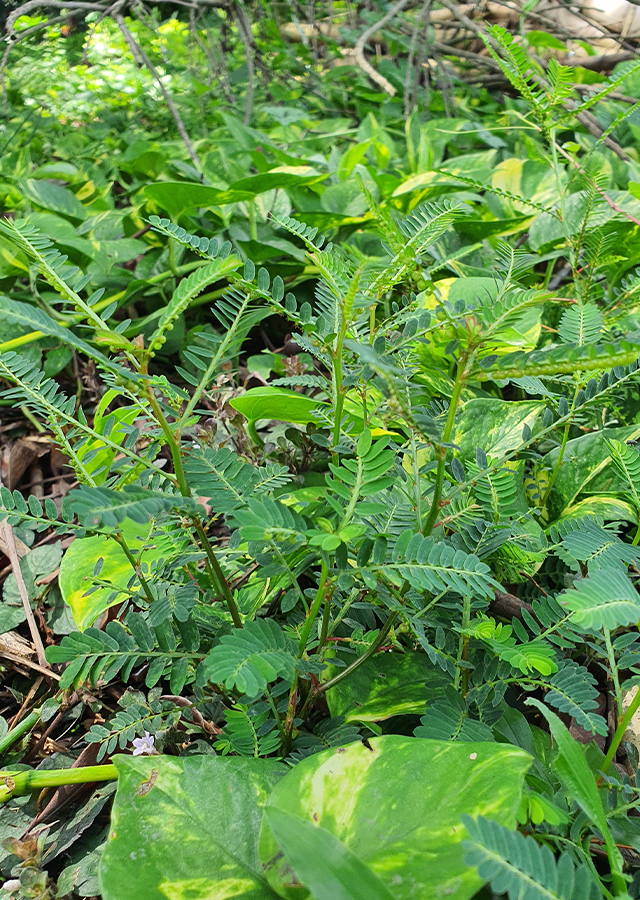
Meniran (Phyllanthus niruri) is an erect annual herb up to 80 cm tall of the Phyllanthaceae family, native to tropical America and coastal India, though now considered a weed in many places. This plant has a long history in Indian Ayurvedic medicine as well as traditional Indonesian jamu, with two known varieties: green meniran and red meniran. A decoction of its leaves and stem is even used as a natural cotton dye, besides being believed to dissolve kidney stones and reduce fever.
Agroecology
Grows in lowlands up to an elevation of 1,500 m above sea level, rainfall of 2,000-3,000 mm/year. Favors both shaded and open locations, with sandy loam soil at pH 7.5-8. Found growing wild in rocky, moist places such as riverbanks, shrubland, former rice fields, or around yards.
Morphology
- Roots taproot, branching, yellowish-white.
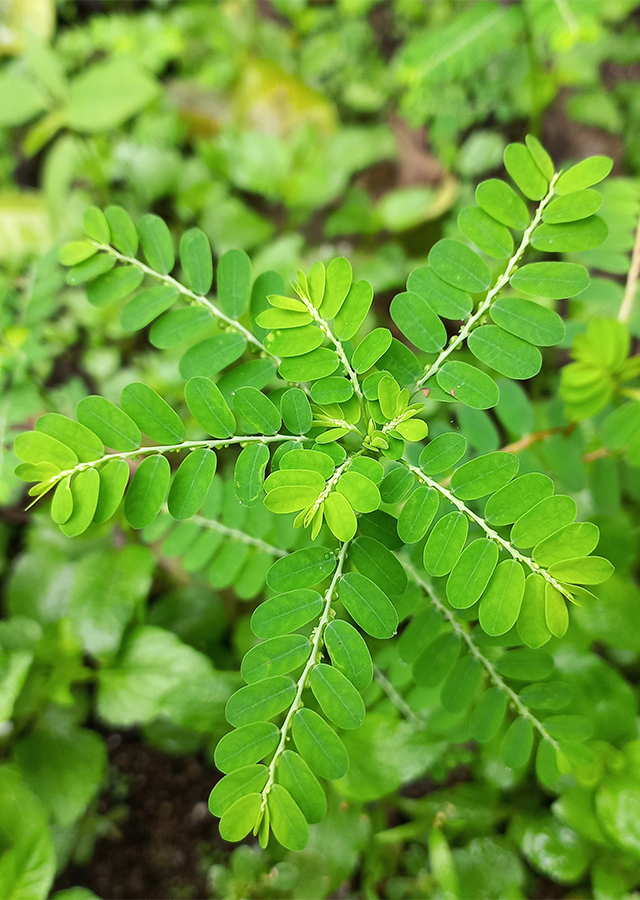
- Stem round, branched, growing erect. Green meniran (Phyllanthus niruri) has monopodial branching, light green, 24 cm tall. Red meniran (Phyllanthus urinaria) has sympodial branching, red, 72 cm tall.
- Leaves alternately arranged, oval-shaped, blunt tip, rounded base, smooth margins. Green meniran (Phyllanthus niruri) is green, red meniran (Phyllanthus urinaria) is greenish-brown.
- Flowers solitary, located in the leaf axils facing downward, white.
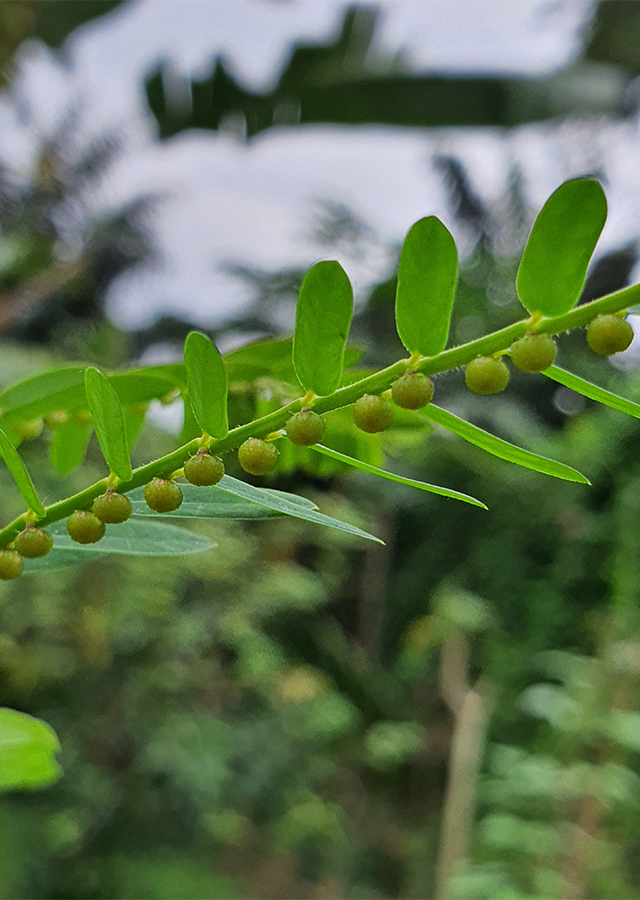
- Fruit round and flat, about 2 mm in diameter, smooth-textured (Phyllanthus niruri) or rough (Phyllanthus urinaria).
Cultivation
- Propagated by seed from a mature parent plant.
- Planting spacing of 20 x 20 cm.
Chemical Content
Alkaloids (4-methoxy-nor-securinine, ent-norsecurinine), coumarins (ellagic acid, ethyl brevifolin carboxylate), flavonoids (quercetin, rutin, astragalin, quercitrin, isoquercitrin, kaempferol-4-rhamnopyranoside, eriodictyol-7-rhamnopyranoside, fisetin-4-O-glucoside, nirurin), lignans (phyllanthin, hypophyllanthin, niranthin, nirtetralin, phyltetralin, hinokinin, isolintetralin), lipids (ricinoleic acid), phthalate, sterols (estradiol, ß-sitosterol, isopropyl-24-cholesterol), tannins (geraniin), triterpenes (lupeol acetate, lupeol, 3,7,11,15,19,23-hexamethyl-2Z,6Z,10Z,14E,18E,22E-tetracosahexaen-1-ol, phyllanthenol, phyllanthenone, phyllantheol), benzenoids.
Benefits
Treats jaundice, excessive menstruation, burns and ulcerated sores, scabies; reduces swelling and boils; treats malaria, dysentery, cough; reduces fever; eliminates acne; dissolves kidney stones; relieves hiccups; addresses asthma, bronchitis, excess uric acid, anemia, snakebites.
Simplisia
- Wash fresh meniran root thoroughly with water. Drain.
- Arrange in a container and sun-dry for ± 3 days until completely dry.
- Store the dried sample in an airtight bag.
Local Names
Ba'me tano, Sidukung anak, Dudukung anak, Baket sikolop (Sumatra), Memeniran (Sunda), Bolobungo (Sulawesi), Gosau ma dungi, Roriha, Belalang babiji (Maluku).
Traditional Recipes
The following recipes reflect traditional knowledge passed down through generations, not a substitute for professional medical diagnosis or advice. Consult a healthcare provider before use.
1. Excessive Menstruation
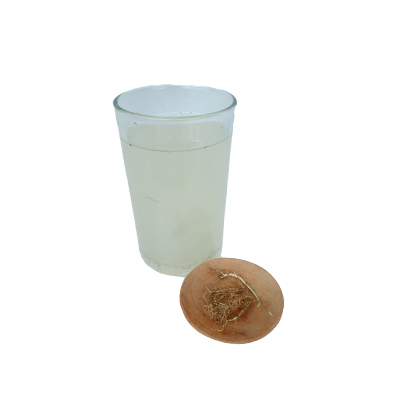
- Take 3–7 pieces of dried meniran root, 1 cup rice-washing water, 2 cups water.
- Pound the root finely, then boil in water until boiling, then add the rice-washing water and mix well, strain.
- Drink twice a day, morning and evening.
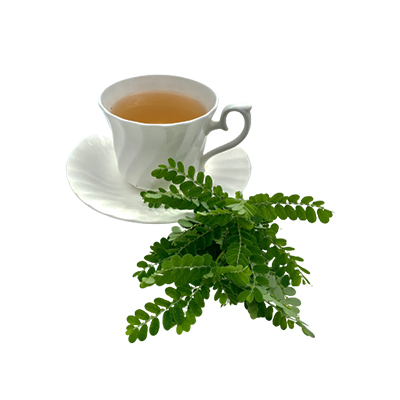
2. Dissolving Kidney Stones
- Prepare meniran leaves that have been sliced and dried into a tea powder.
- Take 1 tsp of the tea powder, then add 1 cup of hot water and let steep for 3-5 minutes.
- Strain the tea and drink while warm. Drink 3 times a day.
Reference Sources
- Royal Botanic Gardens, Kew. Plants of the World Online: Phyllanthus niruri L. https://powo.science.kew.org/taxon/urn:lsid:ipni.org:names:194900-2. 12-11-2021.
- Stuartxchange. 2018. Philippine Medicinal Plants: Sampa-sampalukan. http://www.stuartxchange.org/SampaSampalukan. 12-11-2021.
- Tropical Plants Database, Ken Fern. 2014. Phyllanthus niruri. https://tropical.theferns.info/viewtropical.php?id=Phyllanthus%20niruri. 12-11-2021.
- Narendra K., Swathi J., Sowjanya K. M., Satya A. K. 2012. Phyllanthus niruri: A Review on its Ethno Botanical, Phytochemical and Pharmacological Profile. Journal of Pharmacy Research 2012, 5(9): 4681-4691.