Phytolacca americana L.
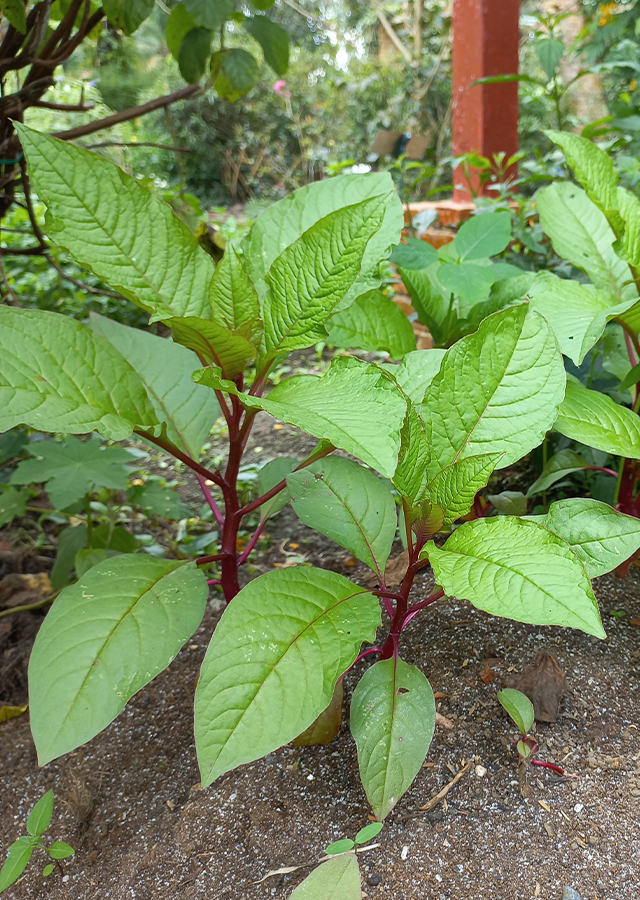
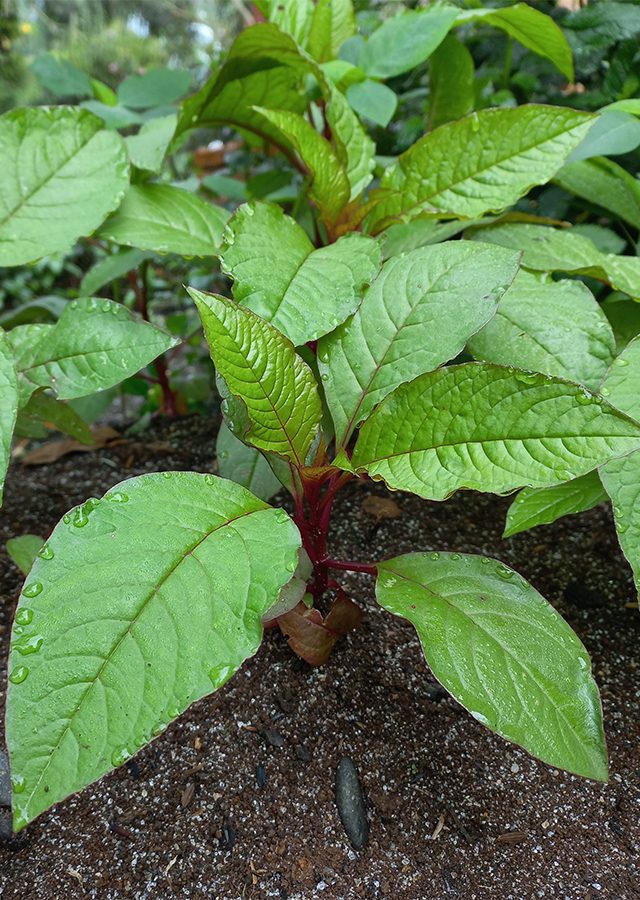
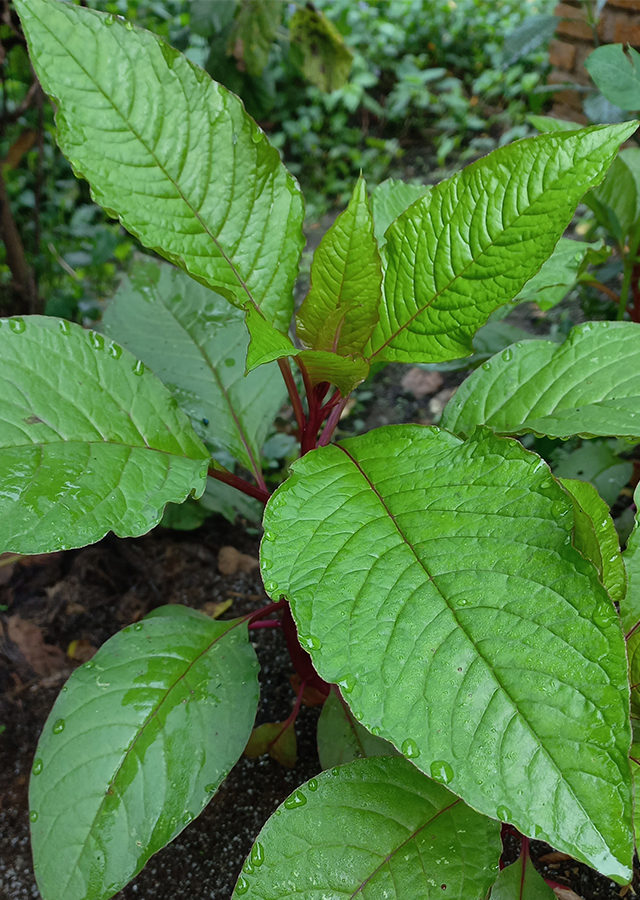
Summary
Bayam tinta (Phytolacca americana) is a herb up to 3 meters tall from the Phytolaccaceae family that originates from eastern North America, entirely toxic especially as the plant ages, though its young shoots can be carefully prepared as a vegetable. Its berries produce a natural red dye for ink and wine. Native Americans traditionally used its root as a laxative and emetic.
Agroecology
Bayam tinta can be found living along roadsides, disturbed areas, forest edges, riverbanks, grasslands, land clearings, thickets, and forest borders from sea level up to 1,400 m asl. This plant prefers light (sandy), medium (loamy) and heavy (clay) soil textures and can grow in partial shade or without shade, but can grow well under trees. Bayam tinta also requires humus-rich, moist, acidic soil, and tolerates short periods of drought.
Morphology
- Roots fleshy taproot, toxic.
- Stem cylindrical, branched, hairless. Young stems soft, watery; old stems reddish and somewhat hard.
- Leaves single, lanceolate-elliptical or ovate, alternate, leaf tip tapering, leaf base pointed and narrowing, pinnate venation, toxic.
- Flowers bisexual, small, numerous, white to green, with 5 whitish to pink petals, no calyx, stamens numbering 10 with filaments longer than the pistil, sweetly scented. Flowers arranged in racemes.
- Fruit a berry, flattened round, green when young and glossy dark purple when ripe, juicy, toxic.
- Seeds round, laterally flattened, 3-4 mm long, numerous, glossy black, smooth and hard skin.
Cultivation
- Propagation can be done generatively (seeds) and vegetatively (stem cuttings).
- Before sowing, fruit must be soaked in water for 48 hours to allow seed extraction.
- Mass propagation is done with non-woody stem cuttings. After 6-8 weeks the cuttings root and can be planted in the field, with a planting spacing of 1-3 m × 2-3 m.
Chemical Content
Saponins (phytolaccosides B, E, and esculentosides), sterols, alpha-spinasterol, americanins A, B, D11, 12, americanol A, isoamericanol A13, methyl esters, lectins, phytolaccanin, phytolaccatoxin, triterpenes, histamine, γ-aminobutyric acid, phytolaccagenin, phytolaccagenic acid, oleanolic acid, tannin, caryophyllene, jaligonic acid.
Benefits
Treats autoimmune diseases (especially rheumatoid arthritis), tonsillitis, goiter, glandular fever and other complaints involving swollen glands, chronic inflammation of the nasal mucous membrane, bronchitis, bruises, swelling and sprains, cancer, hemorrhoids, tremors, rheumatism, dysentery, warts, boils, acne, scabies, itching, menstrual pain, goiter, skin cancer, AIDS, heals chickenpox in children, has anodyne (pain-relieving), anti-inflammatory, cathartic (emotional release), expectorant, hypnotic, laxative, emetic (vomiting agent) properties.
Local Names
Bayam Belanda.
Traditional Recipes
The following recipes reflect traditional knowledge passed down through generations, not a substitute for professional medical diagnosis or advice. Consult a healthcare provider before use.
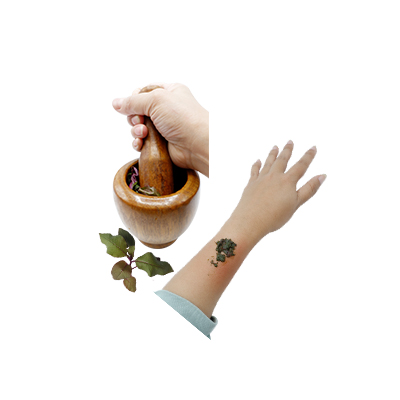
1. Addressing itching
- Prepare leaves as needed and wash with running water until clean.
- Mash the leaves into a paste.
- Apply the leaf paste to the itchy skin.
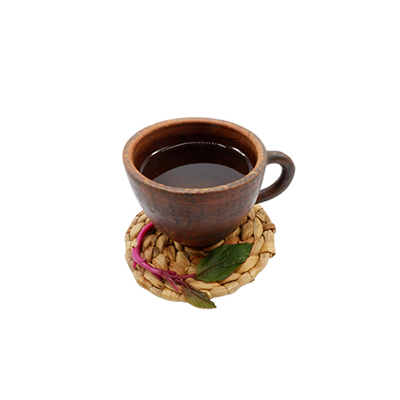
2. Laxative
- Take fresh leaves and wash until clean with running water.
- Boil the leaves until boiling.
- Strain the decoction.
- Drink while warm.
Reference Sources
- Royal Botanic Gardens. 2021. Plants of the World Online: Phytolacca americana L. http://www.plantsoftheworldonline.org/taxon. 22-09-2021.
- Drug.com. 2021. Pokeweed. [diakses 22 September 2021]. https://www.drugs.com/npp/pokeweed.html.
- Useful Temperate Plants Database. 2021. Phytolacca americana. http://temperate.theferns.info/plant/Phytolacca+americana. 22-09-2021.
- Nunik Sulistya Utami's Blog. 2014. Phytolacca americana L., Buah Tinta / Bayam Belanda Yang Beracun. https://biologinunik.wordpress.com/2014/07/31/phytolacca-americana-l-buah-tinta-bayam-belanda-yang-beracun/. 22-09-2021.
- PROTA4U. 2015. Phytolacca americana (PROTA). https://uses.plantnet-project.org/en/Phytolacca_americana_(PROTA). 22-09-2021.