Pilea melastomoides (Poir.) Wedd.
Summary
Poh-pohan (Pilea melastomoides) is an upright herb up to 0.5-2 meters tall of the Urticaceae family, a plant native to Indonesia distributed as far as Vietnam, Taiwan, and China. In Java, Sumatra, and Bali, its soft and distinctively aromatic leaves are a favorite side dish. Poh-pohan is also believed to help relieve menstrual pain and keep skin looking youthful.
Agroecology
This plant grows at elevations of 500-2,500 m above sea level. Usually grows in moist and shaded areas such as forests, forest edges, ravines, riverbanks and clusters like a carpet. Its growth depends on the availability of water around it.
Morphology
- Stem upright, round, thornless, green.
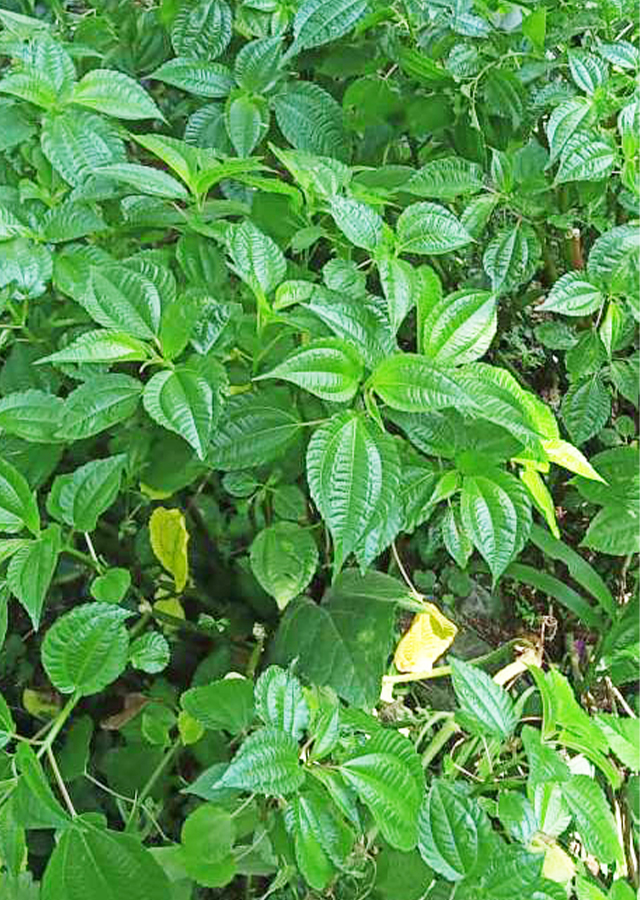
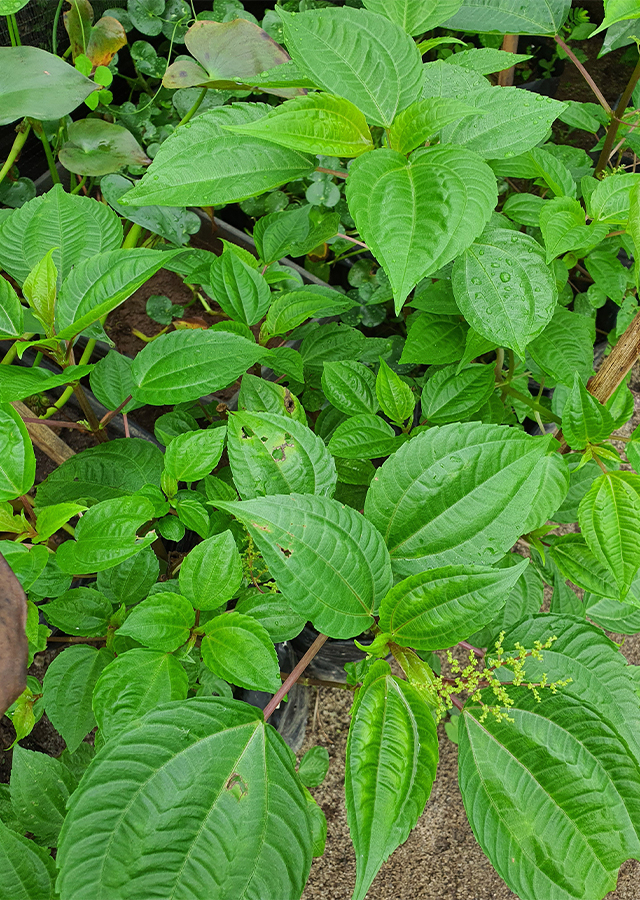
- Leaves grow opposite in two blades. Serrated edges, blunt leaf base, tapering tip, curved leaf veins, green in color, and fragrant smell.
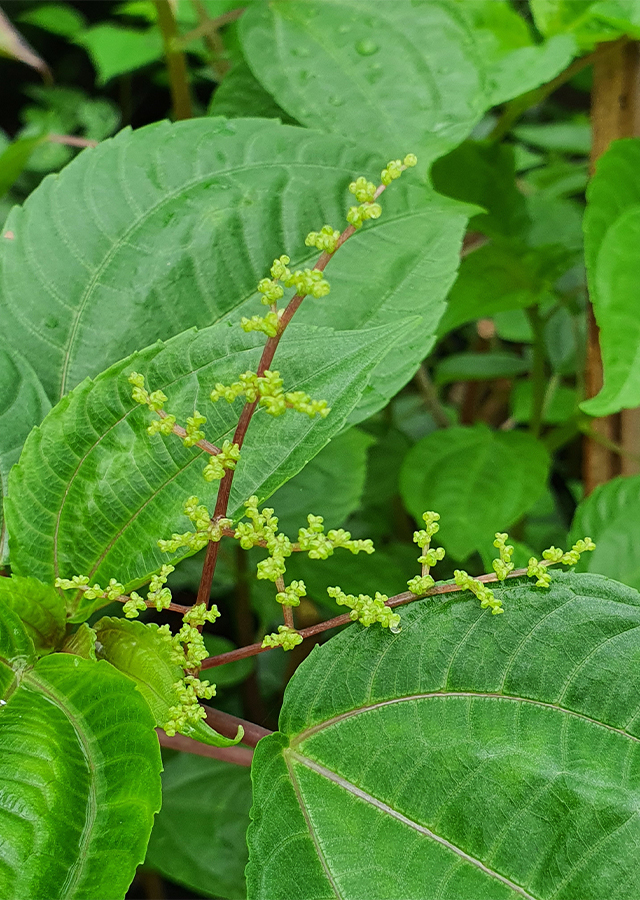
- Flowers imperfect, female flowers below male flowers, white or greenish-white in color, stamens as numerous as the pistil head. Flower position on the stalk, flower stalk longer than the leaf stalk.
Cultivation
- Propagated by stem cuttings and seed.
- Nursery: prepare planting media in a polybag consisting of soil, compost, and husk. Plant cuttings about 20-30 cm long. Water 2-3 times a day.
Chemical Content
Flavonoid, alkaloid, amino acids, pigments (carotenoid) such as ascorbic acid, polyphenol, tannin, monoterpenoid and sesquiterpenoid, steroid, quinone.
Benefits
Dry and dull skin (keeps skin youthful), lower back pain and menstrual pain, heart disorders, prevents cancer risk, early forgetfulness, diabetes, decreased immunity, controls high blood pressure, osteoporosis, bone and muscle pain.
Simplisia
- Pick fresh, undamaged poh-pohan leaves, then wash with running water and drain.
- Arrange the leaves on a tray, cover with a black cloth. Dry in the sun for 2 days or until evenly dry (leaves easily crumble when squeezed).
- Dry-sort the simplisia of unwanted or unneeded foreign material.
- Store in a clean, tightly closed container.
Local Names
No information found. Further research needed.
Traditional Recipes
The following recipes reflect traditional knowledge passed down through generations, not a substitute for professional medical diagnosis or advice. Consult a healthcare provider before use.
1. Dry and dull skin (keeps skin youthful)
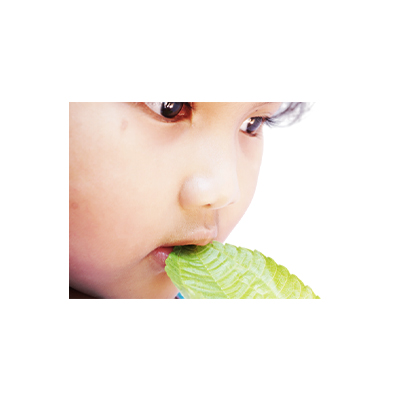
- Clean 7 fresh poh-pohan leaves then eat directly or as a side dish.
- Consume 3 times a day.