Piper sylvaticum Roxb.
Summary
Sirih urat putih (Piper sylvaticum) is a climbing plant up to 10 meters or taller from the Piperaceae family distributed across Southern China, India, Bangladesh, and Myanmar. Its root is an effective antidote to snake venom in the Indian Traditional Medicine System, while its leaves are eaten as a vegetable on the Indian Subcontinent. Sirih urat putih is traditionally used to relieve colds, asthma, and digestive disorders.
Agroecology
Piper sylvaticum can usually be found in shaded areas on the forest floor. This species also prefers wet and moist, well-drained, fertile soil rich in organic matter, in partial shade or full shade. Its minimum temperature is around -5°C.
Morphology
- Roots taproot.
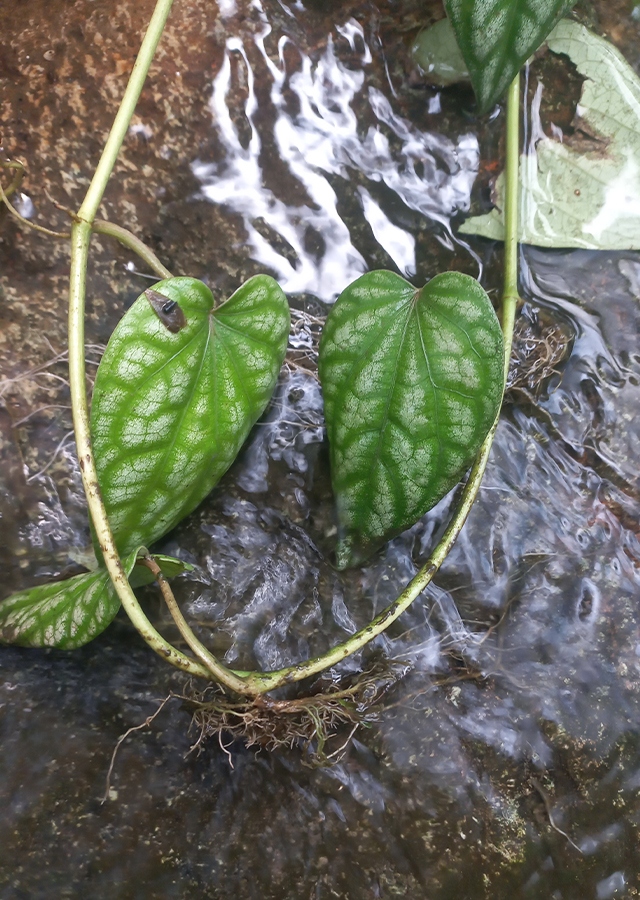
- Stem green, jointed or segmented, with aerial roots at each node.
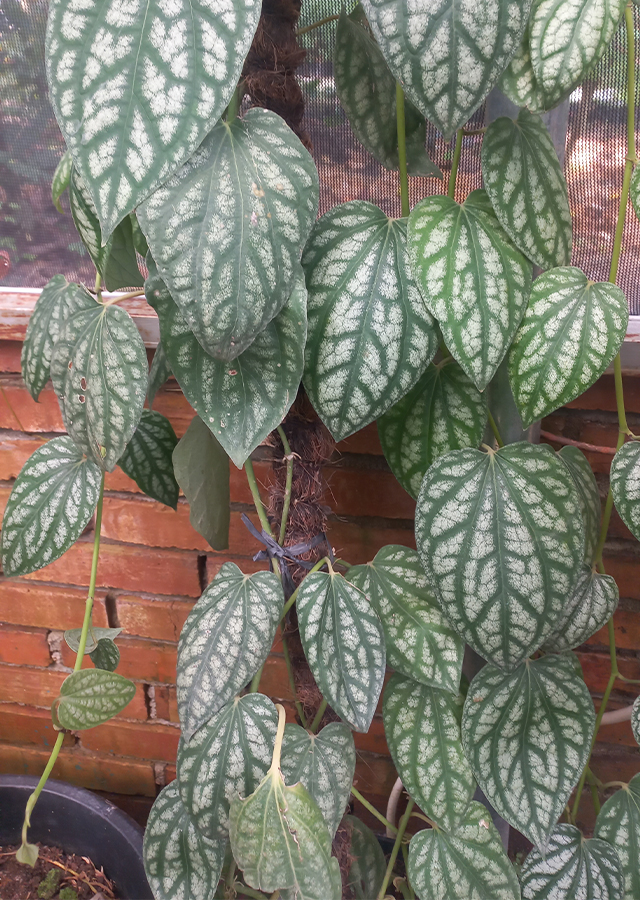
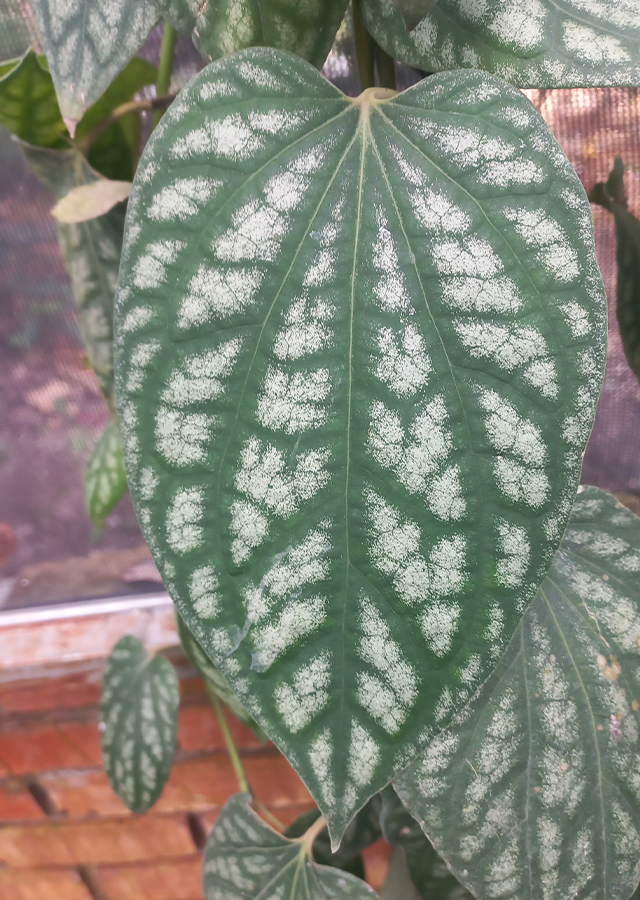
- Leaves unifoliate, short-stalked, arranged alternately, base color green with an additional silver pattern in the area not covered by the veins, and heart-shaped, 5-veined at the base. The area along the veins is dark green.
- Flowers white to yellowish green. Inflorescence arranged in clusters on a 'spike' structure, with between 50-150 individual flowers per spike, the inflorescence opposite the leaf. Male inflorescence slender, upright, growing about 5-8 cm, stamens number 4, filaments short, anthers reniform, 2-celled. Female flowers cylindrical, about 1.5-2.5 cm long, short-stalked, ovary superior and round, 1-celled, 1 ovule, style short.
- Fruit small, round drupes.
- Seeds round, 1 per fruit.
Cultivation
- Propagation is done generatively (seed) or vegetatively (stem cuttings).
- Stem cuttings are done by cutting the plant stem with one or two leaves on the stem section then placing it on a growing medium. The growing medium must be kept consistently moist and placed in a dim location until roots appear (about three weeks).
Chemical Content
Alkaloids, flavonoids, tannins, phenols, saponins, piperine, piperlonguminine, sylvamide, sylvatesmin, sylvatine, sylvone, piperic acid, sesamin, β-sitosterol, N-isobutyldeca-trans-2-trans-4-dienamide, lignans (cubebin and sesamin), sylvatin-4'-7-dimethoxy-, pipataline.
Benefits
Relieves the common cold, asthma, colds, chronic cough, hemorrhoids, rheumatic pain, headaches, wounds, bronchitis, tuberculosis, digestive disorders, dyspepsia, spleen and liver disease, chronic kidney disease, lung wounds, an antidote to snake venom, hepatomegaly (enlargement of the liver beyond its normal size), splenomegaly, a laxative. Is carminative (prevents gas formation in the digestive tract or bloating), diuretic. Has antioxidant, antidiarrheal, antinociceptive, anti-inflammatory, antibacterial, anthelmintic, hepatoprotective, anticancer, and analgesic activity.
Local Names
Informasi tidak ditemukan. Butuh penelusuran lebih lanjut.
Traditional Recipes
The following recipes reflect traditional knowledge passed down through generations, not a substitute for professional medical diagnosis or advice. Consult a healthcare provider before use.
1. Flu
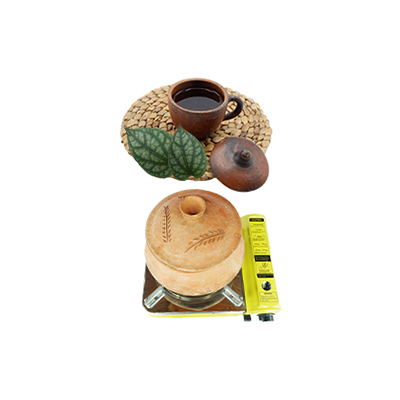
- Take an adequate amount of fresh sirih urat putih leaves and wash until clean.
- Boil until it boils.
- Let it cool to warm/cold.
- Strain then drink to relieve flu.
Reference Sources
- The Plant List. 2013. Piper sylvaticum Roxb. http://www.theplantlist.org/tpl1.1/record/tro-25004426. 6-1-2022.
- Flora Fauna Web. 2019. Piper sylvaticum Roxb. https://www.nparks.gov.sg/florafaunaweb/flora/5/2/5226. 6-1-2022.
- Adnan et al. 2020. Comparative Study of Piper sylvaticum Roxb. Leaves and Stems for Anxiolytic and Antioxidant Properties Through In Vivo, In Vitro, and In Silico Approaches. Biomedicines, 8(68). doi:10.3390/biomedicines8040068.
- Ved A.,Rawat A. K. S., Gupta A. 2016. Antioxidant and Hepstoprotective Potential of Phenol-Rich Fraction From Piper Sylvaticum Roxb.Roots. Current Topics in Nutraceutical Reseach, 14(13): 207-214.
- M. N. U. Chy et al. 2019. Evaluation of anti-nociceptive and anti-inlammatory activities of Piper sylvaticum (Roxb.) stem by experimental and computational approaches. Oriental Pharmacy and Experimental Medicine. https://doi.org/10.1007/s13596-019-00395-9.
- Paul et al. 2018. Anthelmintic activity of Piper sylvaticum Roxb. (family: Piperaceae): In vitro and in silico studies. Clinical Phytoscience, 4:17. https://doi.org/10.1186/s40816-018-0077-8.
- Candide. Piper sylvaticum. https://candide.com/GB/plants/c5194229-3f57-4422-a88c-46916dc1650a. 6-1-2022.
- Shethi et al. 2019. Morphoanatomical Profile of Five Species of Piper L. From Bangladesh and Its Taxonomic Significance. Bangladesh J. Plant Taxon. 26(1): 57–68.
- PlantStory. 2022. Piper sylvaticum. https://plantstory.com/glossary/piper-sylvaticum. 6-1-2022.