Pithecellobium dulce (Roxb.) Benth.
Summary
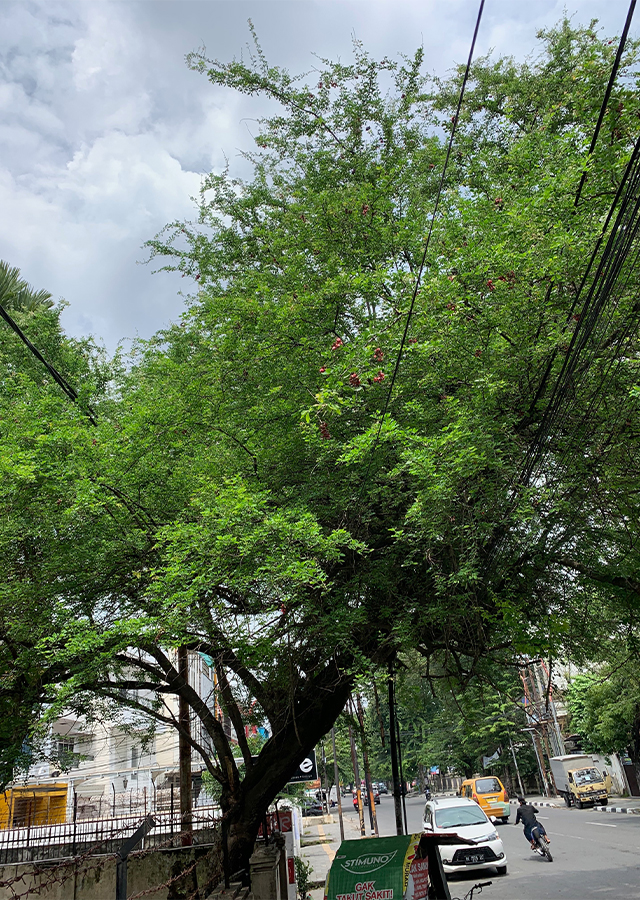
Asam londo (Pithecellobium dulce) is a tree 10-15 meters tall of the Fabaceae family, originating from Mexico and widely distributed in Central and South America. In Indonesia, this tree is often planted as a beautiful roadside ornamental as well as material for fishing net dye and soap-making. Asam londo is also traditionally believed to help address diabetes, inflammation, and kidney disorders.
Agroecology
Grows well in lowlands to mid elevations in tropical regions with annual rainfall of 140-2,200 mm/year, temperature ranging 18-28 °C. This plant is tolerant of nutrient-poor soil, drought and soil pH up to 8.3. Prefers moist, well-drained clay soil, with full sunlight.
Morphology
- Stem round, grooved and thorny.
- Leaves compound, pinnate venation, oblong leaflets.
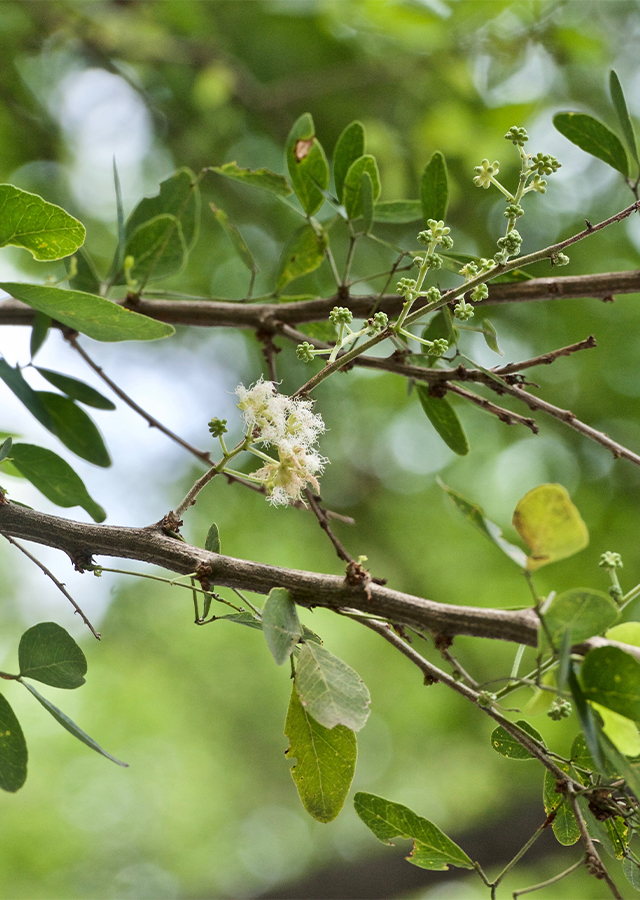
- Flowers compound head-shaped, greenish-white in color, fragrant, terminal inflorescence.
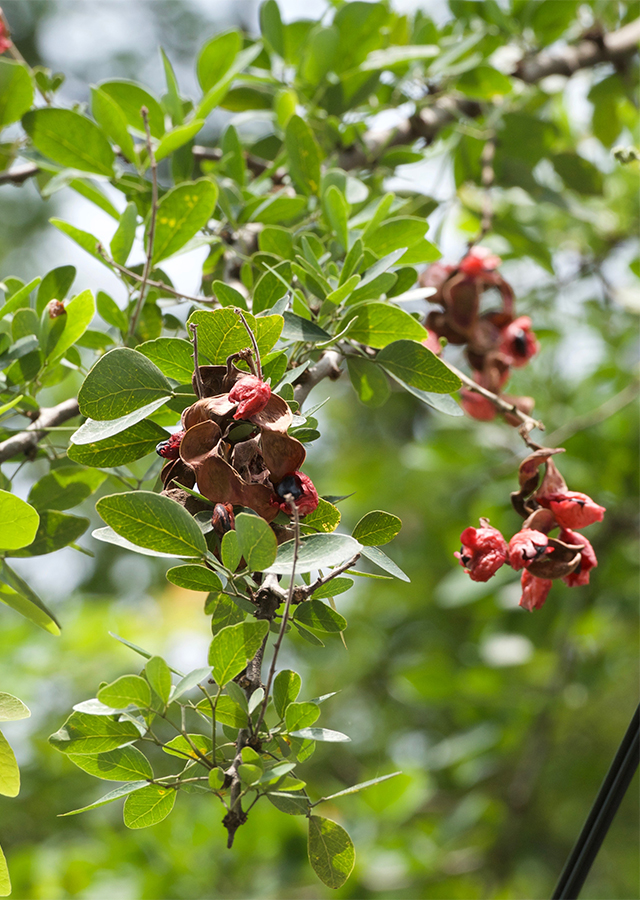
- Fruit a pod, cylindrical shaped, flat, seed count ranging 1-10 seeds.
- Seeds black, flat, glossy, has a white covering.
Cultivation
- Propagated generatively (by seed) and vegetatively (cuttings, air-layering, top-grafting).
- Seeds take about 2 weeks to grow.
Chemical Content
Alkaloids, anthraquinones, flavonoids, cardiac glycosides, tannins, terpenoids, olein, quercetin, kaempferol, dulcitol, saponins, catechol, campesterol, pitheduloside, ellagic acid.
Benefits
Treats diabetes, inflammation, cancer, kidney disorders, fever, colds, sore throat, malaria, pain, eczema, leprosy, toothache and gum pain, chronic diarrhea, dysentery, constipation, tuberculosis, wounds, boils, seizures, antimicrobial, antioxidant, antihyperlipidemic, antiseptic, and antibacterial.
Simplisia
- Select fresh asam londo leaves, clean off attached dirt, wash then drain.
- Arrange on a tray then dry for several days and cover with a thin dark colored cloth.
- Once dry, put into a clean, tightly sealed, airtight plastic bag.
Local Names
Asam belanda, Asem londo (Java), Asam koranji (Sunda)
Traditional Recipes
The following recipes reflect traditional knowledge passed down through generations, not a substitute for professional medical diagnosis or advice. Consult a healthcare provider before use.
1. Canker Sores
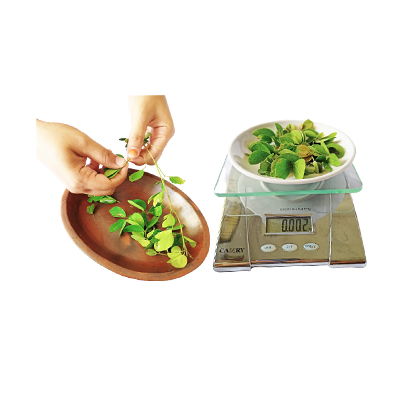
- Prepare 2 g fresh young asam londo leaves.
- Wash the leaves then chew until fine.
- Hold in the mouth for 1-2 minutes then discard the residue.
Reference Sources
- Health Benefits Database. (No date). Facts about Camachile. https://www.healthbenefitstimes.com/camachile/ 18-08-2020
- Fern, Ken. (2014). Useful Trofpical Plants Database. Camachile. Pithecellobium dulce. http://tropical.theferns.info/viewtropical.php?id=Pithecellobium+dulce. 18-08-2020
- Journal of Pharmacognosy and Phytochemistry (2018). Medicinal uses of Pithecellobium dulce and its health benefits. https://www.phytojournal.com/archives/?year=2018&vol=7&issue=2&ArticleId=3358 27-01-2021