Plectranthus verticillatus (L.f.) Druce
Summary
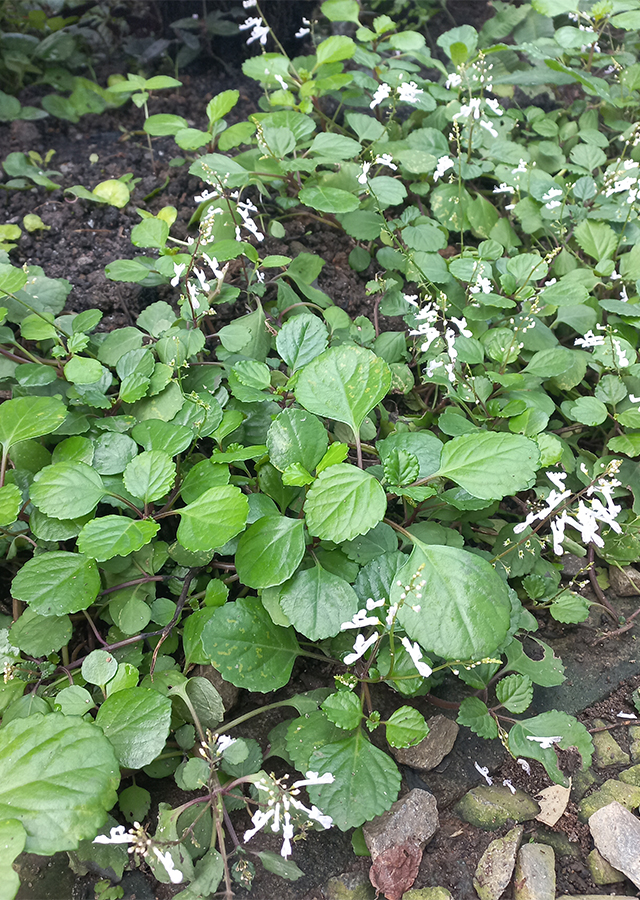
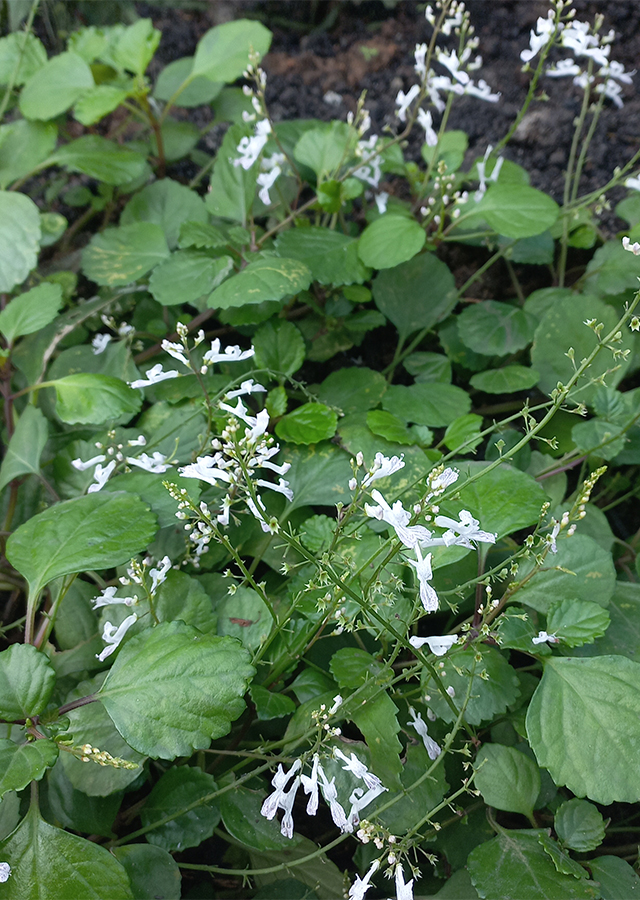
Swedish ivy (Plectranthus verticillatus) is a semi-succulent, aromatic ground-cover herb 10-30 cm tall from the Lamiaceae family native to Southeastern African forests, believed in various cultures to be a 'money plant' bringing good fortune. Its leaf extract is traditionally used as an expectorant for productive cough and a remedy for arthritis. Swedish ivy is also believed to help relieve shortness of breath and skin diseases such as psoriasis.
Agroecology
Easy to grow, good for ground cover or ornamental hanging baskets. This Swedish ivy requires full sun to partial shade with a fertile, well-drained soil mix. The plant is watered well and allowed to dry slightly before watering again. If plants are too wet, they cause root rot.
Morphology
- Stem short, strigose (short, coarse hairs pointing the same direction).
- Leaves often glossy, soft, round to oblong, light to dark green above, sometimes dark purple below, semi-succulent (64-90 mm in size) with margins toothed to broadly toothed on a rectangular stem.
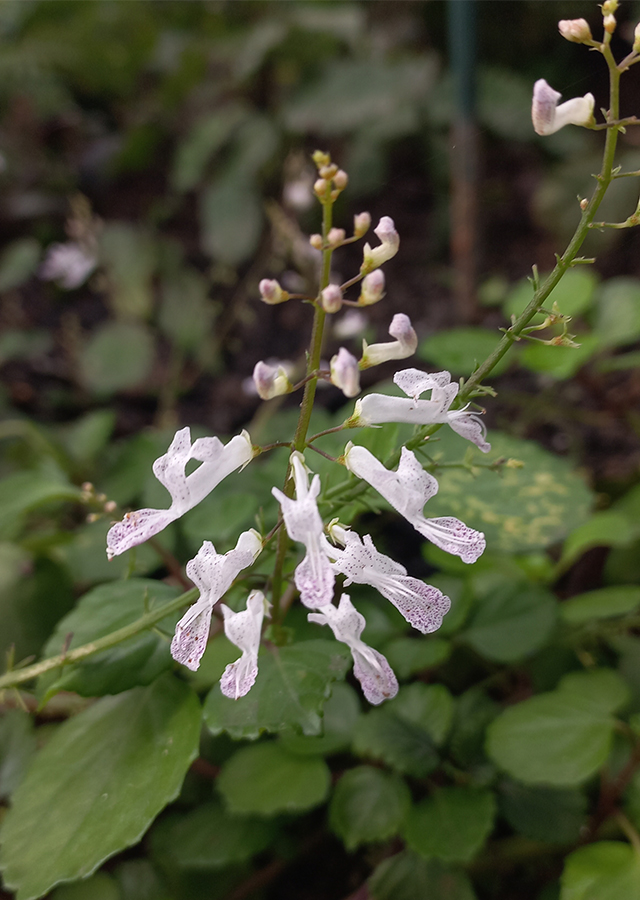
- Flowers white, pale light lavender, or pale pink, appearing sporadically throughout the year in gardens but more so in spring and late autumn. Terminal inflorescence, racemose, verticillate (whorled), 50-260 mm long, often with paired side branches (verticillasters) at the base. Calyx 3 mm long, enlarging to 5 mm. Corolla 10-25 mm long, white, often spotted; tube 4-16 mm long, straight, laterally compressed, 2-3 mm wide, nearly linear, base slightly saccate.
- Seeds brownish.
Cultivation
Propagated from seed, stem cuttings, and by dividing larger plants.
Chemical Content
Saponin compounds, essential oil, diterpenoids.
Benefits
Swedish ivy leaf extract is used as an expectorant to treat productive cough and bronchitis, a wash for sore eyes, treats arthritis, gout, or rheumatism. Relieves pain from wounds or surgery when applied topically, releases toxins from the body, thereby purifying the blood and reducing strain between liver and gallbladder function, reduces pain and potential infection of burns on the skin, treats irritation from psoriasis, eczema, acne, and other skin diseases, treats shortness of breath, asthma, respiratory tract infections and swelling (Chronic Obstructive Pulmonary Disease), prevents the spread and development of cancer and chronic disease. Can remove free radicals and prevent mutation and apoptosis, treats worms, parasites, harmful bacteria living in the intestines. Has anti-inflammatory, antioxidant, anthelmintic, antiparasitic, and antibacterial activity.
Local Names
Informasi tidak ditemukan. Butuh penelusuran lebih lanjut.
Traditional Recipes
The following recipes reflect traditional knowledge passed down through generations, not a substitute for professional medical diagnosis or advice. Consult a healthcare provider before use.
1. Cough
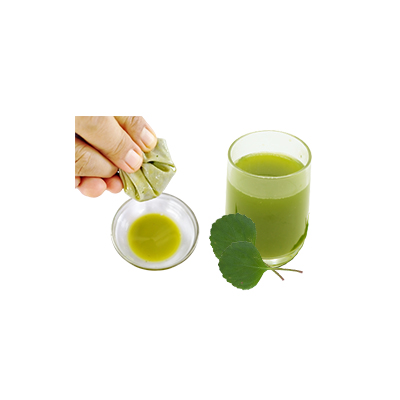
- Prepare an adequate amount of fresh Swedish ivy leaves and wash until clean.
- Grind until it becomes a paste.
- Squeeze the leaf paste and take the liquid.
- Drink to treat cough.
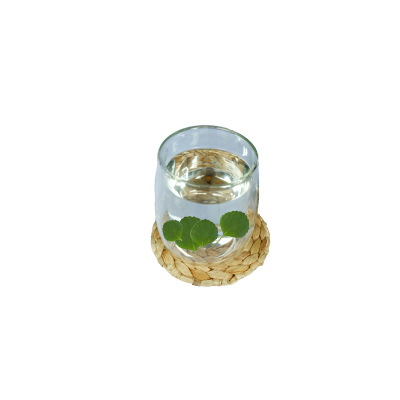
2. Wash for sore eyes
- Take an adequate amount of fresh Swedish ivy leaves and wash until clean.
- Soak in water.
- Wait a while.
- Strain and use the soaking water to wash the sore eyes.
Reference Sources
- Royal Botanic Gardens. 2017. Plants of the World Online: Plectranthus verticillatus (L.f.) Druce. https://powo.science.kew.org/taxon/urn:lsid:ipni.org:names:454770-1. 25-02-2022.
- Green School SD Islam Sabilillah Malang. 2019. Swedish Ivy (Plectranthus verticillatus). https://greenschoolsdismlg.blogspot.com/2019/10/swedish-ivy-plectranthus-verticillatus.html?m=1.
- Senzo Khanyile, KwaZulu-Natal National Botanical Garden. 2010. Plectranthus verticillatus. http://pza.sanbi.org/plectranthus-verticillatus.