Pleurolobus gangeticus (L.) J.St.-Hil. ex H.Ohashi & K.Ohashi
Summary
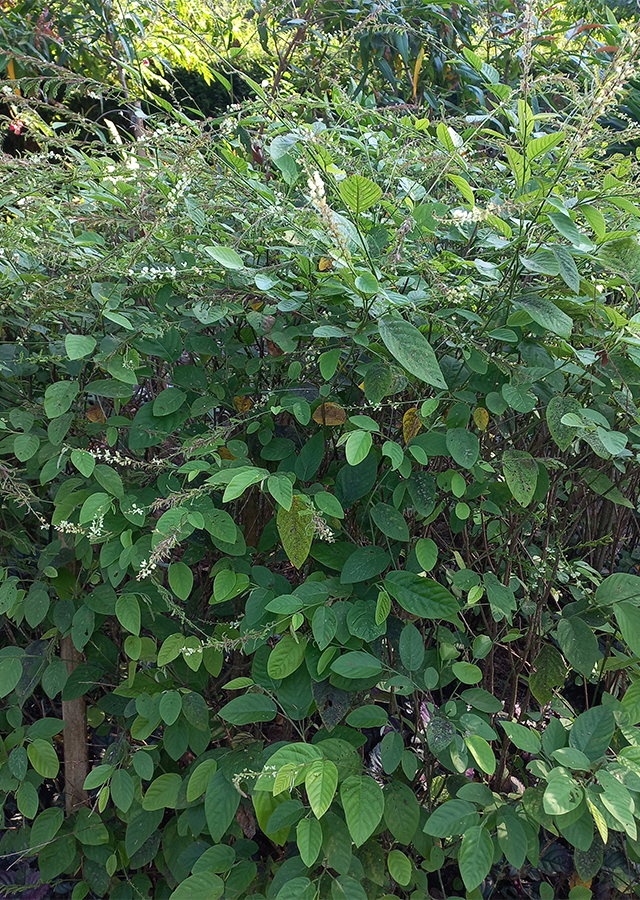
Daun bulu ayam (Pleurolobus gangeticus) is a shrub up to 2 meters tall from the Fabaceae family spread from tropical Africa to Australia. Its root is an important part of the Dasmoola kvatha remedy in Indian Ayurveda, serving as a bitter antipyretic tonic believed to be beneficial for typhoid fever. Its fibrous stem is also used to make paper and, in the Philippines, traditional shrimp traps.
Agroecology
Daun bulu ayam can grow in various habitats, generally often found in open forests, disturbed areas in rainforests, seasonal forests, thickets, sand dunes, and in dry sandy soil near water. In Indo-China, this plant can be found in savannas and bare areas, fences and along forest trails, up to an elevation of 1,900 m asl.
Morphology
- Roots have a taproot and lateral roots, root bark yellowish-white and rough textured, easily peeled, with nitrogen-fixing root nodules.
- Stem slender, somewhat angular and covered with fine grayish hairs, branched, fibrous. Lower stem thickened, young stem hairy.
- Leaves compound, simple, unifoliate, alternately arranged, oblong-ovate shape, hairy on the underside, with a rounded base and pointed tip, green. Stipules triangular to linear, narrow and tapering to a point. Petiole consists of two parts, namely the compound leaf stalk and the leaflet stalk.
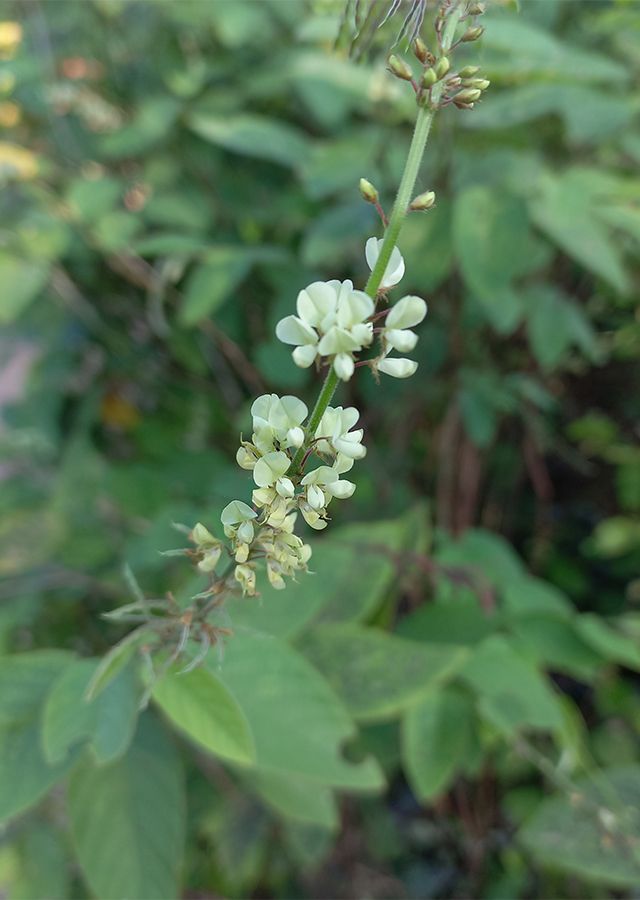
- Flowers small, numerous, inflorescence growing as a raceme terminally and axillary. Calyx tube 4-lobed, corolla white, pink, purple, lilac. Stamens numbering 10, filaments of nine stamens fused forming a tube open on one side while the filament of one stamen is completely free. Ovary length about 2.5 mm, covered with hairs.
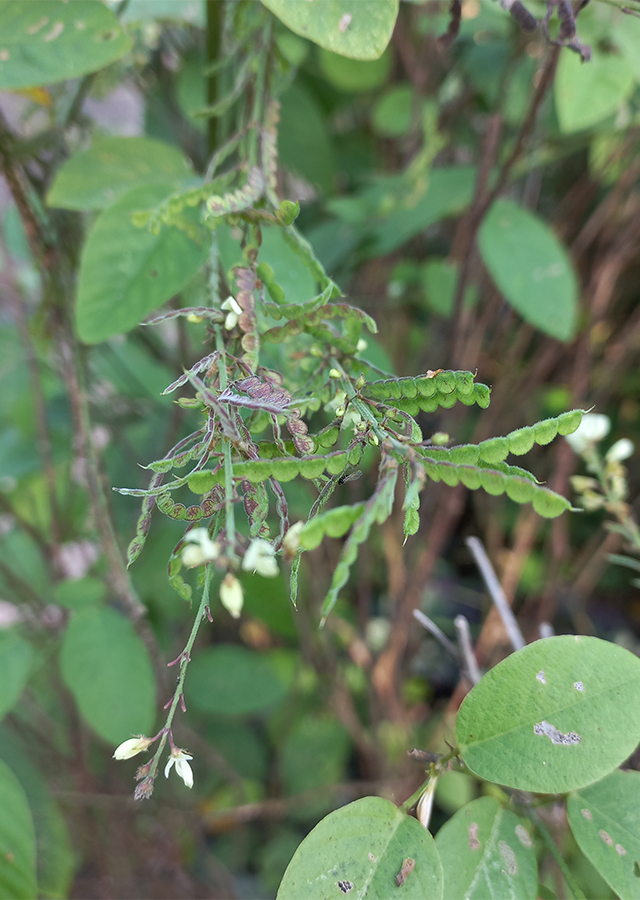
- Fruit a pod, linear, somewhat curved and dense, 1.5-3 cm long, 3 mm wide, covered with small curved hairs, green when young and turning brown when old.
- Seeds pale yellow, kidney-shaped (reniform).
Cultivation
- Propagation is done generatively (seeds) and vegetatively (stem cuttings, clump division, root cuttings).
- Before sowing, scarification is needed to speed up and improve germination. Scarification can usually be done by pouring a little near-boiling water on the seeds and then soaking them for 12-24 hours in warm water.
- Seeds usually germinate within 1-4 months at a temperature of 25 °C.
Chemical Content
N,N-dimethyltryptamine, 5-methoxy-N,N-dimethyltryptamine, Nb-oxides, Nb-methyltetrahydroharman, 6-methoxy-2-methyl-β-carbolinium derivative, Nb-methyltetrahydroharman, hypaphorine, hordenine, caudicine, N-methyl tyramine, β-phenylethylamine, gangetin-(7,12α-dihydro-13-methoxy-3,3-dimethyl-11-13-methyl-2-butenyl)-3H,7H-benzofuro[3,2-C]pyrano[3,2-g]-benzpyran-10-ol, gangetinin, desmodin, 24-ethylcholesta-5,22-dien-3β-ol, flavone glucoside, 4-5,7-trihydroxy-8-prenylflavone-4'-O-alpha-L-rhamnopyranosyl-(1→6)-beta-D-glucopyranoside, alkaloids, 5 phospholipids.
Benefits
Addresses gallstones, kidney or bladder problems, treats diarrhea, dysentery, toothache, headaches, whooping cough, wounds, snake bites and poisoning, reduces fever, treats hemorrhoids, typhoid, inflammation, asthma, bronchitis, anticlerical, chest pain, fungal infections, stomach tumors and cancer, cleanses wounds and boils, sedative for children, worm remedy. Has diuretic, astringent, bitter tonic, laxative, aphrodisiac, anti-inflammatory, analgesic, antioxidant, anthelmintic, vasopressor (constricting blood vessels and increasing blood pressure), antipyretic (fever-reducing), antinociceptive, antiamnesic, antidiabetic, and antibacterial activity.
Local Names
Daun picah (Sunda), Waliketupa, Rumput goro-goro, Nupan-nupan, Upan-upan, Gangaretan, Kalkal otek.
Traditional Recipes
The following recipes reflect traditional knowledge passed down through generations, not a substitute for professional medical diagnosis or advice. Consult a healthcare provider before use.
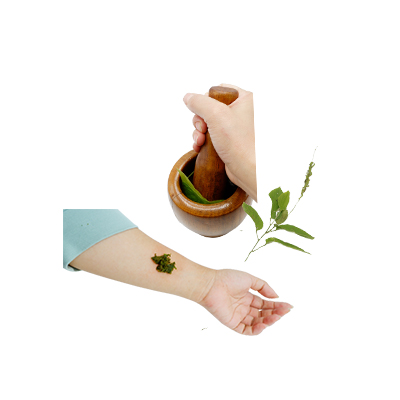
1. Wounds
- Take fresh daun bulu ayam leaves as needed and wash until clean.
- Mash the leaves into a paste.
- Apply the paste to the wounded skin.
Reference Sources
- Royal Botanic Gardens. 2021. Plants of the World Online: Pleurolobus gangeticus (L.) J.St.-Hil. ex H.Ohashi & K.Ohashi. http://www.plantsoftheworldonline.org/taxon/urn:lsid:ipni.org:names:515302-1. 04.10-2021.
- Stuartxchange. 2018. Dikit-dikit. http://www.stuartxchange.org/Dikit-dikit.html. 04.10-2021.
- PROSEA. 2016. Desmodium gangeticum (PROSEA). https://uses.plantnet-project.org/en/Desmodium_gangeticum_(PROSEA). 04.10-2021.
- Vaghela B., Buddhadev S., Shukla L. 2013. PHARMACOLOGICAL ACTIVITIES OF DESMODIUM GANGETICUM: AN OVERVIEW. PHARMA SCIENCE MONITOR: AN INTERNATIONAL JOURNAL OF PHARMACEUTICAL SCIENCES 4(4):264-278.
- Useful Tropical Plants Database. 2021. Desmodium gangeticum. https://tropical.theferns.info/viewtropical.php?id=Desmodium+gangeticum. 04.10-2021.
- Australian Tropical Rainforest Plants. 2019. Desmodium gangeticum. https://www.anbg.gov.au/cpbr/cd-keys/RFK7/key/RFK7/Media/Html/entities/Desmodium_gangeticum.htm. 04.10-2021.
- Planet Ayurveda. 2019. Shalpani (Desmodium gangeticum). https://www.planetayurveda.com/library/shalparni-desmodium-gangeticum/. 04.10-2021.