Pleurotus cystidiosus O.K. Mill.
Summary
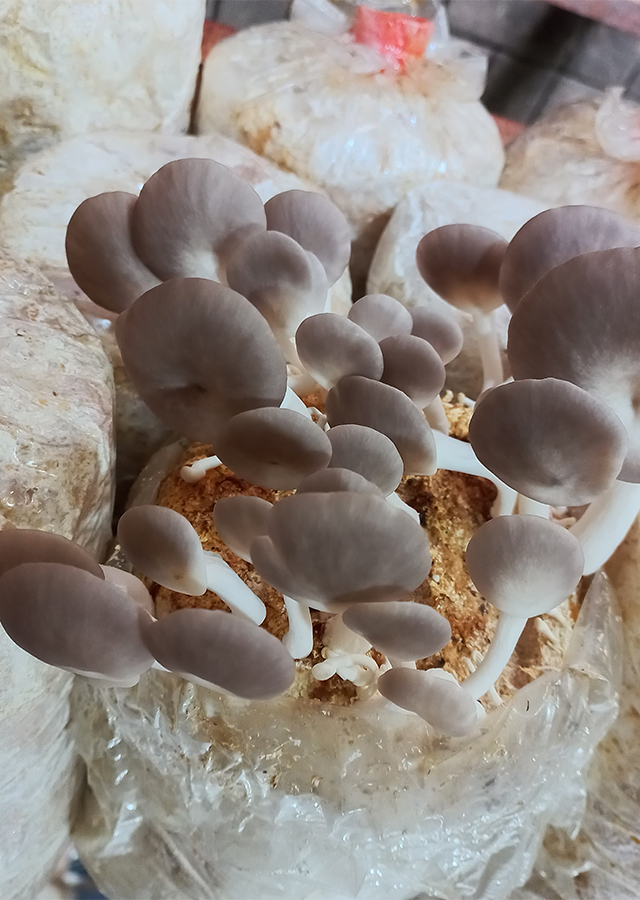
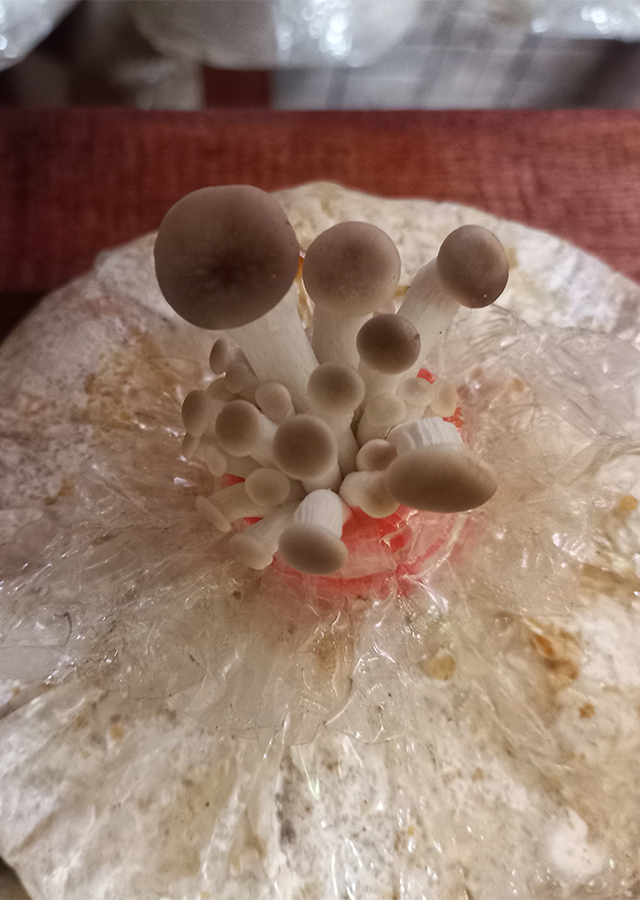
Pleurotus cystidiosus, or brown oyster mushroom, is an edible wood mushroom with a chewier texture and more distinctive aroma than its relative, the white oyster mushroom, though its yield is relatively lower, making it somewhat more expensive. This mushroom's high protein and amino acid content is beneficial for helping control blood pressure, while its low-fat fiber makes it a popular choice in weight-loss diet menus.
Agroecology
Brown oyster mushroom requires certain temperatures to grow optimally. The optimal temperature range for the oyster mushroom's mycelium phase is between 26-28°C and for the fruiting phase is 24-26°C. Primordium growth requires a normal room temperature ranging from 25-28°C. If too cold, the fruiting body will contain a lot of water, leading to rot, while if too hot, primordium growth will be hindered. The mycelium growth period requires air humidity between 65-70%, but to stimulate the growth of buds and fruiting bodies the mushroom requires air humidity of about 80-85%. Light is very much needed to stimulate primordia (fruit bud) growth; even a lack of light will reduce the size of the fruit and cause the cap color to become pale, though the mycelium grows well in dark conditions.
Morphology
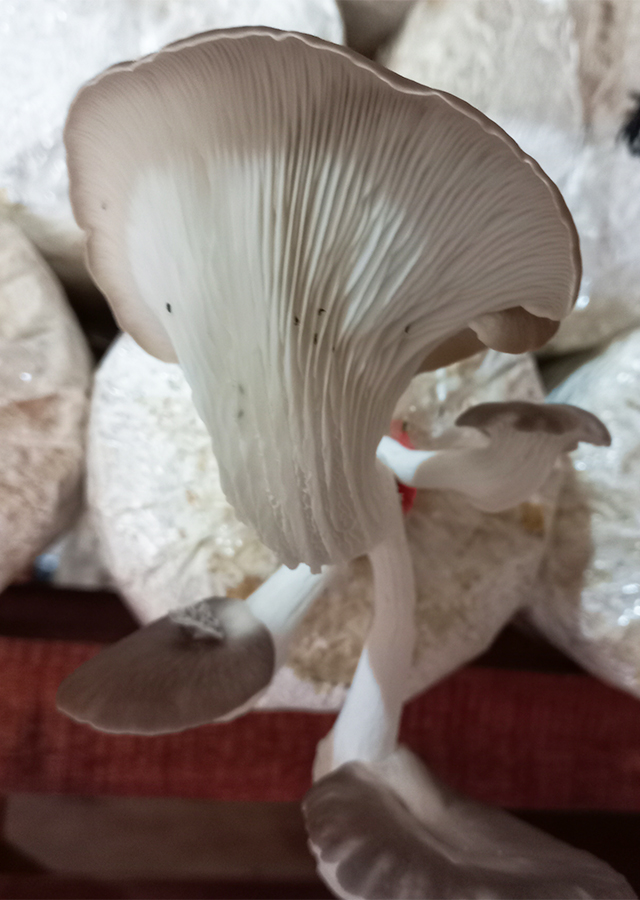
- Stipe and underside of the cap white, growing laterally, aroma similar to paddy straw mushroom.
- Fruiting body cap shape oyster-like, 4-15 cm or more in diameter. Cap surface smooth, somewhat oily when moist, cap color brownish white or dark brown, sometimes yellowish, when the mushroom is mature, but the cap rolls inward and is often wavy in young mushrooms. Brown oyster mushroom has somewhat thick, broad gills, relatively crowded, extending to the top of the stipe, usually with anastomosis near the stipe where they form a net.
- Basidiospores 11.0-18.0 x 3.2-5.7 µm (mean: 14.8±1.7 x 4.3±0.7 µm), cylindrical to elliptic, thin-walled with a small apiculus, inamyloid, hyaline.
Cultivation
Propagation of the brown oyster mushroom is done using spores.
Chemical Content
Protein and amino acids. The amino acids contained in brown oyster mushroom are isoleucine, lysine, methionine, cysteine, phenylalanine, tyrosine, threonine, tryptophan, valine, arginine, histidine, alanine, aspartic acid, glycine, and serine.
Benefits
Helps heal liver disease, lose weight, helps prevent breast cancer, lowers high blood pressure, helps maintain heart health, and many other health benefits.
Local Names
Jamur abalon.
Traditional Recipes
The following recipes reflect traditional knowledge passed down through generations, not a substitute for professional medical diagnosis or advice. Consult a healthcare provider before use.
1. Lowers high blood pressure
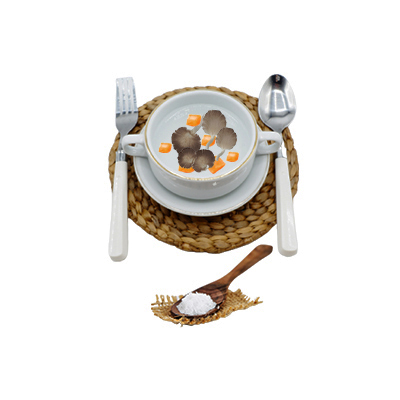
- Prepare an adequate amount of brown oyster mushroom and wash until clean.
- Boil the mushroom until it boils and is cooked, add sugar and salt to enhance the flavor.
- Eating brown oyster mushroom can lower high blood pressure.
Reference Sources
- India Biodiversity Portal. Pleurotus cystidiosus O.K. Mill. 1969. https://indiabiodiversity.org/species/show/240333. 03-07-2022.
- Bhumiagri Nawasena Perkasa . 2022. Jamur Tiram Coklat. https://bhumiagri.co.id/jamur-tiram-coklat/. 03-07-2022.
- Musrifah . 2018. Pertumbuhan Jamur Tiram Cokelat (Pleurotus cystidiosus) Pada Berbagai Komposisi Media Dengan Penambahan Ampas Kelapa dan Molase. Skripsi. Fakultas Sains dan Teknologi. UIN Alauddin Makasar.
- Galappaththi MCA, Dauner L, Madawala S, Karunarathna SC. 2021. Nutritional and medicinal benefits of Oyster (Pleurotus) mushrooms: a review. Fungal Biotec 1(2), 65–87, Doi 10.5943/FunBiotec/1/2/5 https://www.researchgate.net/publication/356633910_Nutritional_and_medicinal_benefits_of_Oyster_Pleurotus_mushrooms_a_review