Plukenetia volubilis L.
Summary
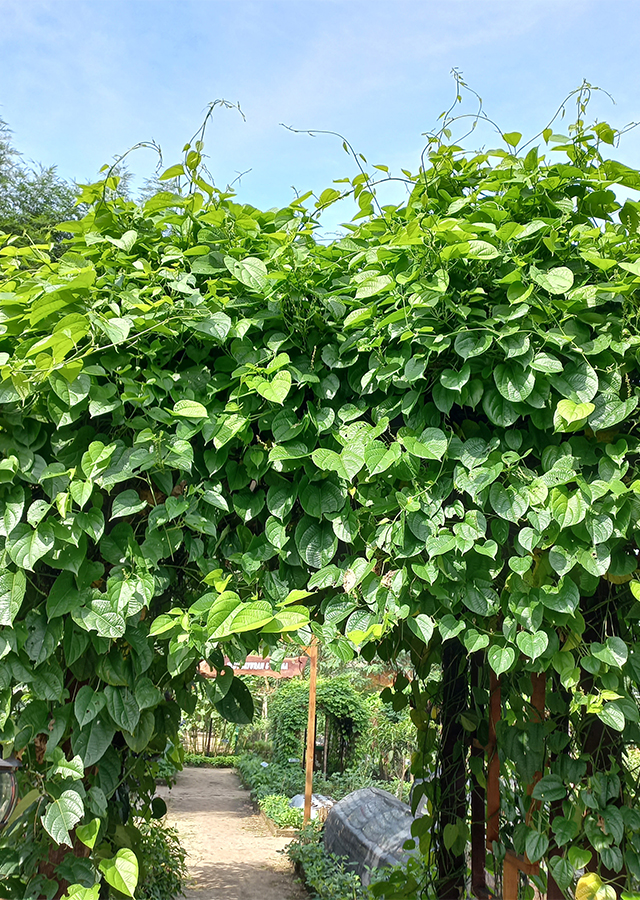
Sacha inchi (Plukenetia volubilis) is a climbing shrub up to 2 meters tall of the Euphorbiaceae family, native to the South American Amazon. Its roasted seeds are rich in oil and protein, while its leaves can be cooked as a vegetable or processed into tea. Sacha inchi is believed to help maintain heart health and control cholesterol levels.
Agroecology
Sacha inchi grows at temperatures between 10 and 37°C in various soil types, but sandy soil is preferred and good drainage is required. Fruit can be produced up to elevations of at least 1,490 m, but yields decrease above 900 m. Sacha inchi can grow in acidic soil (though optimal growth is in neutral pH soil) and alluvial plains near rivers.
Morphology
- Stem climbing, cylindrical, green, smooth.
- Leaves triangular to ovate shaped with a truncated to heart-shaped base, pinnate veins, green in color, serrated edges. Leaf length between 10-12 cm, leaf width 8-10 cm with a petiole 2-6 cm.
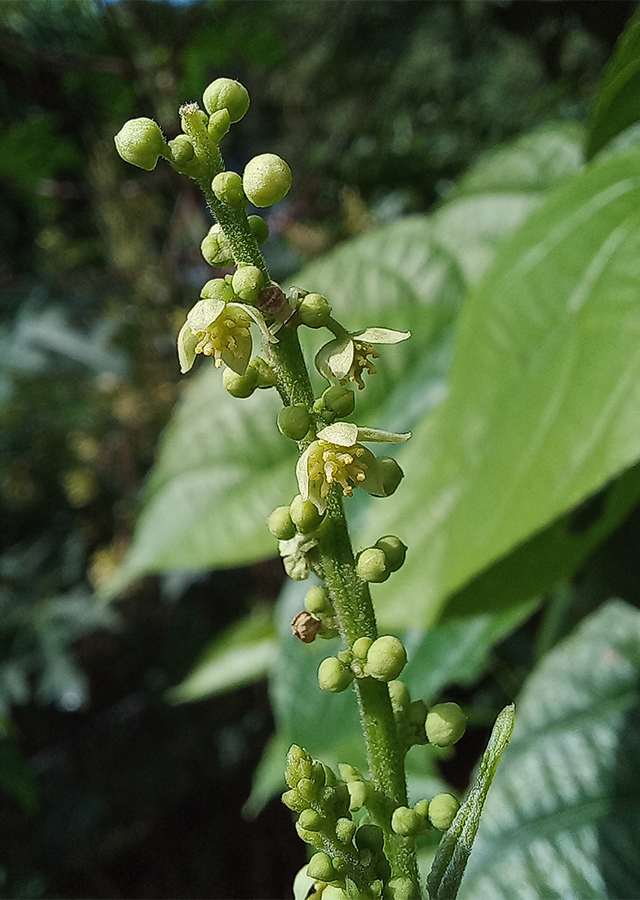
- Flowers in a cluster, emerging from axillary or terminal stems, consisting of one or two flowers, inconspicuous color.
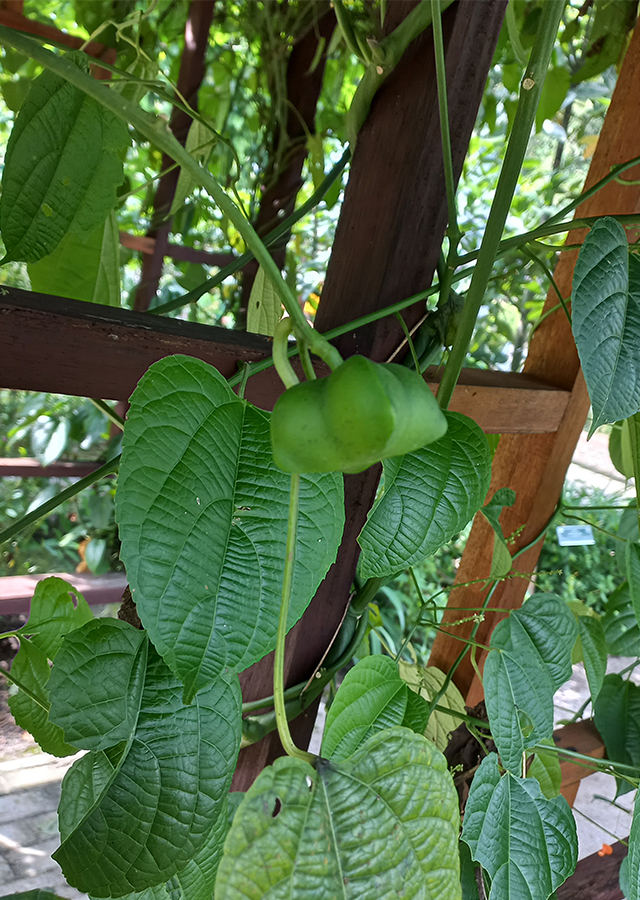
- Fruit sacha inchi bean is star-shaped with 4 to 5 points with a hard, layered skin texture with a diameter of 3-5 cm. One fruit has 4-5 seeds.
- Seeds young fruit green in color, mature fruit blackish-brown.
Cultivation
- Sacha inchi reproduces generatively using seed, good sacha inchi seed for seedlings is seed from a tree 3 years old or more. To speed up germination, sacha inchi seeds are soaked with warm water (temperature 50°C) and left for 24 hours.
- Vegetatively, sacha inchi is done through cuttings with auxin or by grafting the rootstock.
- Cultivation by seed produces flowers approximately 3-5 months after planting, while fruit ripening occurs after about 8-9 months.
Chemical Content
Polyunsaturated fatty acids (linolenic acid, linoleic acid, tocopherol), sterol (sitosterol, campesterol, stigmasterol 5-avenasterol), phenolic compounds (alcohol, isocoumarin, flavonoid, secoiridoid, and lignan), aldehyde, hydrocarbon, furan, carboxylic acid, terpenoid, essential amino acids (leucine, tyrosine, isoleucine, lysine, and tryptophan), omega 3, omega 6, and omega 9.
Benefits
Rejuvenates and revitalizes skin, relieves muscle pain and rheumatism, controls cholesterol, gastrointestinal health, food supplement, improves blood circulation. Prevents common diseases that may be related to oxidative damage, such as coronary heart disease, stroke, and cancer.
Simplisia
- Prepare sacha inchi seeds, wash thoroughly.
- Fry without oil (dry-roast) or roast using an oven.
- Crack the outer shell then grind the inner seed using a blender until it becomes powder.
- Store the simplisia powder in a closed or airtight container.
Local Names
Kacang inca, Kacang gunung, Kacang sacha.
Traditional Recipes
The following recipes reflect traditional knowledge passed down through generations, not a substitute for professional medical diagnosis or advice. Consult a healthcare provider before use.

1. Maintaining heart health
- Prepare sacha inchi seeds, wash thoroughly.
- Fry without oil (dry-roast).
- Crack the outer shell.
- Eat the white inner seed.

2. Improving blood circulation
- Prepare sacha inchi seeds, wash thoroughly.
- Fry without oil (dry-roast).
- Crack the outer shell.
- Grind using a blender until it becomes powder.
- Put into capsules for easy swallowing.
- Take one capsule a day as a supplement.
Reference Sources
- Useful Tropical Plants Database. 2014. Plukenetia volubilis. https://tropical.theferns.info/viewtropical.php?id=Plukenetia+volubilis.%2009-09-2021.
- V. Alexandra , Frank L. Romero-Orejon, Adriana Viñas-Ospino, Dayana Barriga-Rodriguez, Ana María Muñoz and Fernando Ramos-Escudero. 2021. Sacha Inchi Seed (Plukenetia volubilis L.) Oil: Terpenoids. DOI: 10.5772/intechopen.96690 https://www.intechopen.com/chapters/75634.
- Kodahl. N , Sorensen. M. 2021. Sacha Inchi (Plukenetia volubilis L.) Is an Underutilized Crop. with a Great Potential . Agronomy 2021, 11, 1066.