Podocarpus macrophyllus (Thunb.) Sweet
Summary
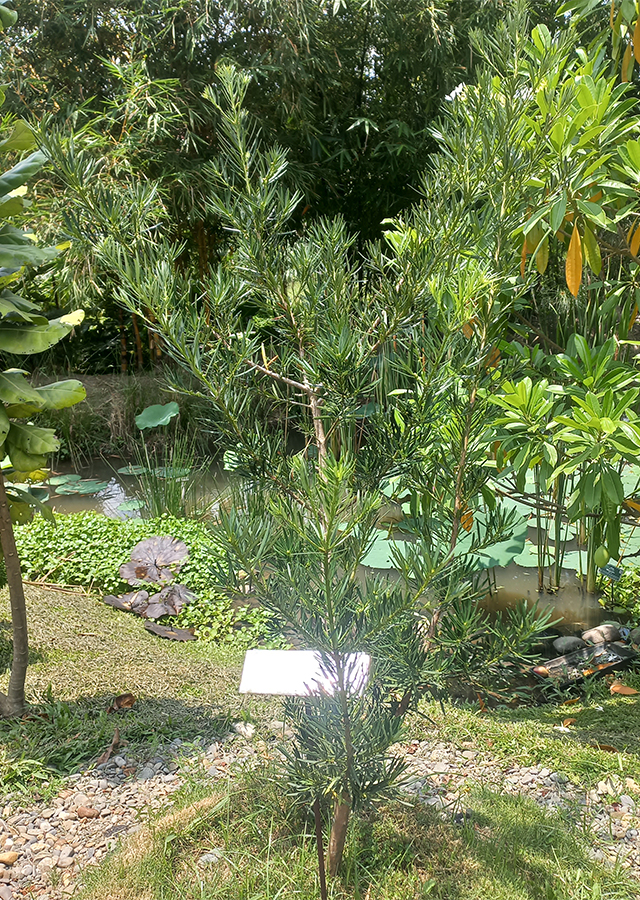
Podocarpus macrophyllus or lohansung is a tree native to China, Japan, Myanmar, and Taiwan that is highly favored as an ornamental and bonsai plant for its unique shape and resilience across various climates—even considered a feng shui tree in Japan. Its fruit can be consumed fresh or processed into cakes, its wood is used for furniture, while in Ayurvedic medicine its bark is known to have antiseptic and astringent properties to relieve fever, asthma, and cough.
Agroecology
Lohansung is usually found growing in forests, open thickets, and roadsides, at elevations from near sea level up to 1,000 m asl. This species generally grows in regions with a mean annual temperature of 18.4°C, with a mean minimum temperature in the coldest month of 7.1°C, and mean annual rainfall of 2,180 mm. Lohansung can tolerate winter temperatures down to between -17.7°C and -12.2°C for a short time. This species grows best in full sun in slightly acidic, nutrient-rich, moist, well-drained soil, and prefers regions where summers are hot and humid. Lohansung is tolerant of drought and shade, but not tolerant of wet soil conditions. This species can develop chlorosis (yellowing of leaves) in alkaline soil conditions.
Morphology
- Roots very strong with the ability to spread throughout the surrounding soil.
- Trunk straight and cylindrical, much-branched, dense and upright. Bark gray or grayish brown, with a rough, raised texture.
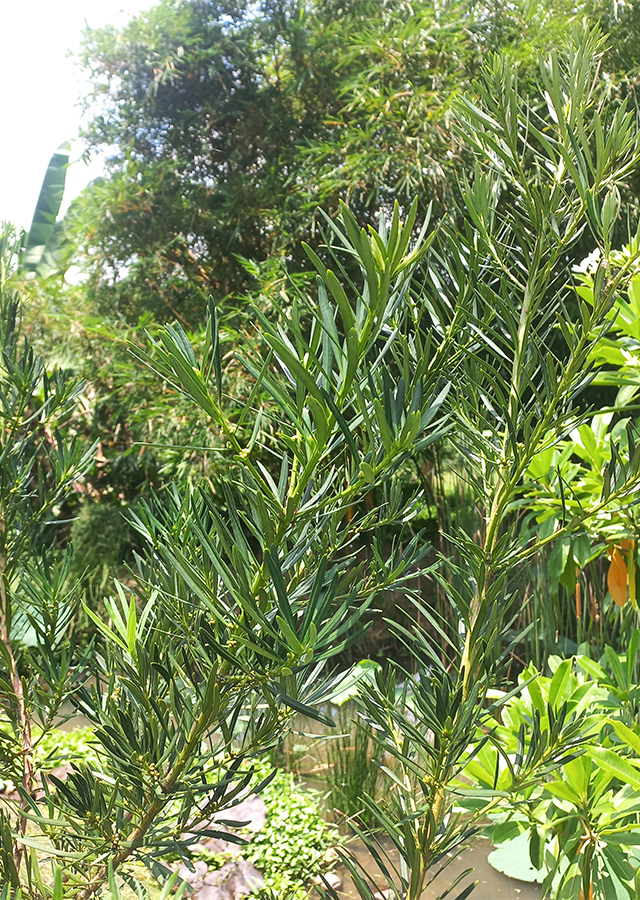
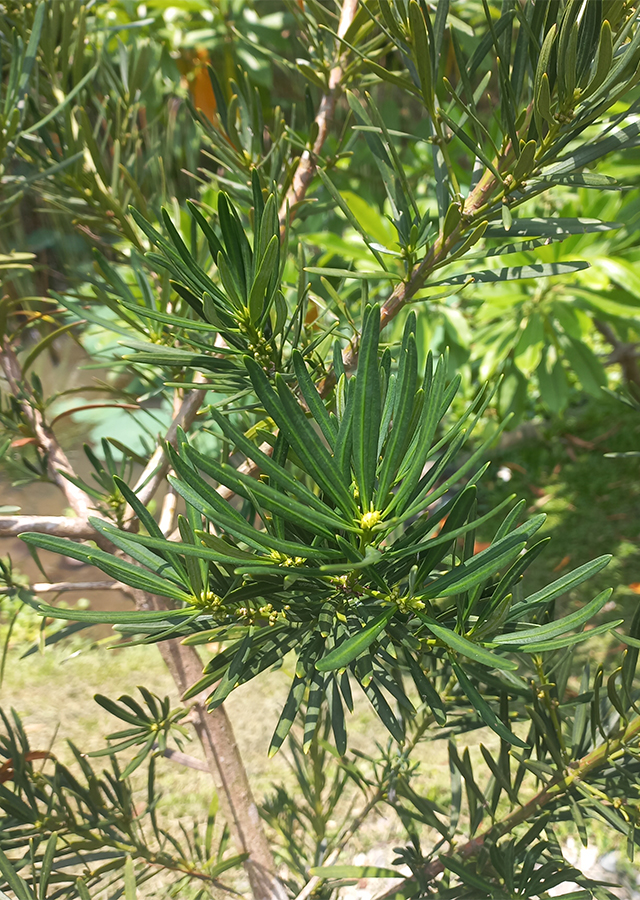
- Leaves simple or unifoliate, arranged spirally around the shoot, dense, upright to spreading, narrowly linear to lanceolate, stiff, thick, with a pointed base and blunt or somewhat pointed tip, yellowish green when young and becoming dark green on the upper surface and pale green below, margin entire. The primary vein (midrib) is prominently raised on both the upper and lower surfaces.
- Flowers yellow, with male and female cones on separate plants.
- Fruit a fleshy berry, cone-shaped, borne on a short stalk, with 2-4 scales, usually only one (sometimes two) fertile, having 1 or 2 seed cavities, each cavity in the fruit bearing a single apical seed 10-15 mm in size. The fruit scales swell and change color to reddish purple when ripe.
Cultivation
Plant propagation uses seed and stem cuttings (by cutting terminal shoots 5-10 cm long).
Chemical Content
A new biflavonoid, 2,3-dihydro-4',4'''-di-O-methylamentoflavone, catechin, quercetin, 2,3-dihydrosciadopitysin, sciadopitysin, isoginkgetin, hinokiflavone, neocryptomerin, podocarpusflavone A, podocarpusflavone B, flavonoids, new norditerpenes (2ß-hydroxymakilactone A and 3ß-hydroxymakilactone A).
Benefits
Treats worm infestation, blood disorders, lung disease, asthma, cough, stomachache, sweaty feet, gonorrhea and syphilis, cholera, rheumatism and joint pain, wounds, reduces fever, as a tonic (for the heart, kidneys, and stomach), a laxative. A wash used in the treatment of arsenic poisoning, skin diseases, and boils.
Local Names
Melur, Pinus Buddha.
Traditional Recipes
The following recipes reflect traditional knowledge passed down through generations, not a substitute for professional medical diagnosis or advice. Consult a healthcare provider before use.
1. Wounds
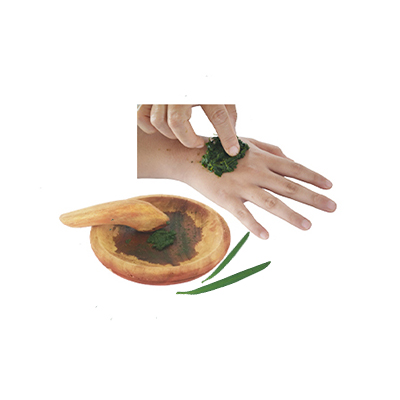
- Prepare an adequate amount of fresh lohansung leaves and wash until clean with running water.
- Grind until it becomes a paste.
- Apply the leaf paste to the wound.
Reference Sources
- Royal Botanic Gardens. Plants ofthe World Online: Podocarpus macrophyllus (Thunb.) Sweet. https://powo.science.kew.org/taxon/urn:lsid:ipni.org:names:263522-1#synonyms. 19-04-2022.
- Stuartxchange. 2019. Philippine Medicinal Plants: Buddhist pine. http://www.stuartxchange.org/Podocarpus. 19-04-2022.
- Flora Fauna Web. 2021. Podocarpus macrophyllus. https://www.nparks.gov.sg/florafaunaweb/flora/3/0/3075. 19-04-2022.
- Healthbenefitstimes. 2021. Facts about Buddhist Pine. https://www.healthbenefitstimes.com/buddhist-pine/. 19-04-2022.
- Temperate Plants Database, Ken Fern. 2021. Podocarpus macrophyllus. https://temperate.theferns.info/plant/Podocarpus+macrophyllus. 19-04-2022.